

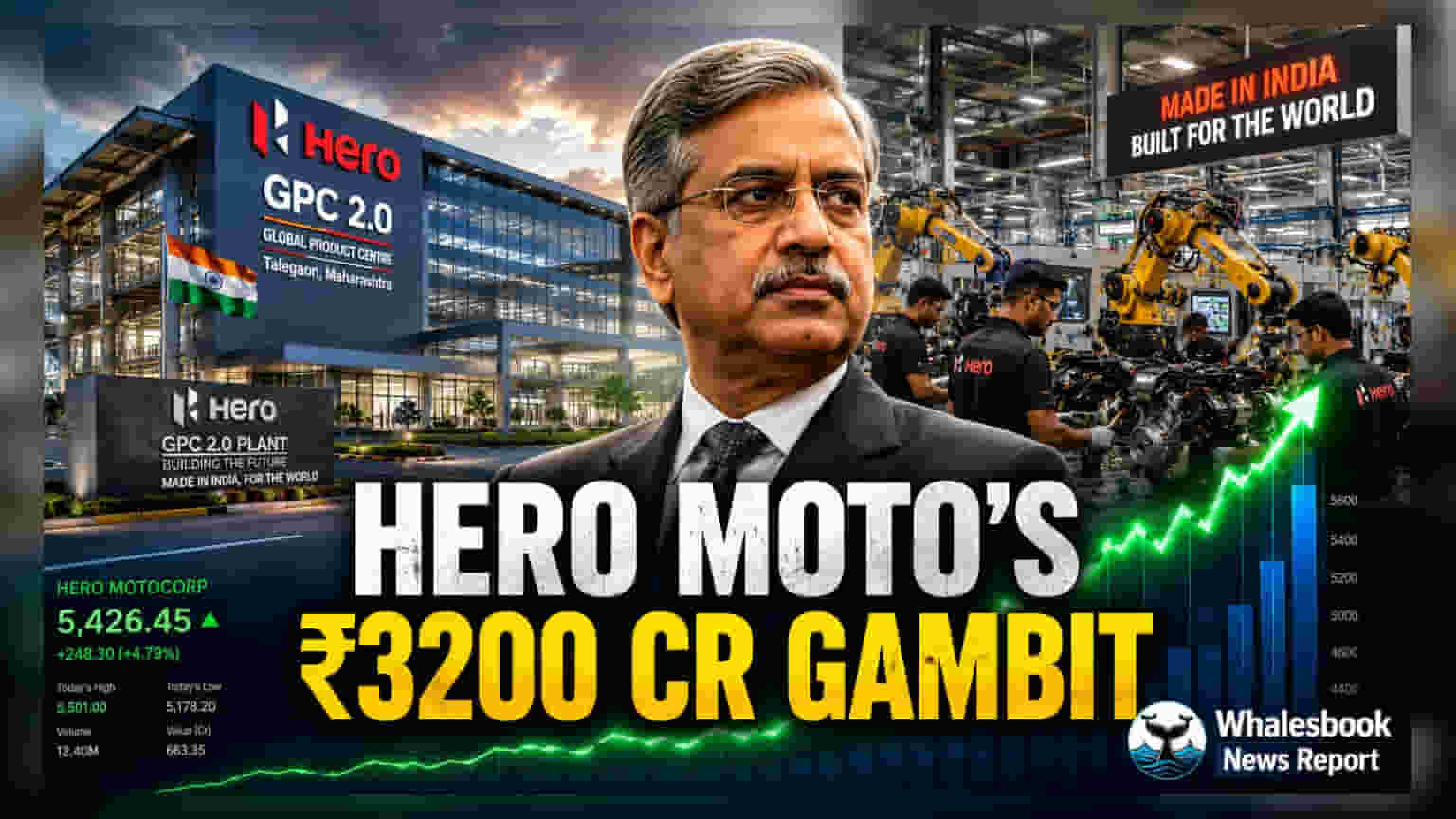
Hero MotoCorp will invest ₹3,200 crore to double production capacity at its Andhra Pradesh plant to 15 lakh units. The plan includes a ₹750 crore Global Parts Centre to support domestic and export markets. Investors will watch if market demand justifies this spending and how it impacts future cash flow.
What Happened
Hero MotoCorp has announced a significant expansion plan for its manufacturing facility in Tirupati, Andhra Pradesh. The company will invest ₹3,200 crore over the next three to five years to scale up its operations. This investment serves two main goals: significantly increasing manufacturing output and strengthening the company's global supply chain. The plan includes a major capacity upgrade at the Tirupati plant, aiming to take annual production from the current 6 lakh units to a range of 12 lakh to 15 lakh units.
The Strategic Shift to Global Parts
A key part of this investment is the construction of a new Global Parts Centre (GPC 2.0), which will cost ₹750 crore. This facility is expected to be operational within two years. By focusing on a dedicated parts centre, the company is aiming to better manage its supply of spare parts and completely knocked down (CKD) kits for international markets. For investors, this move suggests that the company is trying to diversify beyond just selling motorcycles in India and is looking to build a more robust export business, which can be a different margin profile compared to domestic bike sales.
Why Capital Spending Matters
Spending ₹3,200 crore is a major commitment for any company. While this move is intended to fuel future growth, investors typically monitor how large investments affect a company's financial health. Heavy spending on new plants and machinery can put pressure on cash reserves in the short term. The success of this investment will depend on the company’s ability to generate enough profit from the increased production capacity to justify the money spent today.
Risks and Business Monitorables
The two-wheeler market in India is highly competitive, with rivals like Bajaj Auto, TVS Motor, and Honda actively expanding their own capacities and product lines. A primary risk for Hero MotoCorp is whether the actual market demand in the coming years will be strong enough to absorb the increased production of 12 to 15 lakh units. If the market slows down, this extra capacity could lead to lower plant utilization, which can hurt profit margins. Additionally, like any large-scale project, there is always the risk of delays in construction or cost increases due to inflation in building materials and labour.
What Investors Should Track
Moving forward, the key things for investors to watch are the project timeline and any updates on demand trends in the two-wheeler sector. If the company achieves the planned capacity increase on time and without significant cost overruns, it could strengthen its market position. However, investors will also want to monitor the company's quarterly financial results to see if the spending on new capacity is being managed without taking on excessive debt, and whether the planned export push actually contributes to better profit margins over time.