 Whalesbook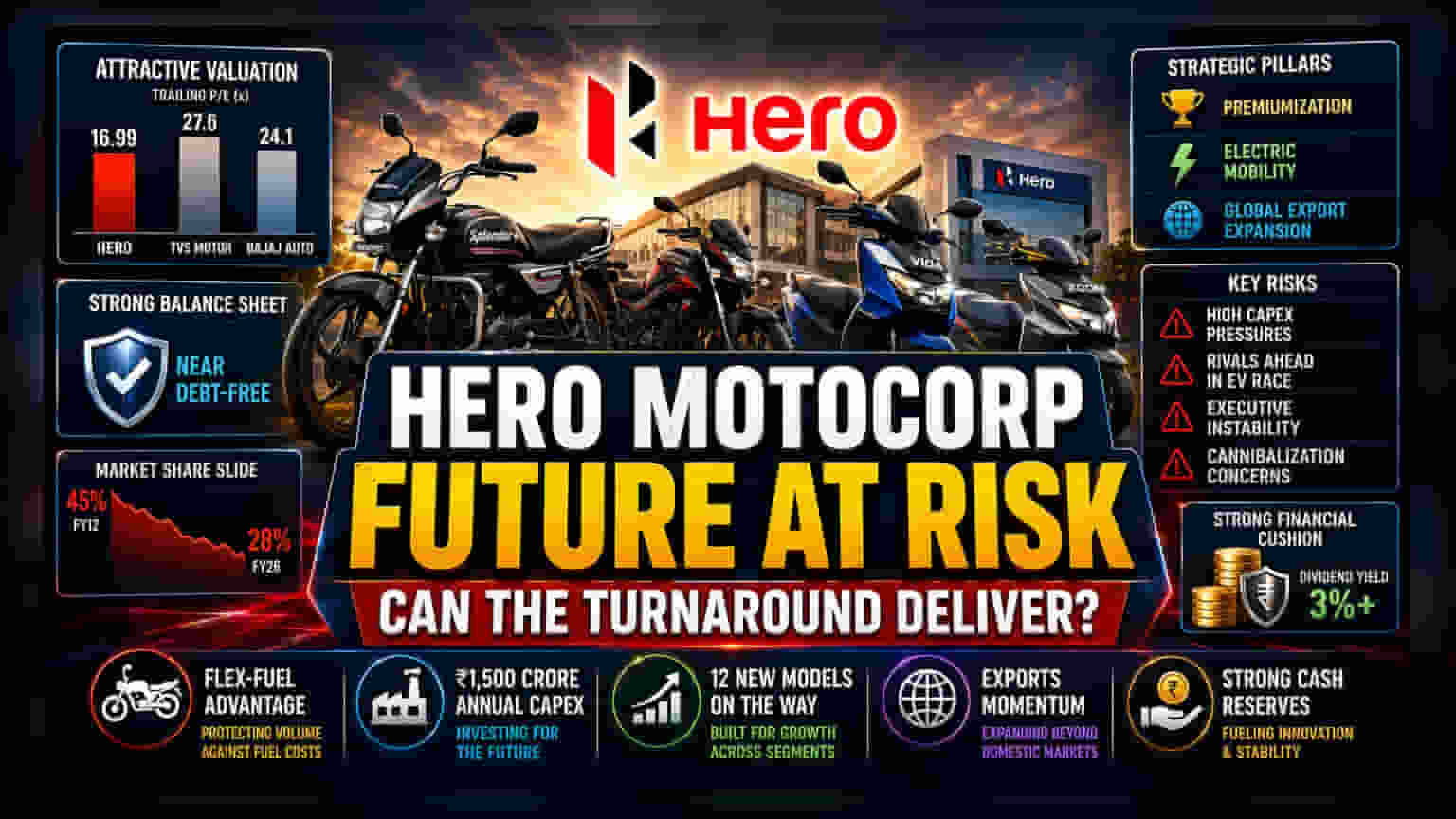


The Valuation Gap
Hero MotoCorp currently occupies a unique position in the Indian automotive sector. Trading at a trailing P/E ratio of approximately 16.99, the stock is valued significantly lower than growth-oriented peers like TVS Motor and Bajaj Auto. While the market acknowledges the company's robust balance sheet and status as a near-debt-free entity, the lower valuation multiple suggests a pervasive investor skepticism regarding the speed and efficacy of its transition toward electric vehicles and premium motorcycles. The market is pricing in the friction of this pivot—specifically the high costs associated with aggressive product rollouts in an environment where competitors have already established significant footholds.
The Analytical Deep Dive
CEO Harshavardhan Chitale is driving an urgent operational overhaul intended to reverse a decade of market share erosion. Having peaked at 45% in FY12, the company’s domestic market share has slid to approximately 28% in FY26. The strategy now centers on three critical pillars: premiumization, electric mobility, and global export expansion. While Hero maintains an iron grip on the entry-level commuter segment, its footprint in the higher-margin scooter and premium motorcycle segments remains thin. The recent launch of flex-fuel motorcycles—specifically targeting high-volume models like the Splendor+—highlights a tactical attempt to leverage existing brand equity to shield volume against rising fuel costs, rather than relying solely on the capital-intensive EV rollout.
The Forensic Bear Case
From a risk-averse perspective, the company’s aggressive push into the electric and premium markets is fraught with structural hurdles. First, the capital expenditure of ₹1,500 crore annually, while necessary for capacity expansion, threatens to compress operating margins in the near term as depreciation and operational costs climb. Second, the company is playing catch-up; rivals such as TVS Motor and Bajaj Auto have successfully moved from niche disruption to market consolidation, capturing a larger slice of the EV segment. Furthermore, the firm has faced recent organizational instability, characterized by a string of high-profile executive departures, which complicates the execution of its long-term renewal strategy. Investors are wary of "cannibalization," where the shift toward new-age vehicles potentially undermines the legacy high-volume portfolio before the new segments achieve meaningful profitability.
The Future Outlook
Despite the clear tactical challenges, the company’s strong financial cushion—underpinned by high cash reserves and a healthy dividend yield of over 3%—provides a buffer that many competitors lack. Analysts remain divided, with a mix of hold and buy ratings, reflecting a broader wait-and-see approach. Future performance will likely be dictated by the commercial success of the upcoming dozen new model launches and the company’s ability to defend its core volume leadership while simultaneously scaling its Vida and Xoom EV lines to compete in a crowded, discount-heavy marketplace.