

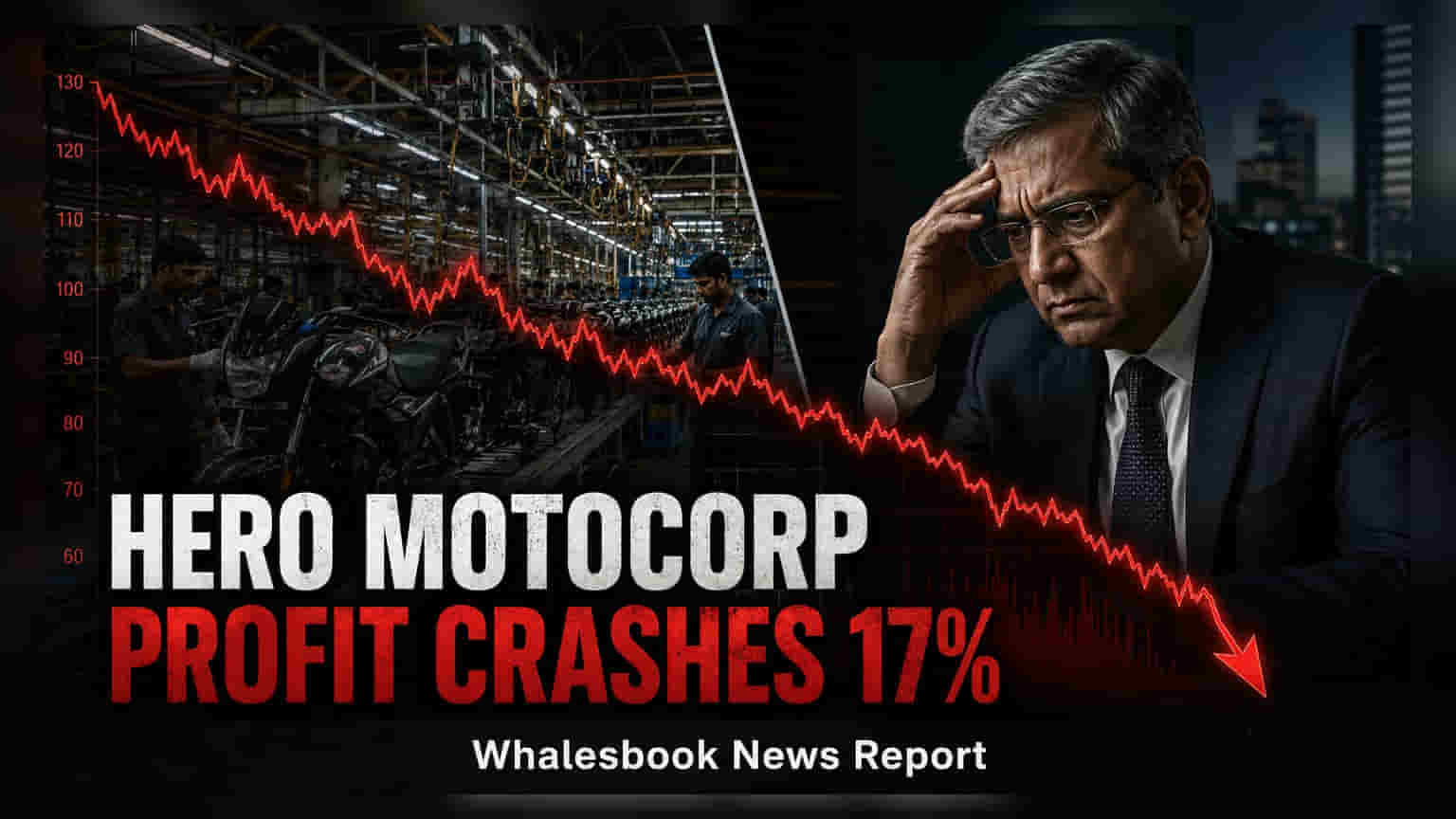
Hero MotoCorp reported a 17% decline in Q1 profit to ₹1,418 crore, primarily due to a one-time gain in the previous year's figures. Despite this, the company saw a strong 35% growth in revenue and 23% increase in two-wheeler sales volume.
Hero MotoCorp, India’s largest two-wheeler manufacturer, reported a 17% year-on-year decline in consolidated net profit for the first quarter of fiscal year 2027, which ended on June 30. The company's profit stood at ₹1,418 crore, compared to ₹1,706 crore in the same quarter last year.
While the profit figure shows a decline, the company’s operational performance tells a different story. Revenue from operations jumped 35% to reach ₹13,126 crore. Additionally, the company sold 16.77 lakh two-wheeler units during the quarter, reflecting a 23% growth in sales volume compared to the previous year. This suggests that the core business of manufacturing and selling vehicles is growing, even if the bottom-line profit figure looks lower on paper.
Why Profit Fell Despite Sales Growth
The primary reason for the profit decline is a technical factor known as a high base effect. In the first quarter of the previous fiscal year, Hero MotoCorp recorded a one-time exceptional gain of ₹722 crore from diluting its investment in associate companies. Without this non-recurring income, the profit comparison becomes more challenging, making the current earnings appear weaker than they are operationally.
Investors should also note that profitability was further affected by rising costs. The company reported an operating margin of 13.3%. This margin was pressured by higher input costs and a one-time expense of ₹119 crore related to the implementation of the New Labour Code. These figures highlight the impact of regulatory and operational costs on short-term earnings.
What Investors May Track
Moving forward, the company's ability to maintain margins will be a key monitorable. While revenue is growing, input costs—such as raw materials—can affect the profitability of each unit sold. Investors may also watch how effectively the company can scale its premium motorcycle segment and electric vehicle (VIDA) business, as these areas are expected to drive future value beyond the traditional commuter motorcycle market.
The company’s reliance on the mass-market commuter segment remains significant. Any shift in rural demand or changes in raw material pricing could influence future financial results. The management's commentary on navigating these cost pressures and scaling new business lines will remain an important area for shareholders to monitor in upcoming quarters.