

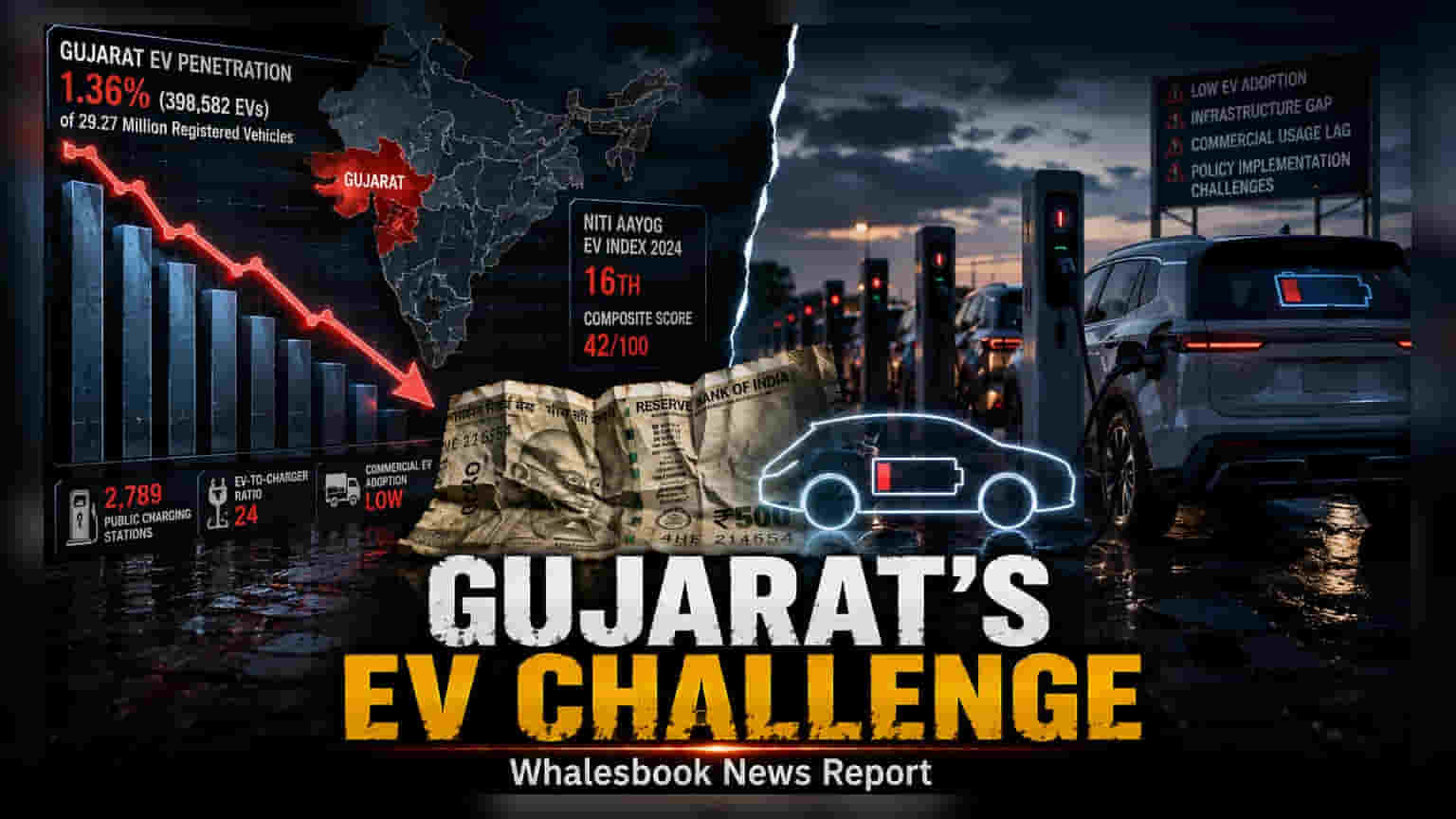
Electric vehicles make up only 1.36% of Gujarat’s total vehicle fleet despite state policy incentives. The state currently ranks 16th in NITI Aayog's India Electric Mobility Index 2024, highlighting a disconnect between its manufacturing-focused EV policy and actual consumer adoption.
Gujarat’s transition to electric vehicles is moving slower than its industrial stature might suggest. As of mid-August 2026, electric vehicles accounted for just 1.36% of the state’s total registered fleet of approximately 29.27 million vehicles. While the absolute number of electric vehicles on the road has reached 398,582, the overwhelming reliance on petrol and diesel engines remains a significant hurdle to broader adoption.
This low penetration has placed Gujarat in 16th position in NITI Aayog’s India Electric Mobility Index 2024, which tracks the progress of electric mobility across states. The state received a composite score of 42, reflecting specific strengths in manufacturing but evident lags in consumer uptake and commercial usage.
Infrastructure and Policy Disconnect
The Gujarat State Electric Vehicle Policy, launched in 2021, was designed to transform the state into an EV manufacturing hub through subsidies and incentives. While the policy successfully spurred sales volume, hitting and eventually surpassing initial purchase targets, it has faced challenges in building a seamless ecosystem for users. The state has made measurable progress in infrastructure, establishing 2,789 public charging stations as of July 2026, which ranks it 8th nationally. However, the EV-to-charger ratio remains inefficient at 24, indicating that the placement and accessibility of these chargers are not yet optimally aligned with the density of electric vehicle owners.
Commercial Adoption Gaps
A primary factor dragging down the state’s index ranking is the slow adoption of commercial electric vehicles. Unlike metropolitan centers where e-rickshaws and electric delivery fleets have become common, Gujarat has seen limited penetration in this segment. This is particularly notable given the state’s policy focus on last-mile connectivity and logistics support. The lack of shift in the commercial fleet—which typically drives high-frequency, high-mileage adoption—creates a structural ceiling for overall EV penetration rates.
What Investors Should Monitor
For market participants, the disconnect between policy support and actual user adoption is the most important trend. While manufacturing incentives are in place, the path to higher penetration now depends on bridging the gap in commercial EV usage and improving the efficiency of the existing charging network. Key monitorables for the coming quarters include potential revisions to state incentives, the rollout of more commercial-focused charging assets, and the conversion rates for electric fleets in logistics and public transport. Future growth will likely hinge on whether the state can move beyond personal vehicle subsidies to drive deeper integration of EVs into its commercial and industrial transport chains.