

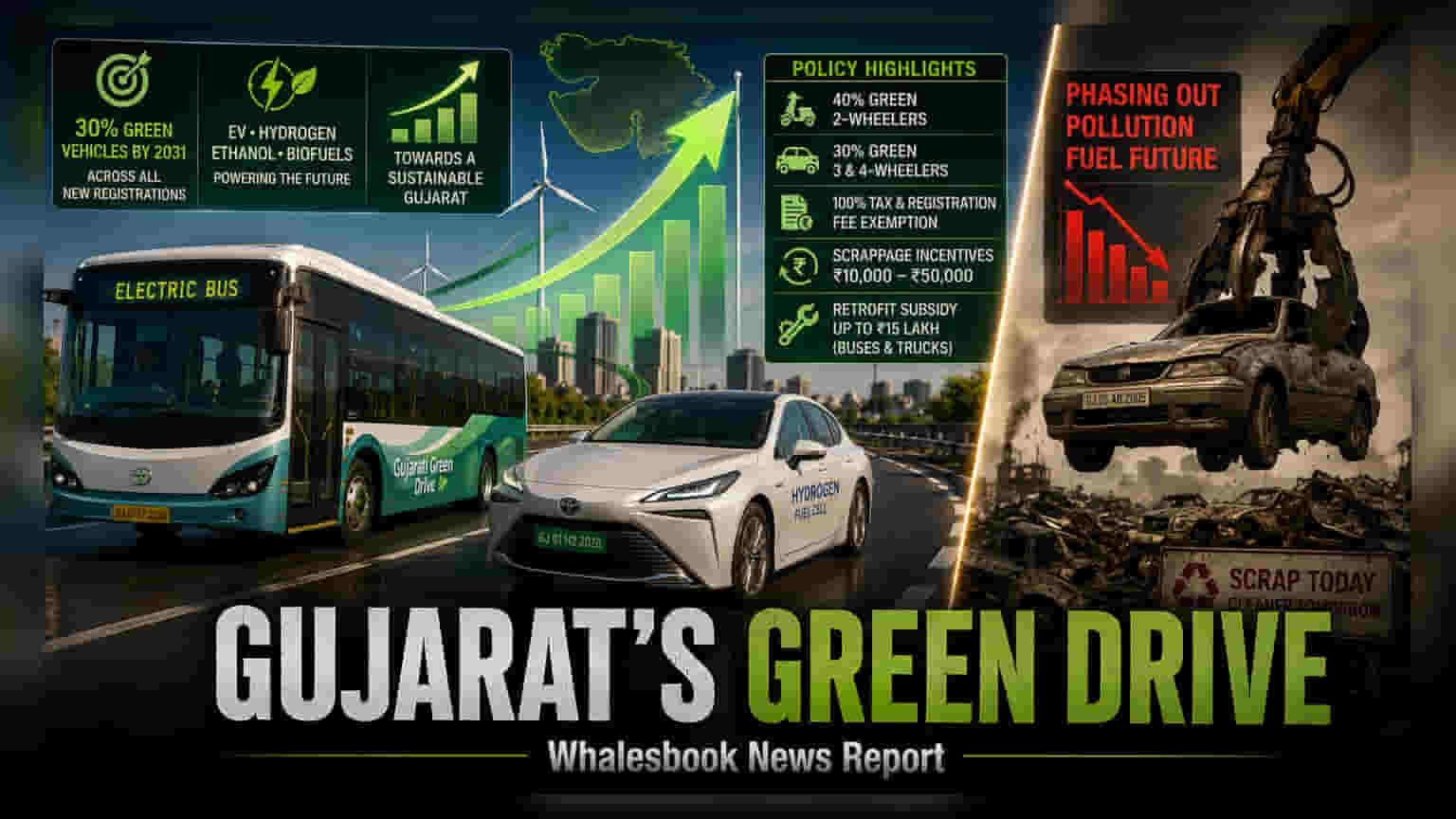
Gujarat has introduced the Green Mobility Policy 2026, targeting 30% of new vehicle registrations to be green by 2031, covering EVs, hydrogen, and ethanol vehicles. While the move aims to boost demand for manufacturers, investors should watch for potential margin pressures from rising commodity costs like rubber and steel, alongside the challenges of building necessary charging infrastructure.
Gujarat has officially launched its Green Mobility Policy 2026, setting an ambitious target that 30% of all new vehicle registrations in the state must be "green vehicles" by 2031. This category is defined broadly, including not only electric vehicles (EVs) but also those powered by hydrogen, ethanol, and biofuels. The policy aims to reduce fossil fuel dependency through phased adoption mandates, tax exemptions, and direct financial incentives.
Under the new framework, specific targets are assigned to different vehicle segments. Two-wheelers have a target of 40% green registrations, while three- and four-wheelers are set at 30%. The policy also mandates that starting January 1, 2029, new registrations for two-wheelers, four-wheeler cars, and light goods vehicles in priority sectors will be restricted exclusively to green vehicles. This essentially forces a shift for new buyers in these specific segments, effectively phasing out conventional petrol and diesel models for those priority applications.
To encourage the transition, the state government is offering scrappage incentives for older BS-IV vehicles, providing between Rs 10,000 and Rs 50,000 depending on the vehicle type. Furthermore, the policy subsidizes the cost of retrofitting existing internal combustion engine vehicles, capping assistance at Rs 15 lakh for buses and trucks and Rs 75,000 for four-wheelers. These buyers will also benefit from a 100% exemption on motor vehicle taxes and registration fees.
For investors, this policy provides long-term demand visibility for original equipment manufacturers and auto-ancillary players operating in the state. However, the broader automotive sector currently faces mixed operational realities. As of August 2026, many manufacturers are managing persistent margin pressure due to elevated prices of key raw materials, including rubber and steel. While government policy support is a positive demand driver, it does not alleviate the impact of global commodity price volatility on company profitability.
Another critical factor for the market is the pace of infrastructure development. The success of these mandates relies heavily on the rollout of a widespread charging and refueling network for EVs and hydrogen-powered vehicles. Without adequate support infrastructure, the ambitious 2029 phase-out target for priority sectors could face execution challenges. Investors may continue to monitor how manufacturers adjust their product portfolios to meet these mandates without compromising their margins. Future updates on the actual adoption rates and the progress of state-backed infrastructure projects will be key indicators of the policy's tangible impact on the industry.