

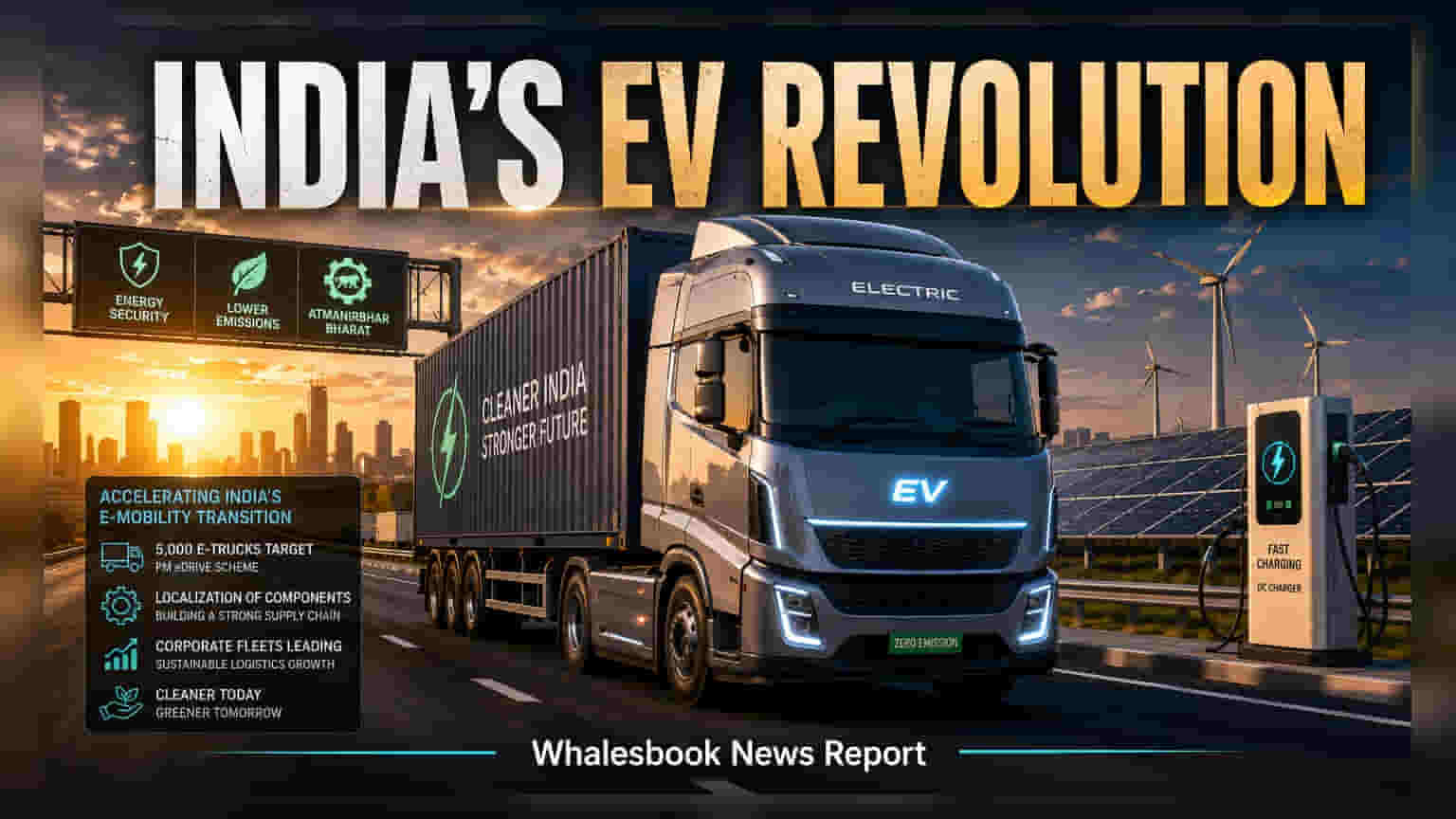
Prime Minister’s advisor Tarun Kapoor has called for a swift shift to electric heavy vehicles within five years to reduce import reliance. While the move signals a major policy push, it creates supply chain and operational hurdles for the automotive sector. Investors should track potential tax changes and localization requirements for critical components.
India’s transition toward electric mobility is entering a critical phase, with the government signaling that the shift for trucks and buses needs to move much faster. At the 66th Society of Indian Automobile Manufacturers (SIAM) convention held on September 3, 2026, Prime Minister’s advisor Tarun Kapoor stated that incremental adoption is no longer sufficient. He emphasized that the next five years will be a crucial window for the industry to transition away from diesel-powered heavy vehicles to improve national energy security and reduce dependence on imported crude oil.
Industry stakeholders should prepare for potential government interventions to force this transition. These may include stricter restrictions on older, inefficient commercial vehicles, adjustments to tax structures, and revised subsidy schemes. The government is aiming to move beyond current, slower adoption rates. For instance, the PM eDRIVE program, which targets supporting 5,000 electric trucks, has seen limited participation so far, with only 150 vehicles covered under the scheme.
Supply Chain and Localization Challenges
A major hurdle for the transition is the localization of critical components. Currently, Indian manufacturers are heavily dependent on imported components, specifically rare-earth magnets used in traction motors and controllers. Due to global supply chain constraints and export restrictions—particularly from China—the industry is struggling to meet strict local sourcing requirements. SIAM has officially requested the government to extend the timeline for these localization norms until April 1, 2027, to allow manufacturers time to secure reliable local supplies or develop domestic alternatives.
Corporate Adoption vs. Policy Targets
While policy-driven adoption under the government scheme has been slow, private sector activity is picking up. Large companies are increasingly investing in electric fleets to meet their sustainability goals. For example, UltraTech Cement has announced plans to scale its electric truck fleet to over 600 vehicles by December 2026, partnering with established OEMs like Tata Motors and Ashok Leyland. Additionally, Energy in Motion, an associate of Ravindra Energy, has initiated a project to deploy 500 electric heavy commercial vehicles across major freight corridors starting in October 2026. These moves suggest that commercial viability is starting to improve, even if large-scale government-backed adoption faces hurdles.
Investor Risks and Monitorables
Investors should be aware of several risks associated with this rapid shift. First, there is significant policy uncertainty; the potential for abrupt changes to subsidies or the introduction of punitive taxes on internal combustion engine (ICE) vehicles could impact the profitability of traditional auto manufacturers. Second, the technical transition poses operational challenges for OEMs shifting from engine-based manufacturing to EV-native models. Finally, the heavy reliance on imported components remains a weak point, as it could lead to cost overruns or production delays if supply chains are disrupted. The key monitorable for investors will be the government’s response to the SIAM request for an extension on localization norms and any upcoming notifications regarding taxes or vehicle scrappage policies.