

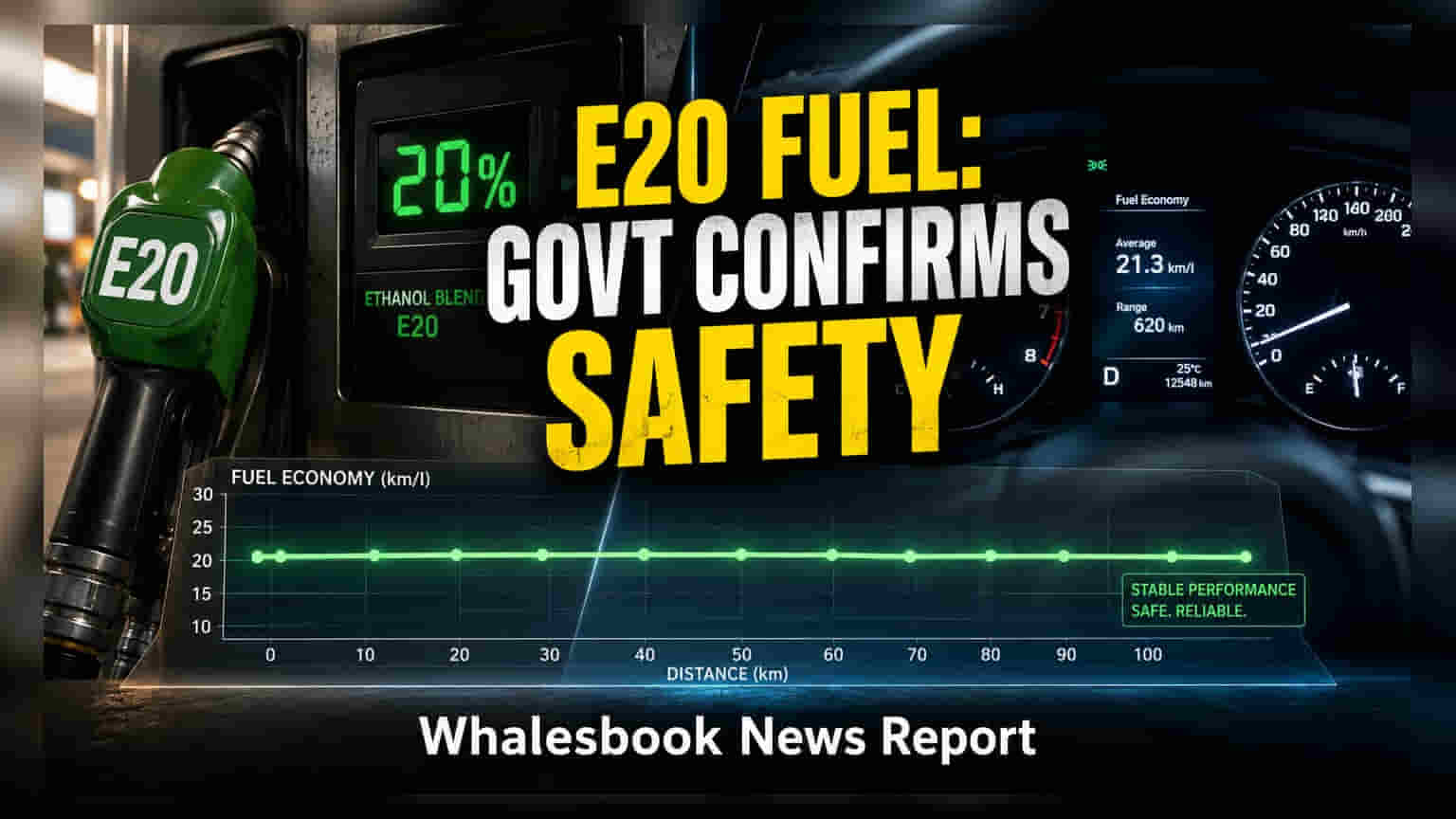
The Ministry of Petroleum and Natural Gas has released a detailed FAQ dismissing claims that E20 ethanol-blended petrol causes engine damage or significant mileage loss. Major automakers have publicly supported these findings, citing extensive testing and real-world service data. This clarification aims to stabilize consumer sentiment toward the government's ethanol blending program as the country pushes for higher biofuel integration.
The Indian government has officially addressed public concerns regarding the transition to E20 fuel, which consists of 20% ethanol blended with petrol. Through a recent Ministry of Petroleum and Natural Gas release, authorities have challenged widespread narratives that suggest this fuel blend causes long-term engine damage or drastic drops in vehicle efficiency.
Reliability Data and Vehicle Performance
To support the safety of E20, the ministry pointed to operational data covering approximately 1.5 crore vehicles that were not originally certified for E20 but have been exposed to ethanol-blended fuel. According to the government, service center records from major manufacturers do not show evidence of abnormal wear, corrosion, or systemic failure linked to these blends. This is a significant point for investors, as it helps mitigate concerns regarding potential liability or brand damage for domestic automobile companies that have been integrating these fuels into their product ecosystems.
Regarding fuel economy, the government acknowledged a marginal reduction of 3-5% for older vehicle models specifically designed for E10 fuel. However, officials emphasized that this impact is often offset by the cleaner combustion and higher octane rating provided by ethanol. For investors, understanding this trade-off is important because it clarifies that the shift to biofuels is a long-term policy goal rather than a temporary trend.
Industry Support and Policy Consistency
Leading Indian automakers, including Maruti Suzuki, Hyundai Motor India, Tata Motors, Bajaj Auto, and TVS Motor Company, have aligned with the official stance. By publicly endorsing the E20 program, these companies have effectively signaled that their products remain reliable under current blending standards. Since these entities are publicly listed, any widespread failure caused by fuel would have resulted in significant warranty claims and financial hits, neither of which has materialized to a material degree.
This government push is part of a broader strategy to reduce India's reliance on imported crude oil and improve the trade deficit. The ethanol-blending program is a core component of this strategy, supported by strict adherence to Bureau of Indian Standards (BIS) quality checks across the entire supply chain.
Future Monitorables
The key for investors will be to track the pace at which vehicle manufacturers roll out E20-compatible engines in newer models and whether the government maintains its timeline for nationwide blending targets. Additionally, while the government has cleared the air on current safety concerns, the long-term impact on maintenance costs and the evolution of fuel pricing remain areas for shareholders to monitor in upcoming company earnings reports and management commentary. The government's continued focus on this policy suggests that biofuel integration will remain a staple of the domestic automotive and energy sectors for the foreseeable future.