

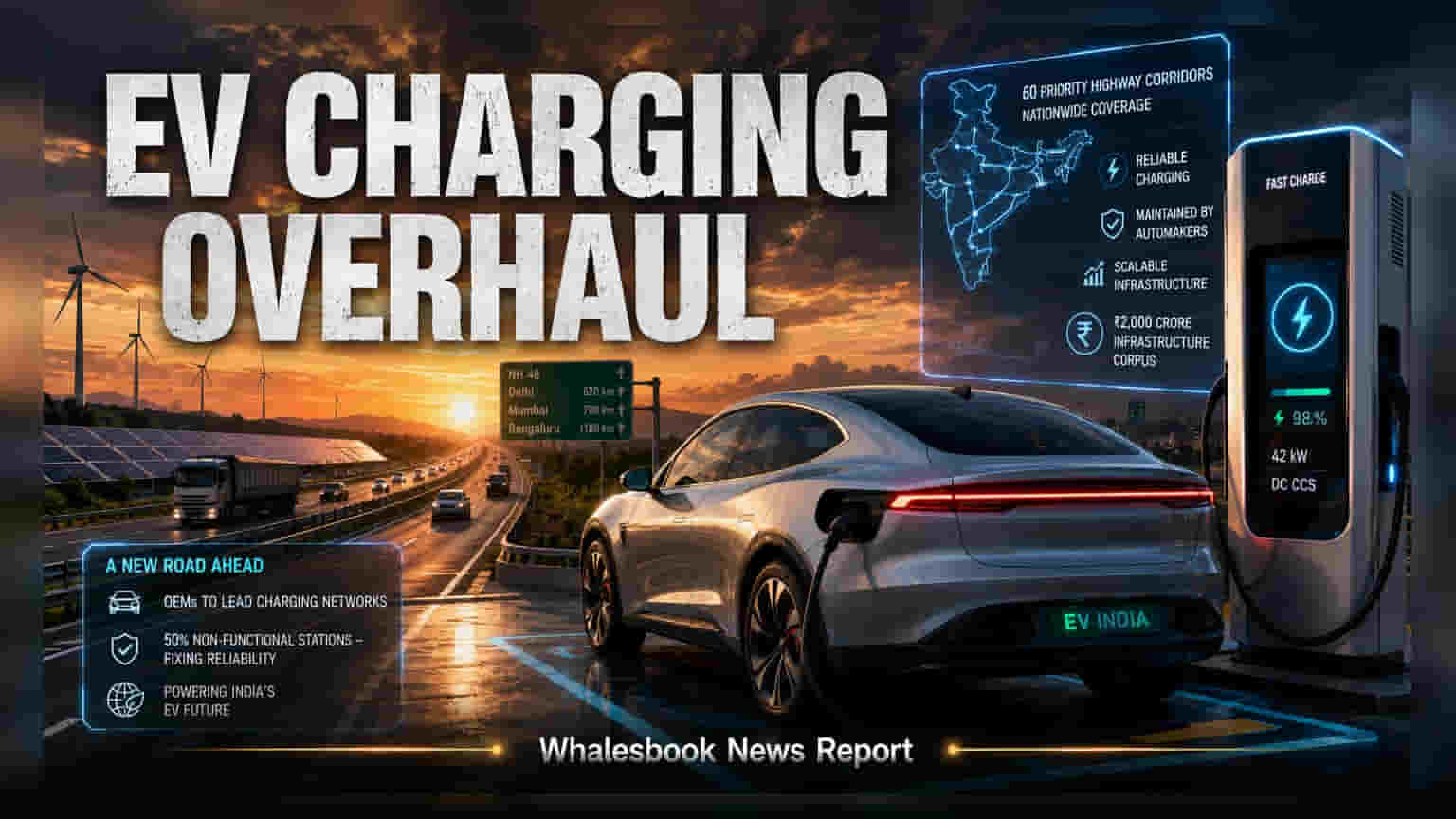
The Ministry of Heavy Industries has directed auto companies to take charge of building and maintaining EV charging stations along 60 major highway corridors. This move shifts the focus from direct vehicle subsidies toward industry-managed infrastructure to fix reliability issues. Investors may monitor how this affects company spending and long-term operational costs.
The Indian government has officially asked automobile manufacturers to take the lead in developing and maintaining electric vehicle charging infrastructure across the country. In a directive announced at the Society of Indian Automobile Manufacturers (SIAM) annual session on September 3, 2026, the Ministry of Heavy Industries proposed a new model where vehicle makers, or original equipment manufacturers (OEMs), directly manage charging networks along 60 designated priority highway corridors.
This shift in strategy comes as the government aims to solve persistent reliability issues in the existing network. Ministry officials noted that currently, about 50% of the mapped public charging stations often fail to function, which creates a major hurdle for long-distance electric travel. By placing the responsibility on automakers, the government expects to ensure that charging points are not only installed but also properly maintained and operational for travelers.
Moving From Subsidies To Infrastructure
The government is gradually moving away from offering direct purchase subsidies for electric vehicles as certain segments, such as electric three-wheelers, begin to reach a stable market presence. Instead, the focus is shifting toward structural support for the EV ecosystem. To facilitate this, the Ministry of Heavy Industries has set aside a Rs 2,000 crore corpus. This capital is intended to support companies that commit to deploying and keeping functional charging depots along the identified highway routes.
This move represents a significant change in how the industry approaches growth. Automakers will now need to balance their traditional focus on manufacturing and sales with the operational responsibility of managing a service network. While this could lead to higher money spent on expansion and maintenance, the ministry argues that charging infrastructure is a standalone, scalable business model that requires the technical expertise that only automakers can provide.
What This Means For Investors
For investors and shareholders, this policy transition introduces new factors to track. Historically, the automotive sector has relied on government support to boost sales. With the shift toward industry-led infrastructure, companies may face increased pressure on their profit margins due to the cost of installing and running these charging networks. The success of this model will depend on whether automakers can efficiently manage these assets and whether the new infrastructure actually drives higher electric vehicle adoption across the country.
Investors should monitor how individual automakers plan to fund these projects and whether they choose to partner with existing energy firms or build these networks in-house. The speed at which these 60 highway corridors reach full electrification will also be a key update to watch, as it will signal the industry's ability to execute large-scale infrastructure projects.