

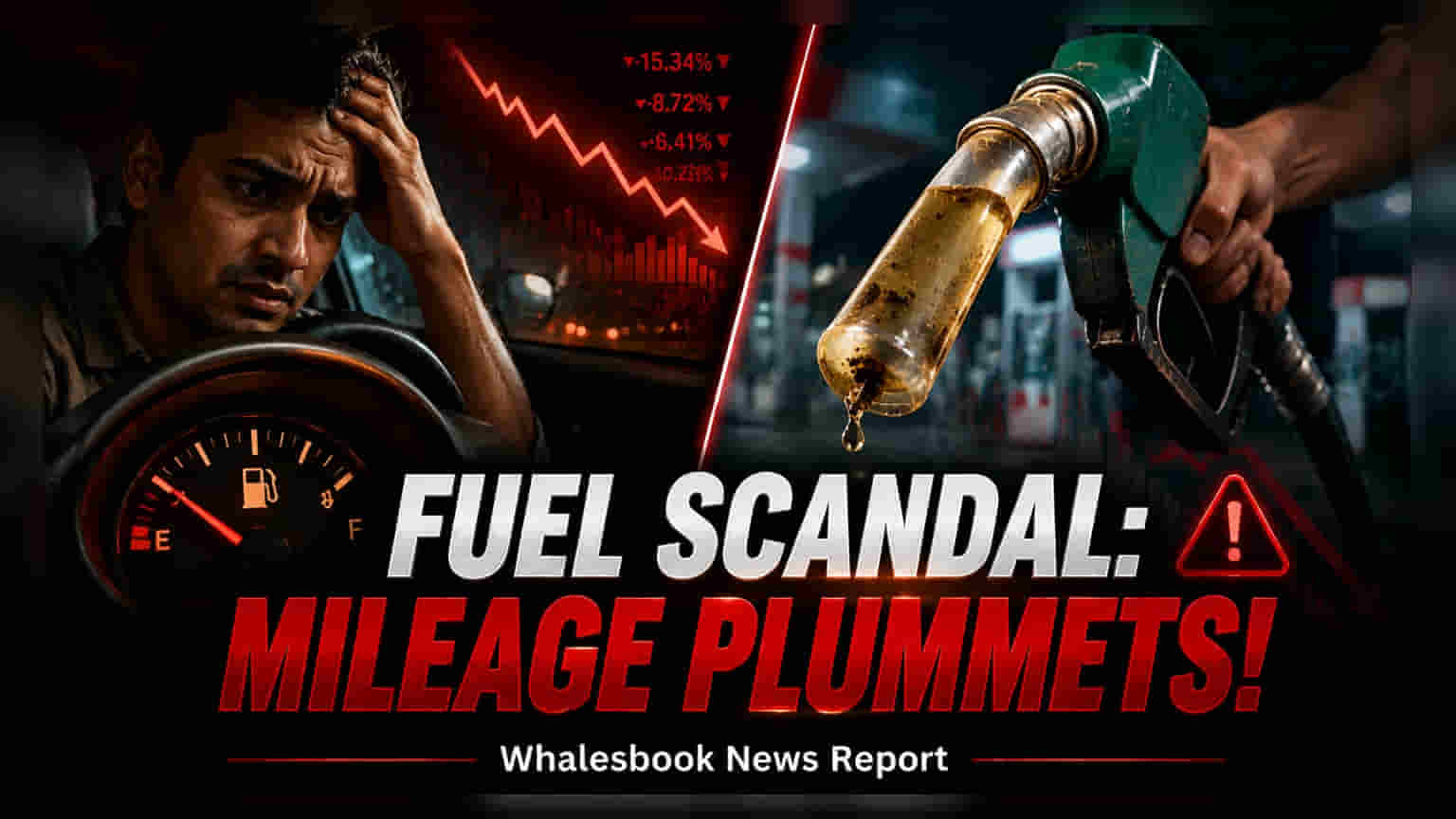
A recent survey of over 22,000 vehicle owners indicates that 59% of new petrol vehicle owners are seeing a mileage decline of more than 10%. These findings raise significant questions regarding fuel quality and potential adulteration in the supply chain, conflicting with lower official estimates of efficiency losses from E20 ethanol-blended petrol.
A new survey conducted by LocalCircles across 277 districts has brought attention to a widespread decline in fuel efficiency for petrol vehicles in India. The data shows that 59% of owners who purchased vehicles between 2023 and 2024 have experienced a mileage drop exceeding 10% since early 2025. This development is significant as it suggests that the real-world impact of the government's E20 ethanol-blending program may be higher than the officially projected figures.
Discrepancy in Efficiency Estimates
Official figures from the Automotive Research Association of India (ARAI) have previously estimated that the transition to E20 fuel would result in a modest efficiency loss of roughly 1% to 6%. However, the survey findings align more closely with independent tests that have suggested losses in the 8% to 12% range. The gap between these official projections and the experience of vehicle owners has sparked public concern about the quality of fuel currently being supplied at retail outlets.
Impact Across Vehicle Segments
The issue appears to extend beyond just the newest models. According to the survey, 66% of owners with vehicles manufactured before 2023 also reported mileage losses of more than 10%. This suggests that the problem may be tied to the fuel supply chain itself rather than engine technology or vehicle age. Automakers have previously indicated that impurities in the fuel supply could be a contributing factor to the performance issues reported by customers.
Economic Incentives and Fuel Integrity
A key point for investors and consumers is the economic incentive for potential over-blending. Because ethanol is often priced lower than petrol, there is a financial motive for non-compliant blending levels, which can lead to higher-than-expected fuel consumption for the end user. The survey has prompted calls for the Ministry of Petroleum and Natural Gas and various oil marketing companies to perform independent audits of fuel quality at retail locations. Investors may monitor whether this results in stricter regulatory oversight, increased quality control spending, or changes in how ethanol-blended fuel is marketed and verified at the pump. The primary concern for stakeholders is whether these persistent quality questions will lead to regulatory action or require further investment in fuel testing infrastructure to restore consumer confidence in the fuel supply chain.