 Whalesbook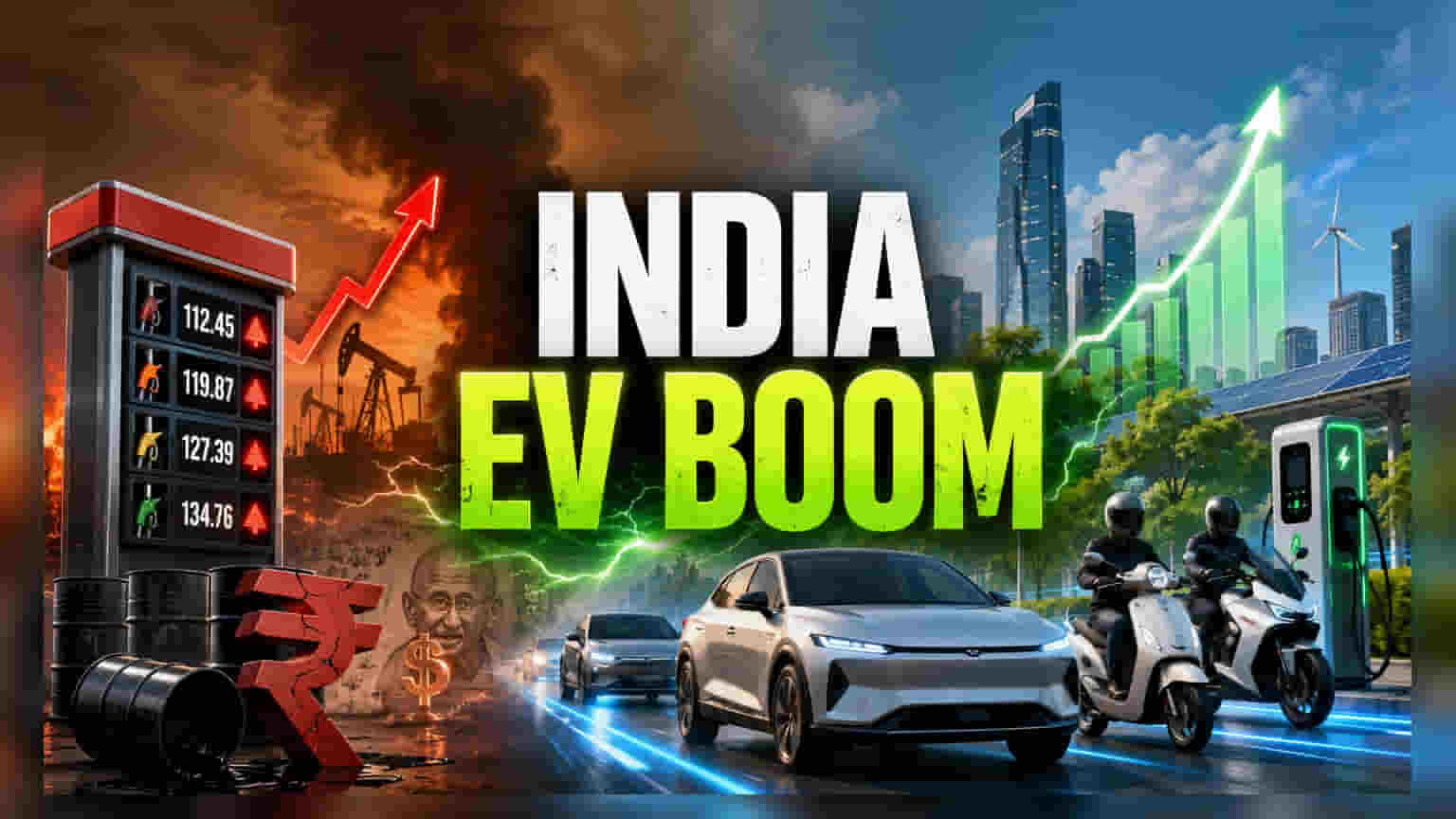


The Catalyst: Geopolitical Pressure and Consumer Shift
The Indian automotive sector is undergoing an accelerated structural transition, primarily dictated by the total cost of ownership rather than mere environmental sentiment. Escalating fuel prices, exacerbated by the recent U.S.–Iran conflict and subsequent regional instability in West Asia, have forced a reassessment of household and commercial transport budgets. With the rupee experiencing downward pressure against the dollar, the cost of importing crude oil has hit record levels, directly translating to painful pump prices for the Indian consumer. This macroeconomic reality has effectively acted as a catalyst for electric vehicle adoption, transforming EVs from a premium preference into a pragmatic, fuel-independent alternative.
Market Penetration and Competitive Dynamics
Data for May 2026 confirms this inflection point. Passenger vehicle EV penetration has climbed to 6.4%, marking a significant ascent from the 4% level recorded during the previous fiscal year. Even more pronounced is the two-wheeler segment, where penetration has surpassed 9% of total sales. Tata Motors continues to command the passenger EV space, leveraging a strong product pipeline that has seen bookings increase fivefold following the introduction of updated models. In the two-wheeler arena, a fierce three-way competition dominates the narrative, with TVS Motor, Bajaj Auto, and Ather Energy collectively capturing a dominant share of the market. TVS Motor remains the frontrunner in volume, while Ather Energy has demonstrated aggressive growth, with its sales volume doubling on a year-on-year basis.
The Forensic Bear Case: Structural Risks
While the adoption momentum is undeniable, the underlying supply chain remains vulnerable. India’s reliance on imported lithium-ion cells persists as a critical strategic dependency, leaving manufacturers exposed to global price volatility and geopolitical supply disruptions. Furthermore, the infrastructure gap is a persistent barrier; the density of public charging stations remains inadequate for long-distance transport, particularly in tier-2 and tier-3 markets. Financially, manufacturers face a challenging environment where input cost pressures—estimated at 300 to 400 basis points—are colliding with a need to maintain affordability. While OEMs have attempted to pass on these costs through modest 1–2% price hikes, the risk of margin compression remains acute. Additionally, as the industry moves beyond early-adopter subsidies, the dependence on future regulatory support—specifically the continuation of schemes like the PM E-DRIVE—poses a latent risk to profitability and demand stability.
Future Trajectory
Industry consensus suggests that the electrification trend is moving past the experimental phase and into a manufacturing-led expansion. With automakers increasing production capacity to meet sustained demand, the focus is shifting toward localizing battery production and integrating advanced connectivity and safety features, such as Level 2 ADAS. While short-term macroeconomic headwinds may moderate demand across the broader automotive sector, the EV segment is increasingly insulated by its lower operational cost advantage, positioning it as the primary growth engine for India’s automotive industry through the remainder of the decade.