 Whalesbook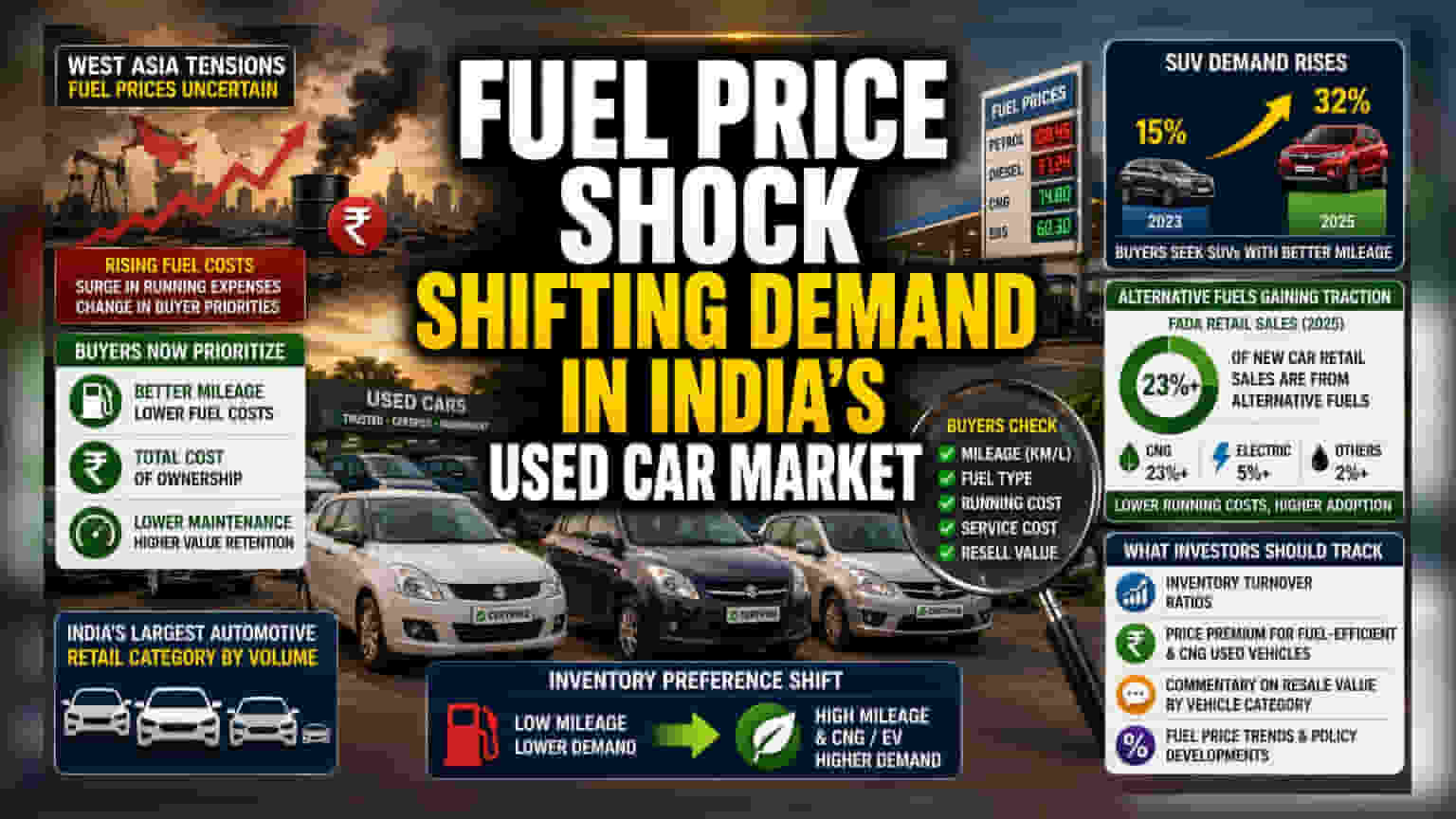


Rising fuel prices due to geopolitical tensions in West Asia are forcing Indian used-car buyers to prioritize fuel efficiency and running costs over sticker prices. This shift is changing inventory dynamics for major platforms like Cars24 and Spinny, as consumers move toward CNG and economical models to lower their long-term ownership expenses.
What Happened
Global geopolitical tensions in West Asia are causing uncertainty in fuel prices, which is now directly impacting consumer behavior in the Indian used-car market. Buyers are increasingly shifting their focus from the initial purchase price to the long-term cost of running the vehicle. Instead of only asking about the price tag, customers are now prioritizing mileage and lower operational expenses. This change in buying habits is causing a subtle but important shift in demand across the pre-owned vehicle segment, which remains the largest automotive retail category in India by volume.
Why This Matters For Investors
For investors monitoring the automotive retail sector, this shift highlights the importance of 'total cost of ownership' as a key decision factor. Companies like Cars24 and Spinny, which operate large-scale digital platforms for used cars, are observing that inventory preference is moving toward more efficient models. If fuel prices remain unstable, vehicles that are perceived as fuel-thirsty may face weaker demand or pressure on their resale values. Conversely, models known for high fuel efficiency or those with CNG options could command better demand and liquidity in the secondary market.
The Shift in Market Demand
The appetite for specific car types in the used market has evolved. While demand for SUVs has grown significantly, rising from 15% in 2023 to 32% in 2025, the internal competition within these categories is changing. Buyers are no longer just looking for big cars; they are actively seeking SUVs and hatchbacks that promise better mileage. This mirrors trends seen in the new passenger vehicle market, where data from the Federation of Automobile Dealers Associations (FADA) shows that alternative fuels like CNG and electricity now account for a significant portion of retail sales. CNG vehicles alone represent over 23% of new car retail sales, indicating a strong national preference for lower-cost running alternatives.
How Investors May Read This
Investors should understand that while the used car market has not seen a massive, sudden collapse in demand for conventional petrol or diesel vehicles, the preference ladder is shifting. The organized used-car platforms are adapting their inventory to match this, likely pushing cars with better fuel efficiency to the front of their catalogues. A key indicator for the health of this sector will be how quickly these companies can turnover their inventory of less fuel-efficient vehicles versus more economical ones. If high fuel costs persist, the price gap between fuel-efficient used cars and high-consumption models may widen, affecting the margins for dealers who hold the wrong mix of inventory.
What Could Go Wrong
The primary risk here is consumer sensitivity to fuel price volatility. If global supply stabilizes and fuel prices retreat, the current urgency to buy fuel-efficient used cars might cool down. Additionally, the used car market is still highly fragmented, with unorganized players dominating a large share of the business. These small, local dealers may not adapt their inventory strategy as quickly as large, tech-enabled platforms, potentially leading to a mismatch in supply and demand that creates price volatility. Furthermore, if the economic environment tightens—such as through higher interest rates on vehicle loans—it could suppress overall demand, making the focus on running costs even more critical for survival in the industry.
What Investors Should Track
Moving forward, market participants should track the inventory turnover ratios for organized used-car platforms. Specifically, monitoring whether there is a growing price premium for fuel-efficient and CNG-equipped used vehicles compared to petrol-only variants will be important. Investors may also want to observe the commentary from industry bodies regarding the resale value of different vehicle categories. Any sustained trend where fuel-efficient models maintain their value significantly better than others could indicate a long-term structural change in how Indians value their automobiles.