 Whalesbook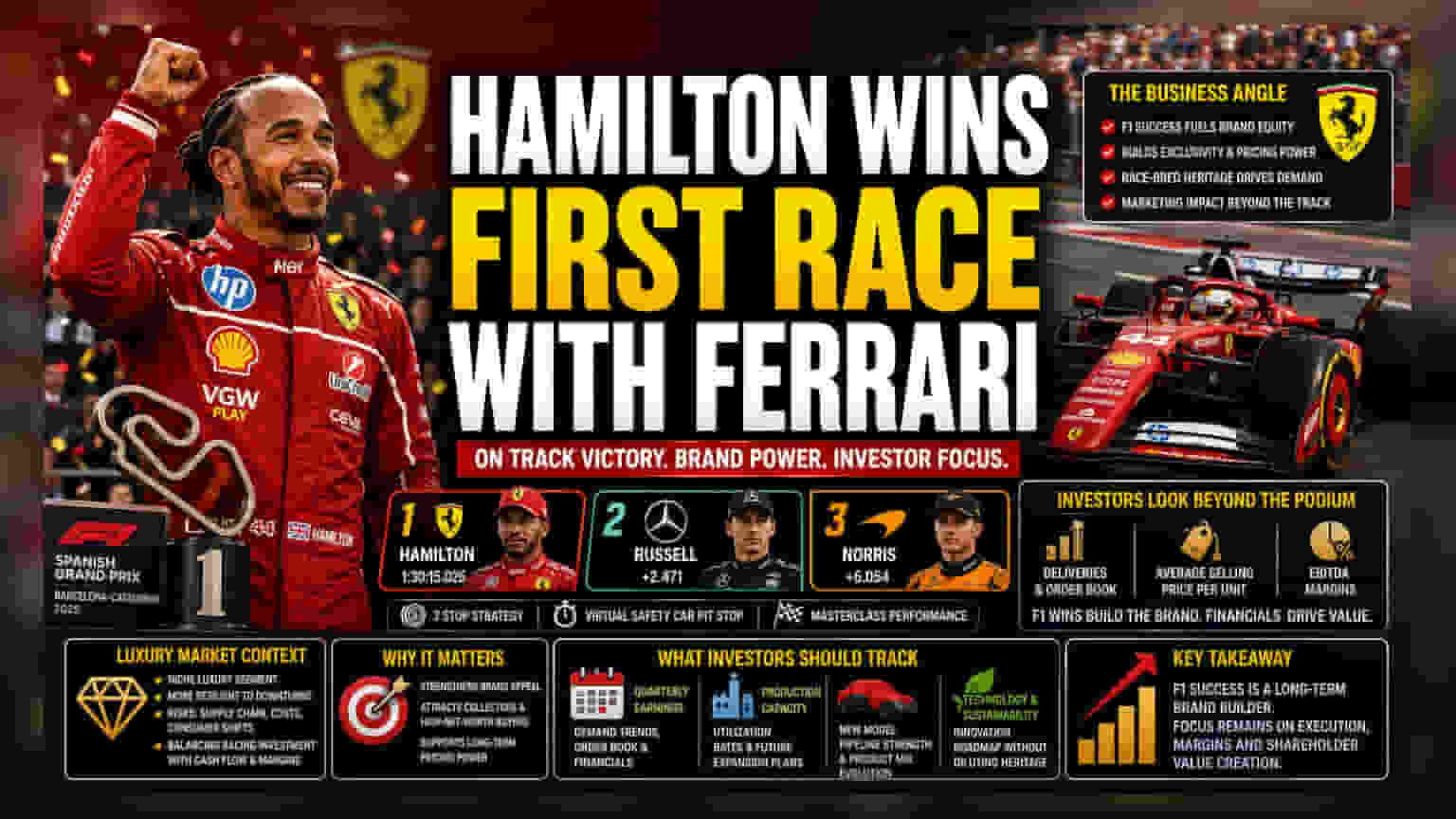


Lewis Hamilton claimed his first victory with Ferrari at the Barcelona Grand Prix, a major symbolic win for the Italian luxury carmaker. While track success helps brand visibility, investors in Ferrari (RACE) typically focus on car delivery numbers, profit margins, and luxury demand as the primary drivers of financial value.
What Happened
Lewis Hamilton secured his first Formula One victory with Scuderia Ferrari at the Barcelona-Catalunya Grand Prix. This win marks a significant milestone for the seven-time world champion and the Italian manufacturer, representing his first top-podium finish since July 2024. Hamilton executed a competitive race strategy, including a three-stop tire plan and a critical pit stop under a Virtual Safety Car, to finish ahead of George Russell and Lando Norris.
The Business Angle
For Ferrari N.V. (RACE), which is publicly traded, the performance of its racing team often serves as a key pillar for its brand image. Ferrari’s business model is unique among global automakers. Unlike mass-market manufacturers, it operates as a luxury goods company. The brand’s identity is deeply rooted in its racing history, which supports its ability to command high prices and maintain exclusivity for its sports cars.
Investors often view the team's track success as a marketing tool that strengthens the brand's allure. When the racing division performs well, it reinforces the "race-bred" reputation that attracts collectors and high-net-worth buyers to the brand’s luxury vehicle lineup.
How Investors View F1 Success
While race wins create positive news, financial analysts typically look past podium finishes to understand the company's core business performance. For shareholders, the direct impact of an F1 victory on the company’s bottom line is not immediate. The real financial strength of Ferrari comes from its ability to manage production, control costs, and move toward higher-value products to boost profit margins.
Investors watch the brand’s ability to maintain high demand for its cars, regardless of racing outcomes. The company’s financial health is usually measured by metrics such as the number of vehicles delivered, the average selling price per unit, and the EBITDA margin, rather than just the performance of the racing team on a Sunday afternoon.
The Luxury Market Context
Ferrari operates in a niche luxury segment that is often more resilient to broader economic downturns compared to the mass-market automotive sector. However, the company is still subject to risks such as supply chain disruptions, rising raw material costs, and shifts in consumer preference within the luxury market.
Success on the track helps keep the brand relevant and helps it defend its market position. However, investors must also consider that high-performance racing requires significant capital spending. Balancing the investment needed for racing excellence with the need to maintain strong cash flow and profit margins is a constant task for the management team.
What Investors Should Track Next
Investors may monitor the company’s quarterly earnings reports to see if brand momentum translates into sustained vehicle demand and order book strength. Other key monitorables include any updates on production capacity, the launch of new luxury car models, and the company’s strategy for transitioning toward new technologies without compromising its core luxury appeal. The impact of F1 success is best understood as a long-term brand builder rather than an immediate catalyst for stock price movement.