

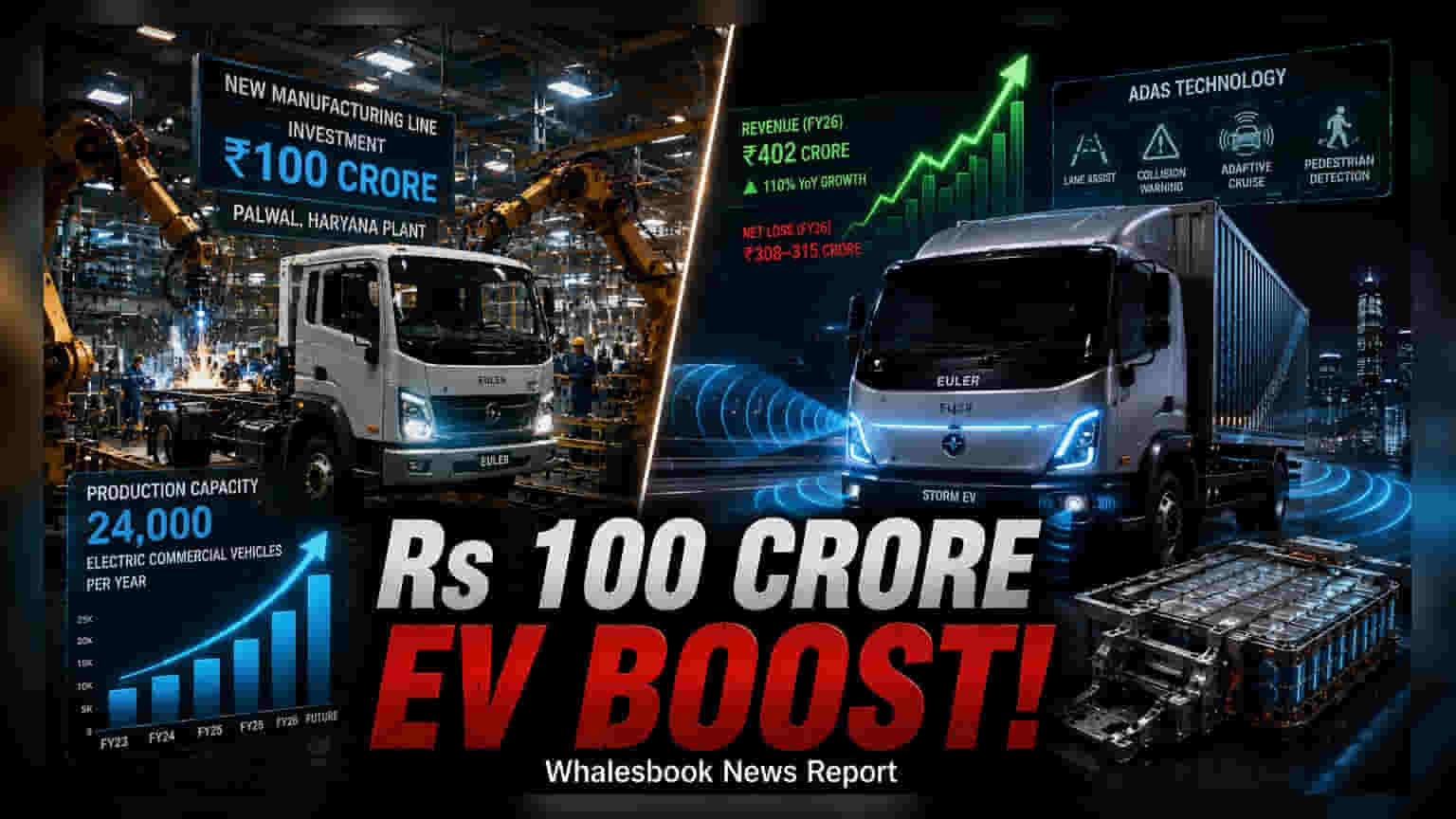
Euler Motors has added a new ₹100 crore manufacturing line at its Palwal facility to produce 24,000 electric trucks annually. The company, backed by Hero MotoCorp, recorded ₹402 crore in revenue for FY26 but remains in a loss-making phase as it scales. As a private entity, Euler Motors is not listed on the stock market.
Euler Motors is expanding its electric vehicle production capacity with a ₹100 crore investment in a new manufacturing line at its Palwal, Haryana plant. This expansion brings the company’s total annual capacity to 24,000 electric commercial vehicles. The new line will support the production of the company’s electric truck models, including the Turbo EV 1000 and the Storm EV, which features advanced driver-assistance systems.
Private Company Status and Financial Context
For investors monitoring the electric commercial vehicle space, it is important to note that Euler Motors is a private, unlisted company. This means it is not available for trading on the National Stock Exchange (NSE) or the Bombay Stock Exchange (BSE). The company’s financial data for FY26 shows a revenue of ₹402 crore, representing a significant 110% year-on-year increase. However, the company reported a net loss of approximately ₹308–315 crore. This level of loss is common for high-growth EV startups that are currently prioritizing aggressive manufacturing expansion and research and development over immediate profitability.
Strategic Backing and Operational Focus
The expansion is supported by strategic investor Hero MotoCorp, which continues to back the company's growth. Euler Motors is targeting the rising demand for electric cargo vehicles, aiming to replace traditional internal combustion engine trucks. By establishing in-house production capabilities for key components like battery packs and chassis, the company intends to maintain greater control over product quality and supply chain reliability.
Risks and Monitorables
While the increase in production capacity is a milestone for the company, it faces typical startup risks. These include high cash burn, a reliance on continuous external funding to sustain operations, and vulnerability to price volatility in raw materials like lithium, copper, and aluminum. The competitive landscape in the electric commercial vehicle segment also remains intense. Investors tracking the broader EV sector should monitor how quickly the company can utilize its new capacity and whether it can effectively manage the transition toward operational profitability in the coming quarters.