 Whalesbook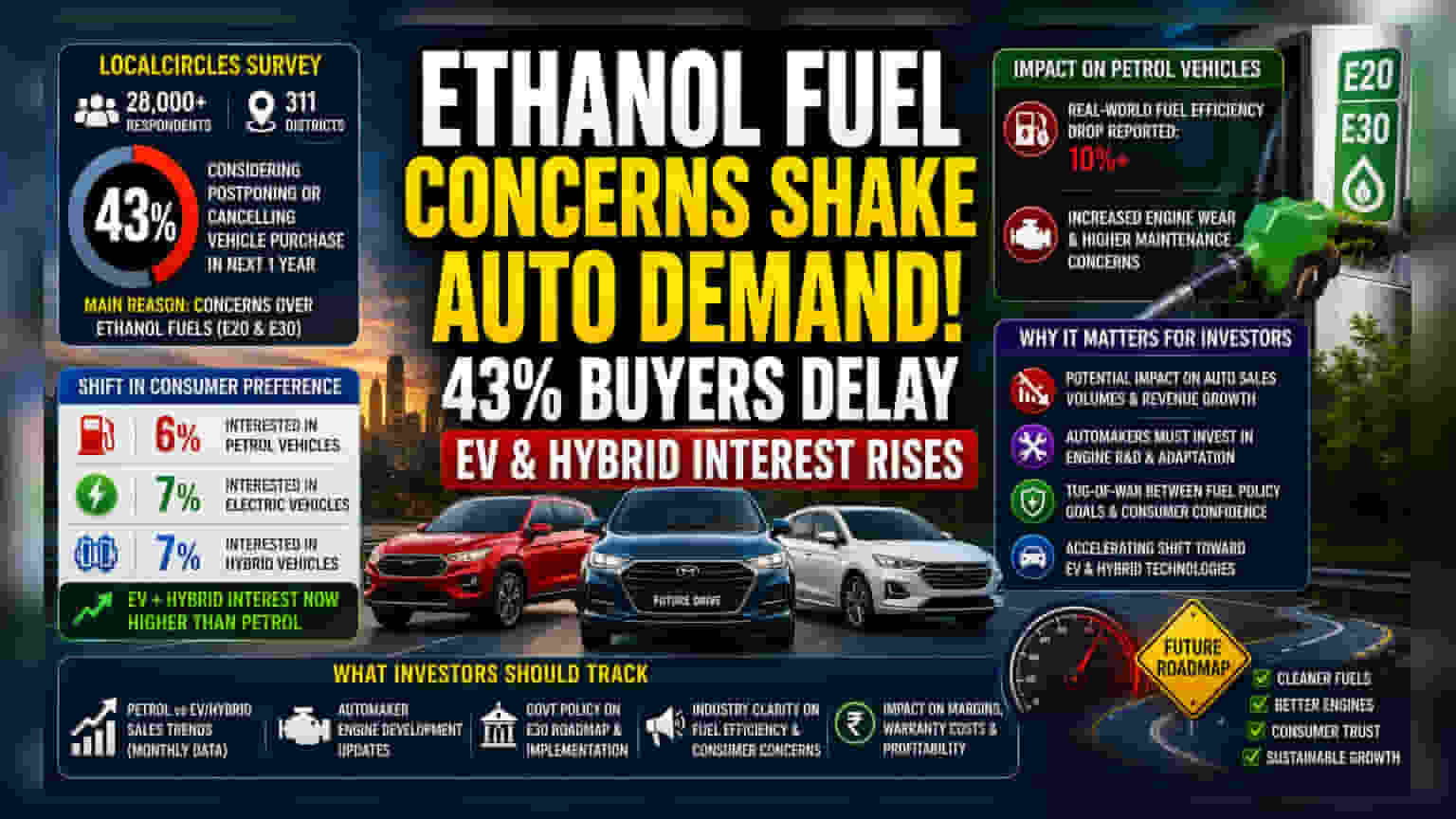


A recent survey indicates that 43% of prospective car buyers in India may delay purchases due to worries about E20 and E30 fuel compatibility. This uncertainty is causing a shift in consumer preference toward electric and hybrid vehicles.
What Happened
A recent survey conducted by LocalCircles has highlighted a significant change in consumer sentiment within the Indian automobile market. The data, gathered from over 28,000 potential vehicle buyers across 311 districts, indicates that 43% of respondents are considering postponing or cancelling their vehicle purchases within the next year. This hesitation is primarily driven by concerns regarding the use of ethanol-blended fuels, specifically E20 and the proposed E30 standards.
Why This Matters For Investors
For investors in the automotive sector, this finding is important because it links regulatory fuel policies directly to consumer demand. Automobile manufacturers in India have been working to update engines to handle higher ethanol blends in line with government mandates. If a large segment of the buying public chooses to delay purchases because they are worried about engine compatibility, maintenance costs, or lower fuel efficiency, it could affect the sales volume and revenue growth of major automakers.
The Shift Toward Alternatives
The survey results show a clear trend in consumer preference. Only 6% of the surveyed individuals expressed an intent to purchase a new petrol vehicle. In contrast, 7% of respondents showed interest in electric vehicles (EVs), and another 7% were interested in hybrid models. While these percentages are relatively close, the combined demand for EVs and hybrids is now higher than the interest in traditional petrol vehicles. This reflects a growing market appetite for alternative powertrains as buyers seek to avoid the potential long-term issues they associate with high-ethanol petrol.
The Impact On Efficiency And Maintenance
The root of consumer apprehension lies in the reported real-world performance of petrol vehicles. Many car owners who have already shifted to E20 fuel have reported a drop in fuel efficiency of more than 10%. Additionally, a portion of owners noted increased wear and tear on engine components and higher maintenance needs. For investors, this creates a situation where automakers must not only focus on sales and marketing but also invest heavily in research and development to ensure their vehicles remain durable and efficient when using these new fuel blends. If the perception of poor performance persists, manufacturers may face higher warranty claims or damage to their brand reputation.
How Investors May Read This
The tension between government-mandated ethanol blending targets and consumer acceptance is a key factor to watch. While the government aims to reduce oil imports through ethanol blending, the success of this policy depends on how well car engines can adapt without sacrificing user experience. Investors should keep a close eye on how companies manage this transition. If manufacturers can successfully educate the public or improve engine technology to maintain fuel efficiency, the current apprehension may be temporary. However, if the negative sentiment leads to a sustained slowdown in petrol vehicle sales, it could force companies to accelerate their investments in EV and hybrid technology sooner than planned.
What Investors Should Track
Moving forward, the primary monitorable is the sales volume data for petrol versus hybrid and electric models. Investors should watch for monthly sales reports to see if the decline in petrol vehicle interest is a one-time sentiment shift or a long-term trend. It will also be important to monitor management commentary from major automakers regarding their engine development strategies and any updates on government policy regarding the E30 fuel roadmap. Any clarity from the government or industry bodies on how they plan to address fuel efficiency concerns will be vital for maintaining consumer confidence in the automotive sector.