

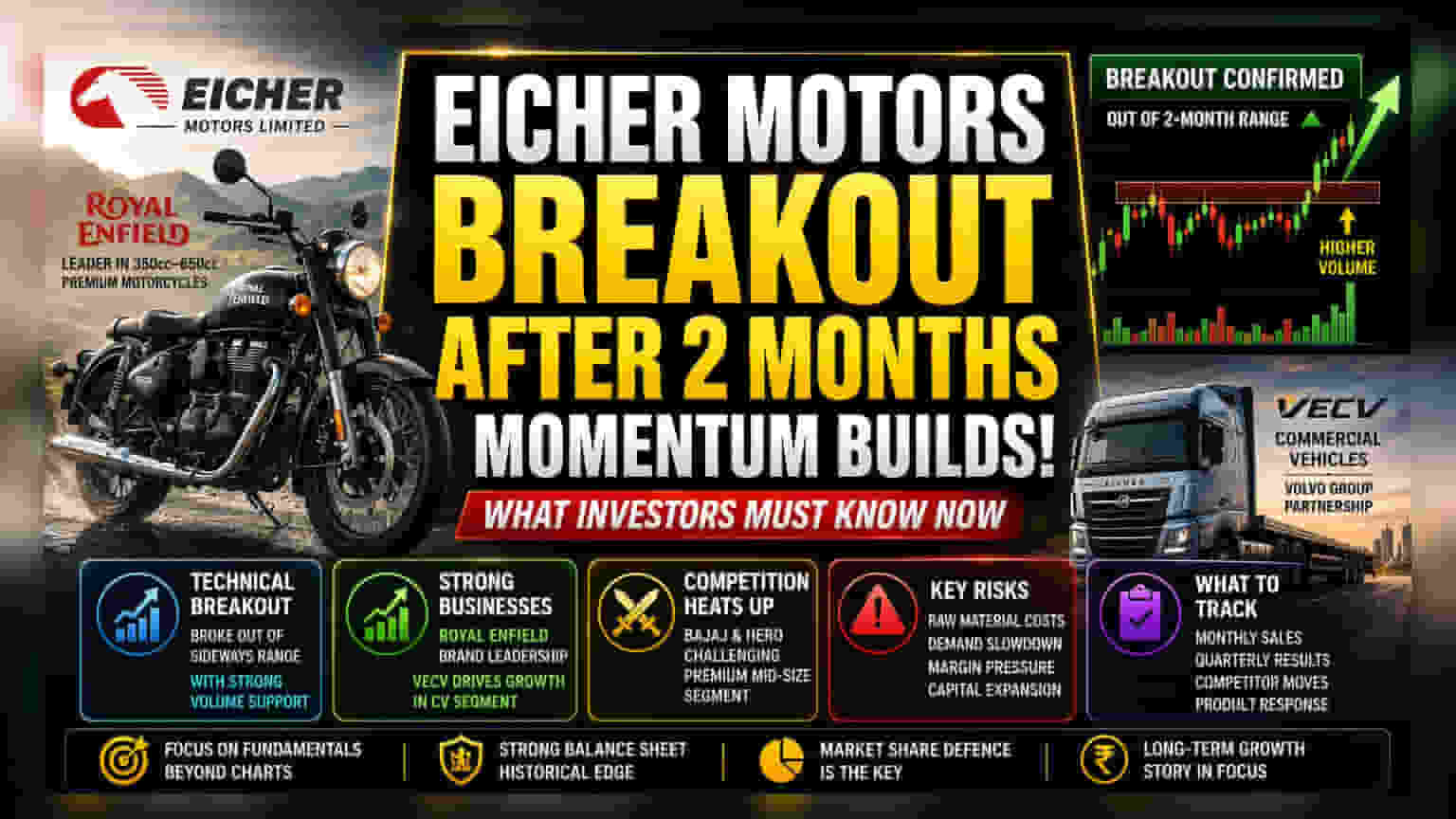
Eicher Motors has crossed a price level where the stock had been stuck for two months, signaling renewed interest from traders. While this price movement has caught market attention, investors are also watching how the company manages rising competition in the premium motorcycle segment. The stock’s future performance will depend on its ability to maintain market share against newer entrants.
What Happened
Eicher Motors Ltd. has seen its stock price break out of a sideways trend that lasted for nearly two months. This movement, supported by higher trading volumes, indicates that the stock has moved past a price level where it previously struggled to rise. In market terms, this often suggests that buyers are becoming more confident, and the stock is gaining momentum on the daily charts.
Why Investors Are Watching
For traders, this breakout is a signal that the stock may be shifting from a period of stagnation into a more active phase. Technical analysts often look for such patterns to identify potential trends. However, for long-term investors, the price movement is only one part of the story. The underlying business performance, brand strength, and the competitive environment remain the most important factors for the company’s valuation.
The Business Behind The Stock
Eicher Motors is known for two primary businesses. First, it owns Royal Enfield, a dominant brand in the mid-sized motorcycle market (350cc to 650cc) in India. This brand has a loyal customer base, which historically helped the company maintain strong profit margins. Second, the company operates VE Commercial Vehicles (VECV), a joint venture with Volvo that manufactures trucks and buses. This diversified portfolio gives the company exposure to both consumer demand and industrial economic growth.
The Competition Challenge
While the stock is seeing technical momentum, the motorcycle industry is facing significant competitive pressure. Royal Enfield no longer has the mid-sized premium segment to itself. Major competitors like Bajaj Auto and Hero MotoCorp have launched new bikes aimed directly at Eicher’s territory. This competition can impact Royal Enfield's market share and force the company to spend more on marketing or adjust pricing strategies to stay relevant. Investors often watch whether these competitive forces pressure the company's operating profit margins.
Financial And Operational Risks
Beyond competition, investors should consider raw material costs and demand patterns. As an automobile manufacturer, Eicher Motors is sensitive to the prices of steel, aluminum, and rubber. Additionally, the premium bike segment is sensitive to consumer sentiment. If the broader economy slows down or if rural and urban spending weakens, it could impact the sales volume of premium motorcycles. Any significant increase in debt or spending on new manufacturing facilities could also impact the company's cash flow, although Eicher has historically maintained a strong balance sheet.
What Investors Should Track Next
Investors tracking the stock should look beyond the daily price charts. Key monitorables include the company's monthly sales reports, which indicate how well Royal Enfield is defending its market share. Additionally, quarterly results will be important to monitor for signs of margin pressure or efficiency improvements. Watching how the company responds to new product launches from peers will also provide clarity on its long-term competitive standing.