

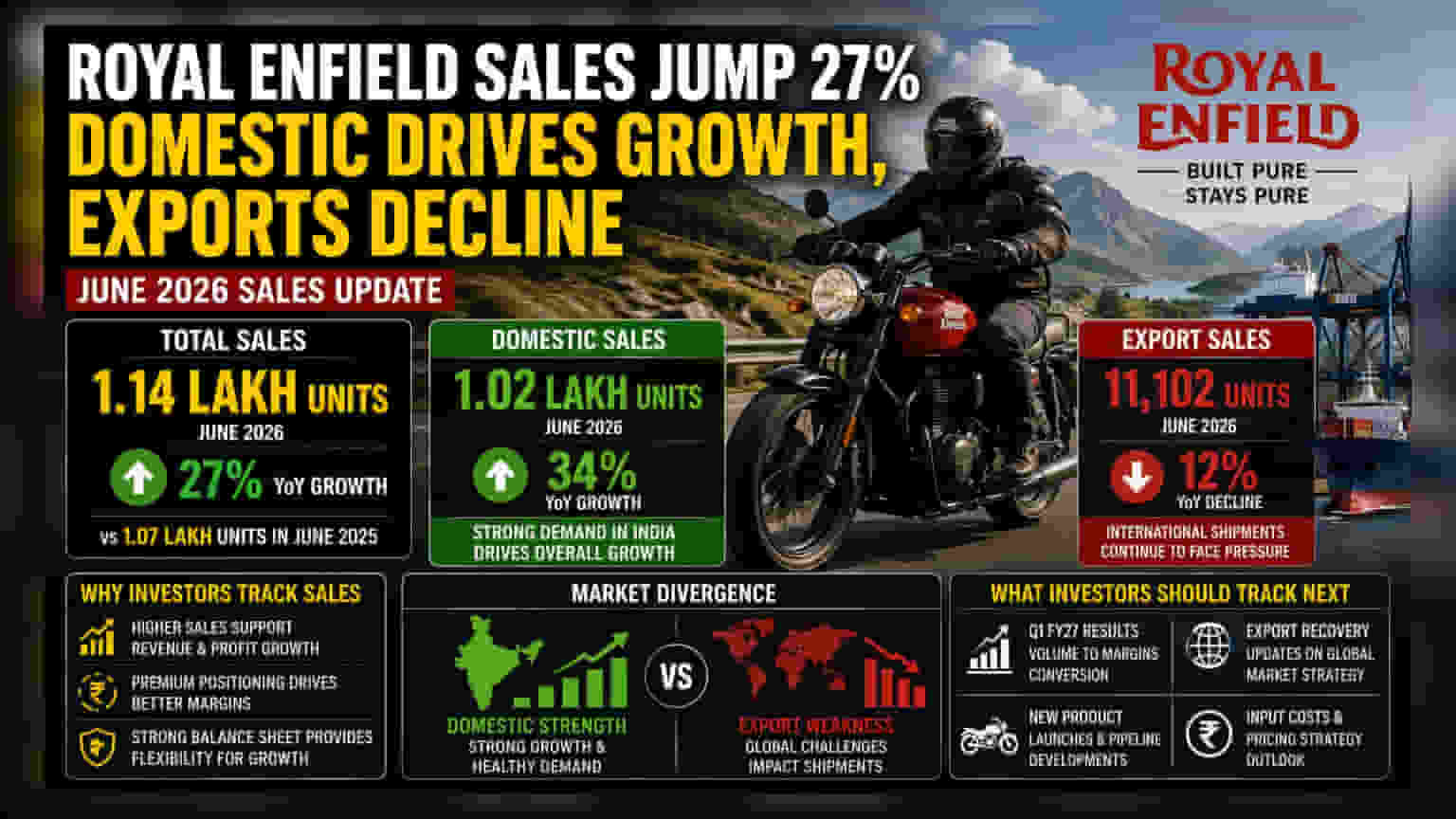
Royal Enfield sold 1.14 lakh motorcycles in June 2026, supported by a strong 34% jump in domestic demand. While home sales remain robust, exports fell by 12% year-on-year, highlighting a split in the company's performance across different markets.
What Happened
Royal Enfield, the premium motorcycle division of Eicher Motors, reported a 27% increase in total sales for June 2026. The company sold a total of 1.14 lakh units during the month, compared to 1.07 lakh units in the same month last year. The data reveals a clear split in performance, with the domestic market showing strong growth while international shipments continued to struggle.
The Domestic And Export Divergence
The domestic market remains the primary driver of growth for the company. Sales within India surged by 34% to reach 1.02 lakh units, reflecting a healthy demand for Royal Enfield’s premium motorcycle lineup. This segment is crucial for the company, as it contributes significantly to overall revenue and profit margins.
In contrast, the export business is facing pressure. International sales declined by 12% year-on-year, with 11,102 units shipped abroad. This ongoing weakness in exports suggests that global demand or specific geographic challenges are hindering the company's international expansion efforts. For investors, the contrast between the strong domestic appetite and the contracting export numbers is a key area to watch.
Why Investors Track Sales Data
Monthly sales numbers are a leading indicator of a company’s revenue health. For Eicher Motors, high sales volume often supports strong operational efficiency and better profit margins, as the company operates in the premium segment where brand value helps maintain pricing power. However, investors often look beyond just the number of units sold to understand how different product lines and markets contribute to the bottom line. With exports slowing, the company relies heavily on the domestic market to maintain its momentum.
The Business And Financial Context
Eicher Motors is generally known for a strong balance sheet, typically maintaining low debt and significant cash reserves. This financial stability provides the company with the flexibility to invest in new product launches and manage costs during periods of weaker demand. However, the company operates in a competitive premium motorcycle segment, facing rivalry from both domestic manufacturers and international brands entering the Indian market. The ability to defend market share in India while navigating global export headwinds is essential for long-term growth.
What Investors Should Track Next
Investors may monitor the company’s quarterly results to see if the domestic sales volume is translating into higher profit margins. The impact of the export decline on overall profitability, if any, will also be a key focus. Additionally, watch for any commentary on new product launches or updates regarding expansion plans in international markets, as these are often used by the company to revive export demand. Management’s view on input costs and pricing strategies will also be important for understanding the sustainability of current profit margins.