

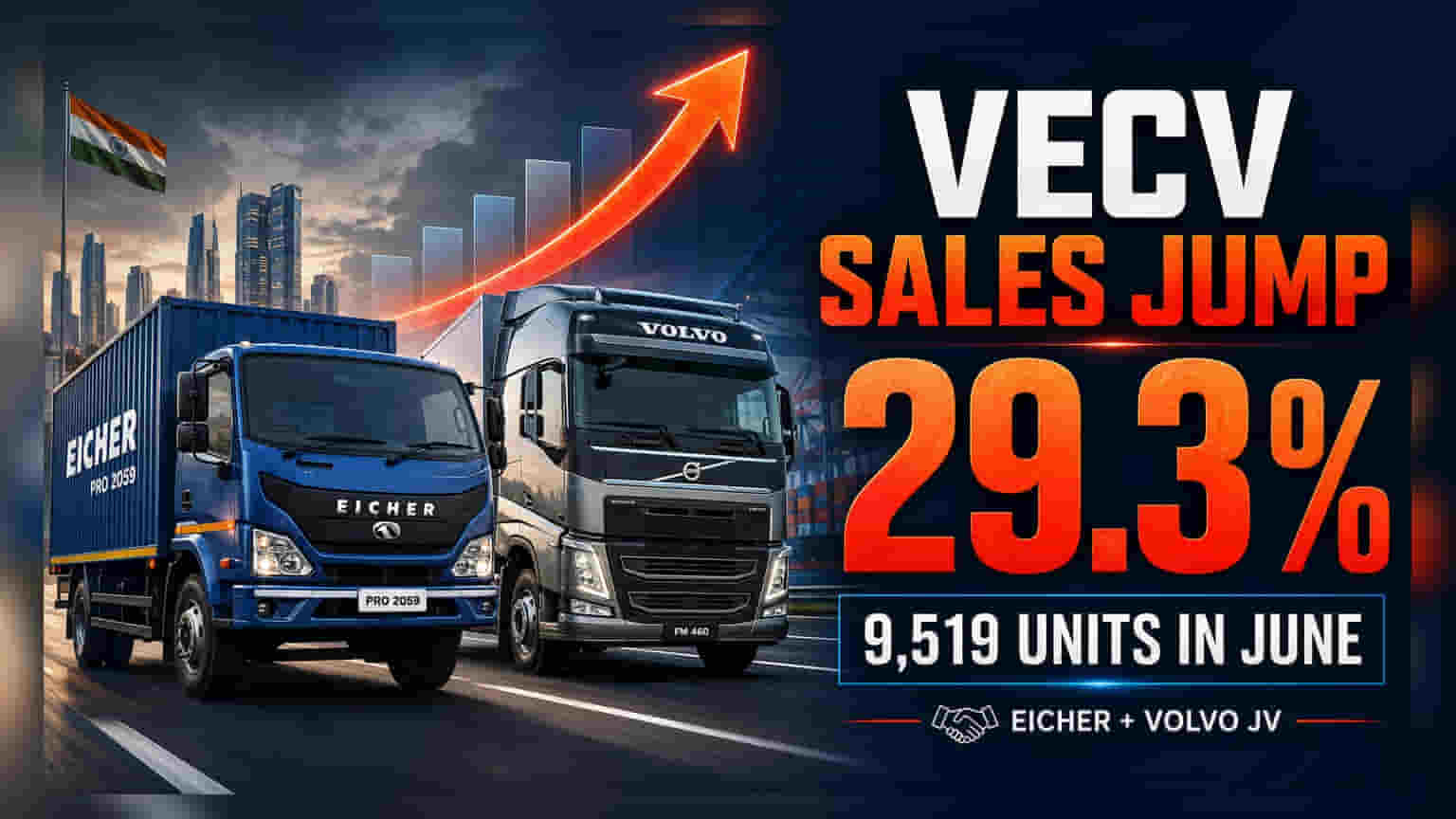
VE Commercial Vehicles (VECV), a joint venture between Eicher Motors and Volvo Group, reported a 29.3% increase in total sales for June 2026, reaching 9,519 units. Strong demand across both domestic and export markets drove this growth. Commercial vehicle sales are often closely watched by investors as a leading indicator of infrastructure activity and freight demand in the Indian economy.
What Happened
VE Commercial Vehicles (VECV), the joint venture between Eicher Motors and Sweden’s Volvo Group, reported a strong sales performance for June 2026. The company sold 9,519 units, marking a 29.3% increase compared to the 7,363 units sold in June 2025. This growth highlights a significant pickup in demand for the company’s range of trucks and buses during the month.
The Sales Breakdown
The growth was primarily driven by the Eicher-branded vehicle segment, which accounted for 9,269 of the total units sold. Volvo-branded vehicles contributed 250 units to the overall figure.
In the domestic market, Eicher-branded trucks and buses saw sales rise by 27.9%, reaching 8,595 units in June 2026 compared to 6,722 units in June 2025. Export performance was even more notable in percentage terms, with Eicher-branded exports climbing by 41.6% to 674 units from 476 units in the same period last year. This dual growth in domestic and international demand indicates a broad-based improvement in the company's business.
Why Commercial Vehicle Sales Matter
For investors, commercial vehicle (CV) sales are widely considered a barometer for the Indian economy. When companies, logistics operators, and construction firms buy more trucks, it often signals an increase in industrial production, infrastructure development, and freight movement. High CV sales figures can suggest that fleet operators are expanding or replacing their vehicles, which is generally a sign of confidence in economic activity.
Factors Influencing the Sector
While the sales data is positive, investors typically look at several factors that impact the commercial vehicle cycle. Infrastructure spending by the government and private sector is a primary driver of heavy truck demand. Additionally, freight rates and the availability of financing for fleet operators play a critical role in purchasing decisions.
Like many automobile manufacturers, VECV operates in a cyclical industry. Demand can fluctuate based on broader economic growth, interest rates, and the cost of raw materials like steel and fuel. Investors often keep an eye on these macroeconomic indicators to gauge whether the current growth trend is sustainable.
What Investors Should Track
Moving forward, the primary monitorables for investors include the consistency of domestic demand and the company’s ability to sustain export growth. Regular updates on capacity utilisation, any shifts in profit margins due to raw material costs, and overall sector-wide volume trends remain essential for understanding the company’s financial health. Additionally, management commentary regarding order books and future growth expectations in upcoming quarterly results will be the next key data points for the market.