

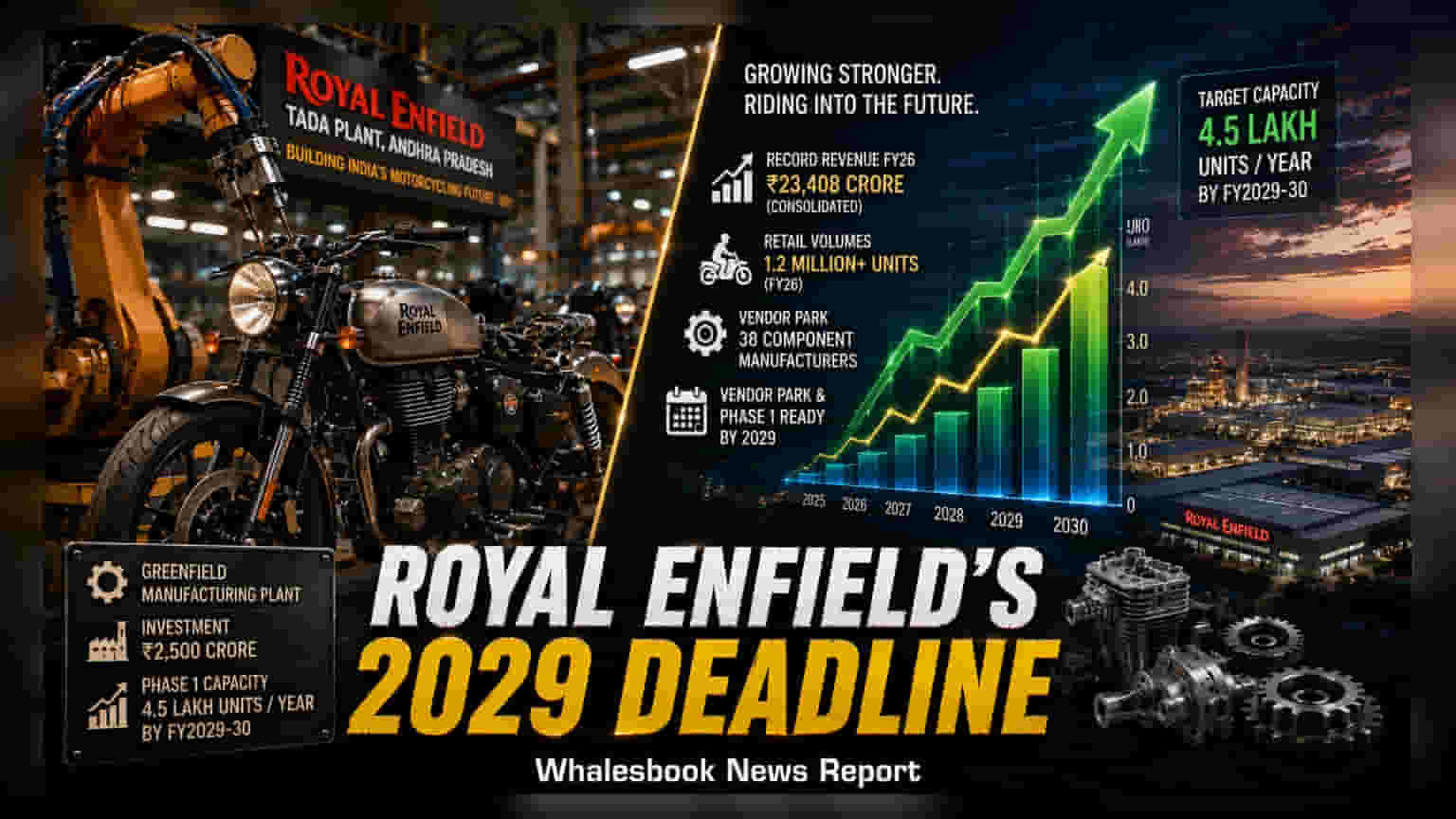
Royal Enfield is investing ₹2,500 crore to build a new manufacturing facility in Andhra Pradesh, marking its first plant outside Tamil Nadu. The project targets an added capacity of 4.5 lakh units by FY 2029-30. Investors will be watching how the company manages this capital spending while balancing operational risks and market demand for premium motorcycles.
Royal Enfield, a division of Eicher Motors, is establishing a new greenfield manufacturing facility in Tada, Tirupati district, Andhra Pradesh. This expansion is a significant step for the company, as it is the first time the motorcycle maker is setting up a plant outside its traditional manufacturing base in Tamil Nadu. The total project investment is planned at ₹2,500 crore, with ₹1,225 crore already approved for the first phase.
The project is designed to be completed in phases to align with demand and operational readiness. The initial phase aims to add 4.5 lakh units to the company's annual production capacity by the 2029-30 financial year. Beyond just the main factory, the project includes a dedicated vendor park, which is expected to be ready by 2029. This focus on building a local supply chain with approximately 38 component manufacturers is aimed at creating a robust ecosystem similar to the one the company has nurtured in its existing locations.
Eicher Motors has seen strong growth recently, with the company reporting record consolidated revenue of ₹23,408 crore for the 2026 financial year, driven by retail volumes exceeding 1.2 million units. This expansion is part of the company's long-term strategy to ensure it has enough capacity to meet future demand in the premium mid-sized motorcycle segment. By building this new hub, the company is attempting to diversify its geographic presence and reduce dependence on a single manufacturing cluster.
While the expansion signals confidence in long-term growth, it also comes with inherent risks that investors often monitor. Large capital spending projects are subject to execution delays and cost increases. Additionally, the automotive sector faces ongoing pressure from commodity price inflation, which can impact profit margins. The company will need to ensure that demand for its motorcycles remains strong enough to justify the new capacity, as any slowdown in the premium segment could lead to lower utilization of the new plant.
Investors will likely track the progress of the vendor park and the construction milestones leading up to the 2029 target. The success of this project will depend on how effectively the company can replicate its supply chain efficiency in a new geography while managing the capital investment without putting significant stress on its balance sheet or cash flow.