

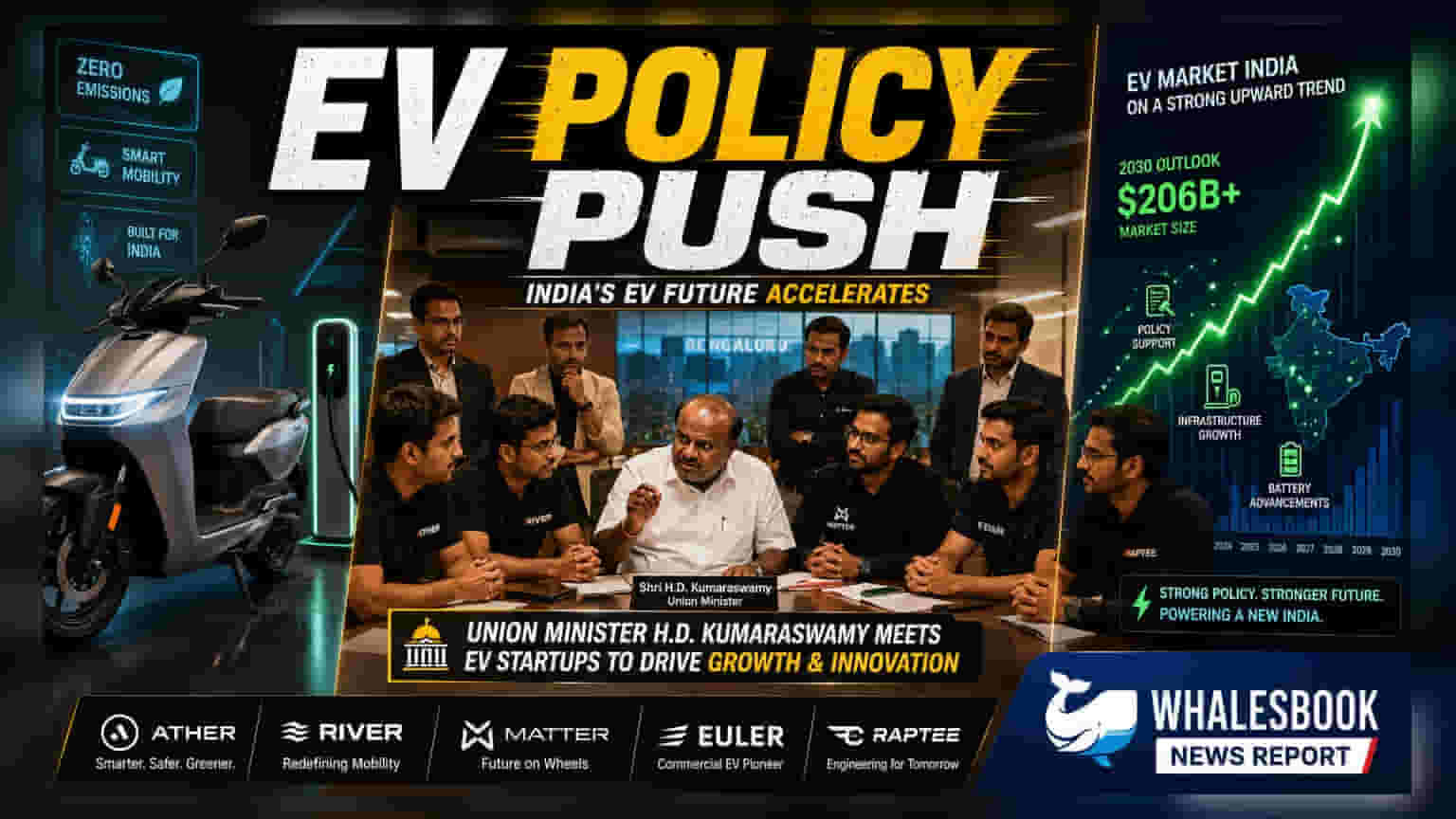
Founders of Indian electric vehicle startups met Union Minister H.D. Kumaraswamy to request an extension of the PM E-DRIVE scheme and updates to the PLI Auto program. These policy changes aim to boost domestic manufacturing, improve export competitiveness, and provide long-term stability for research and development investments.
What Happened
On July 4, 2026, Union Minister for Heavy Industries and Steel, H.D. Kumaraswamy, held a meeting in Bengaluru with founders of leading electric vehicle (EV) startups, including Ather Energy, Matter, River, Euler Motors, and Raptee. The discussion centered on policy measures to accelerate the adoption and manufacturing of electric vehicles in India. The startup leaders requested an extension of the PM E-DRIVE (Electric Drive) incentive scheme and called for revisions to the Production Linked Incentive (PLI) Auto scheme to better accommodate newer, technology-focused companies. These requests are driven by the need for policy predictability to support capital-intensive manufacturing and research operations.
The Demand for Policy Evolution
For many EV startups, the current incentive landscape is critical for bridging the price gap between electric and internal combustion engine (ICE) vehicles. Industry leaders argued that while existing government support has been helpful, expanding the PLI Auto scheme to better include new-age manufacturers would provide the scale needed to compete globally. By integrating more domestic players into these incentive frameworks, the startups believe they can increase "value addition"—the process of sourcing and manufacturing more components within India—which is a core goal of the government’s 'Aatmanirbhar Bharat' vision.
Why This Matters for the EV Ecosystem
Investors often track policy updates in the EV space because the financial viability of these startups is heavily dependent on government subsidies and incentives. Without clear, long-term policy continuity, companies face risks regarding their cash flow projections and capacity expansion plans. The startup delegation emphasized that consistent support is necessary to maintain high spending on research and development (R&D). As these companies look to increase export volumes, the ability to manufacture at scale with government backing becomes a key factor in their long-term growth and margin stability.
The Financial and Competitive Context
India’s EV sector has seen rapid growth, but it remains highly competitive. Established legacy automotive giants and emerging pure-play EV startups are vying for market share. While legacy players often have deep cash reserves and existing manufacturing infrastructure, startups rely more on external funding and government support to scale. The government’s focus on the 2070 net-zero emissions target suggests a long-term commitment to electrification, yet the transition period requires careful fiscal management to balance incentives for new players without putting undue pressure on the national exchequer.
What Investors Should Track
Investors monitoring the sector should look for official announcements regarding the extension of the PM E-DRIVE scheme and any potential modifications to the PLI Auto framework. Key monitorables include the criteria for inclusion in incentive schemes, the timeline for fund disbursements, and any official government response that outlines the budget or duration for these extensions. Additionally, tracking how these policy shifts affect the capital spending plans and profit margins of listed companies or those planning public listings in the EV space will be essential for assessing future performance.