 Whalesbook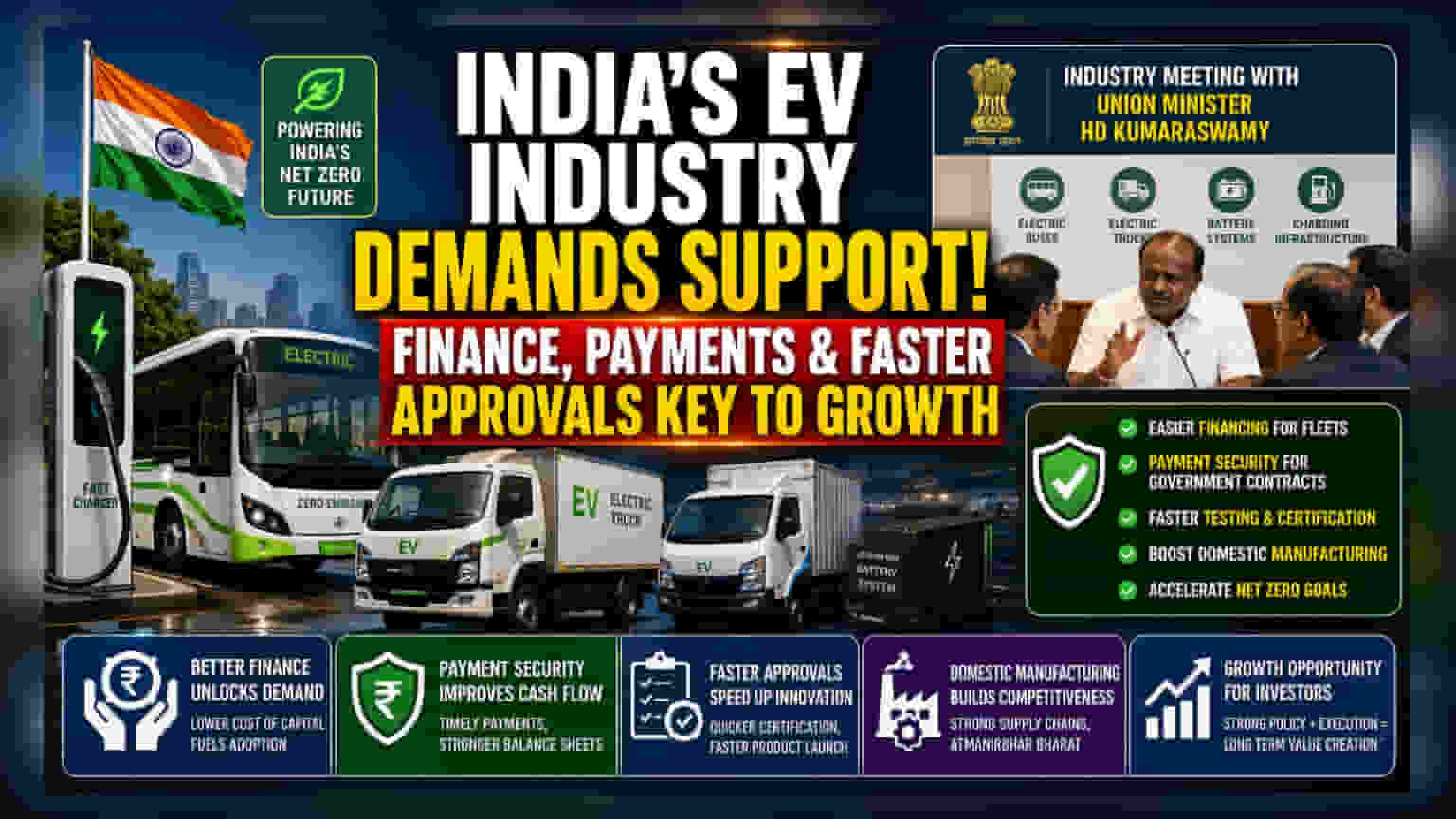


India's electric vehicle industry, including bus and truck manufacturers, has requested better financing and payment security from the government. The move aims to lower entry barriers and support the transition to green mobility. For investors, this highlights the sector's current reliance on financing to drive volume growth and the importance of government policy in sustaining the order books of commercial EV players.
What Happened
Industry leaders from India's electric vehicle (EV) sector recently met with Union Minister for Heavy Industries, HD Kumaraswamy, to discuss challenges facing the industry. The meeting included major stakeholders such as manufacturers of electric buses, trucks, battery systems, and charging infrastructure. The primary focus of the discussion was the need for structured financial support and robust payment security mechanisms. These demands are intended to make electric mobility more accessible and to support the growth of domestic manufacturing capabilities, which are central to the government’s green energy and net-zero targets.
Why This Matters For Investors
For investors, the demand for better financing is a significant signal about the current stage of the electric vehicle market in India, particularly in the commercial segment. Electric buses and trucks have a high upfront cost compared to traditional diesel-powered vehicles. Even if the 'total cost of ownership' is lower over time, the initial price tag remains a hurdle for many fleet operators. By pushing for easier financing options, manufacturers are essentially trying to unlock demand for their vehicles. If these financial solutions are introduced, it could help accelerate order conversions and revenue growth for companies involved in electric commercial vehicles.
Additionally, the call for payment security is crucial for companies that rely on government tenders and large-scale public sector contracts. Ensuring that payments from these contracts are timely and secure is a key factor in maintaining healthy cash flow for manufacturers. If the government introduces a mechanism to address this, it would reduce the working capital pressure on EV companies, allowing them to reinvest more efficiently in production and technology.
Business Context and Sector Challenges
Commercial EV makers, such as Olectra Greentech, Tata Motors, and Ashok Leyland (through its electric arm, Switch Mobility), operate in a market where volume growth is closely tied to government subsidies and policy support. The industry’s request for faster testing and certification processes—from bodies like the Automotive Research Association of India (ARAI)—is another critical area. Faster certification allows companies to bring new technology, such as updated battery packs or new vehicle models, to market more quickly. Delays in these approvals can stall product launches and affect the competitiveness of these manufacturers.
The Bigger Picture: Risks and Uncertainties
While the push for policy support is positive for industry growth, investors should be aware of the underlying risks. The sector is heavily dependent on consistent government policy. Any change in subsidy structures or a delay in the implementation of these requested financial schemes could lead to a slowdown in demand. Furthermore, the commercial EV segment faces stiff competition, and manufacturers must manage the costs of building domestic supply chains, including battery packs and thermal management systems.
Another point to watch is the capital expenditure involved. Manufacturers are constantly investing in new capacity and technology to keep up with industry standards. If the broader financing ecosystem for customers does not improve alongside the production capacity, companies may face pressure on inventory build-up and cash flow.
What Investors Should Track
Investors may keep an eye on official government announcements regarding new credit support schemes or payment security frameworks for the EV sector. Any specific policy that reduces the financing cost for fleet operators would be a positive trigger for volume growth. Additionally, monitoring the pace of vehicle deliveries and the resolution of pending orders for major commercial EV players will be important to judge how well companies are managing their order books against these sector-wide challenges.