

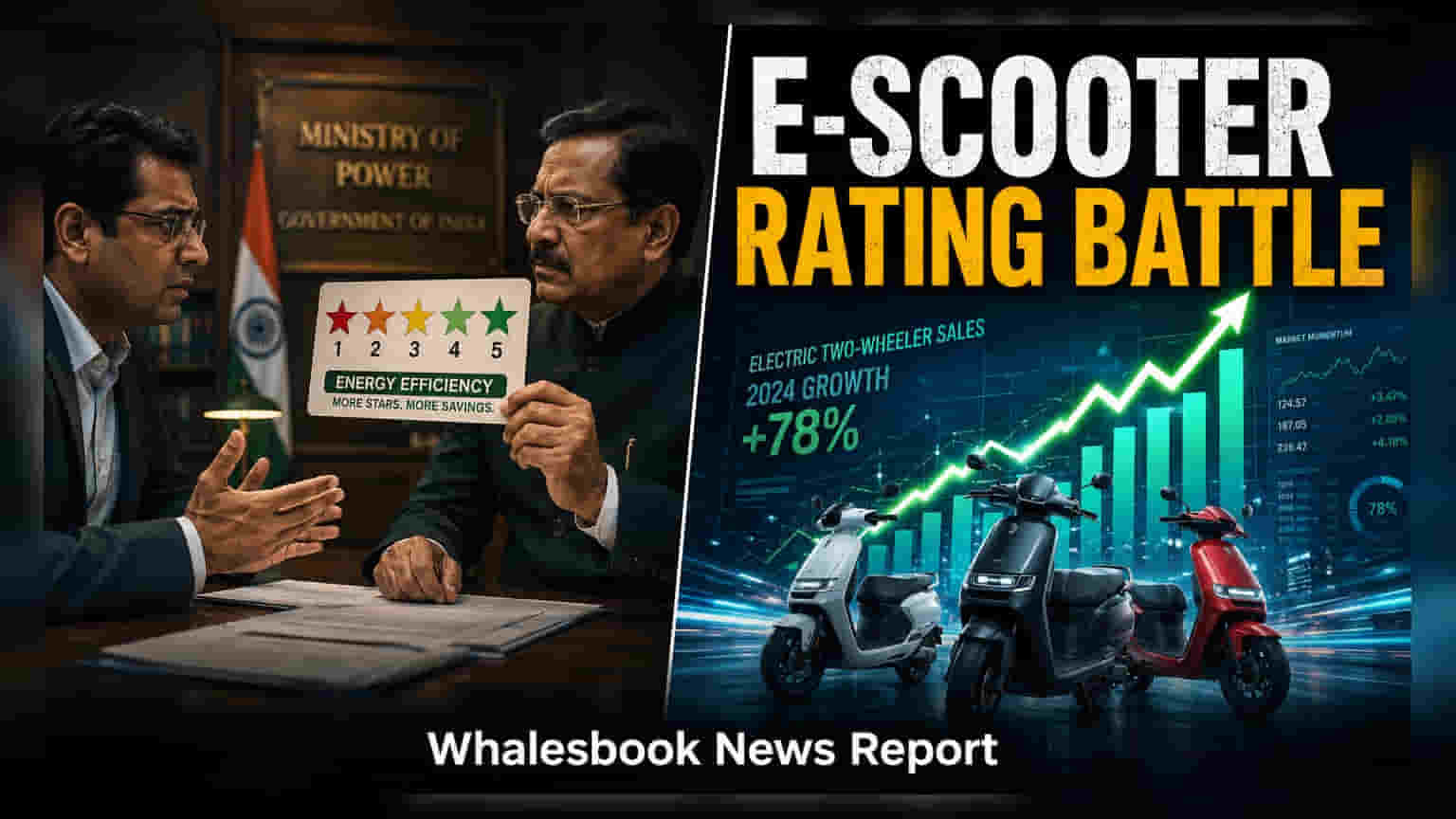
The Society of Indian Automobile Manufacturers (SIAM) has requested the Bureau of Energy Efficiency to defer its plan for energy-efficiency star ratings on electric two-wheelers. Automakers, including Bajaj Auto and TVS Motor, argue the market is too nascent for standardized labels, fearing the move could impact consumer confidence and innovation. Investors should monitor this regulatory conflict as it may affect future compliance costs and product strategy.
The Society of Indian Automobile Manufacturers (SIAM) has formally requested the Bureau of Energy Efficiency (BEE) to postpone the introduction of energy-efficiency star ratings for electric two-wheelers. This pushback highlights a growing conflict between the government’s efforts to standardize green energy consumption and the industry's desire for flexibility as the electric vehicle (EV) market continues to evolve.
The government’s proposed plan involves applying a 1-to-5 star rating system to e-scooters, similar to how labels are used on home appliances like refrigerators and air conditioners. The Ministry of Power aims to encourage energy efficiency, lower electricity consumption, and reduce the overall carbon footprint of personal mobility.
Major industry players, including Hero MotoCorp, Bajaj Auto, Ather Energy, and TVS Motor Co., are concerned that these ratings are premature. In a letter to the Bureau, the industry body argued that the electric two-wheeler market is still in its early stages of growth and remains heavily reliant on government support schemes, such as the PM E-DRIVE program. Automakers believe that imposing strict efficiency labels at this point could misguide consumers, as e-scooter performance varies significantly based on battery technology and usage patterns, unlike standardized electronic appliances.
For investors, this development brings regulatory uncertainty to the forefront. Companies in this space are currently operating with thin profit margins and are heavily focused on scaling up production and managing research and development costs. Implementing mandatory compliance standards would require manufacturers to dedicate resources to testing, certification, and potentially re-engineering models to meet specific rating benchmarks. If these costs rise, it could put additional pressure on profitability during a time when companies are also preparing for a post-subsidy future.
Furthermore, the industry is concerned that fixed energy efficiency benchmarks might penalize innovation, particularly in emerging categories like electric motorcycles. If a manufacturer is forced to prioritize a specific efficiency rating to compete, it might limit their ability to experiment with high-performance battery packs or motors that do not fit neatly into a standardized labeling framework.
The electric two-wheeler sector has shown strong volume growth, with sales reaching 1.4 million units in FY26, a 20% increase from the previous year. As adoption accelerates, the government is likely to continue pushing for stricter standards to ensure data transparency and consumer awareness. Investors should monitor future updates from the Power Ministry and the BEE regarding whether the government will allow a phased approach or accept the industry's request for a deferral, as this will determine the timeline for future compliance costs and product planning.