

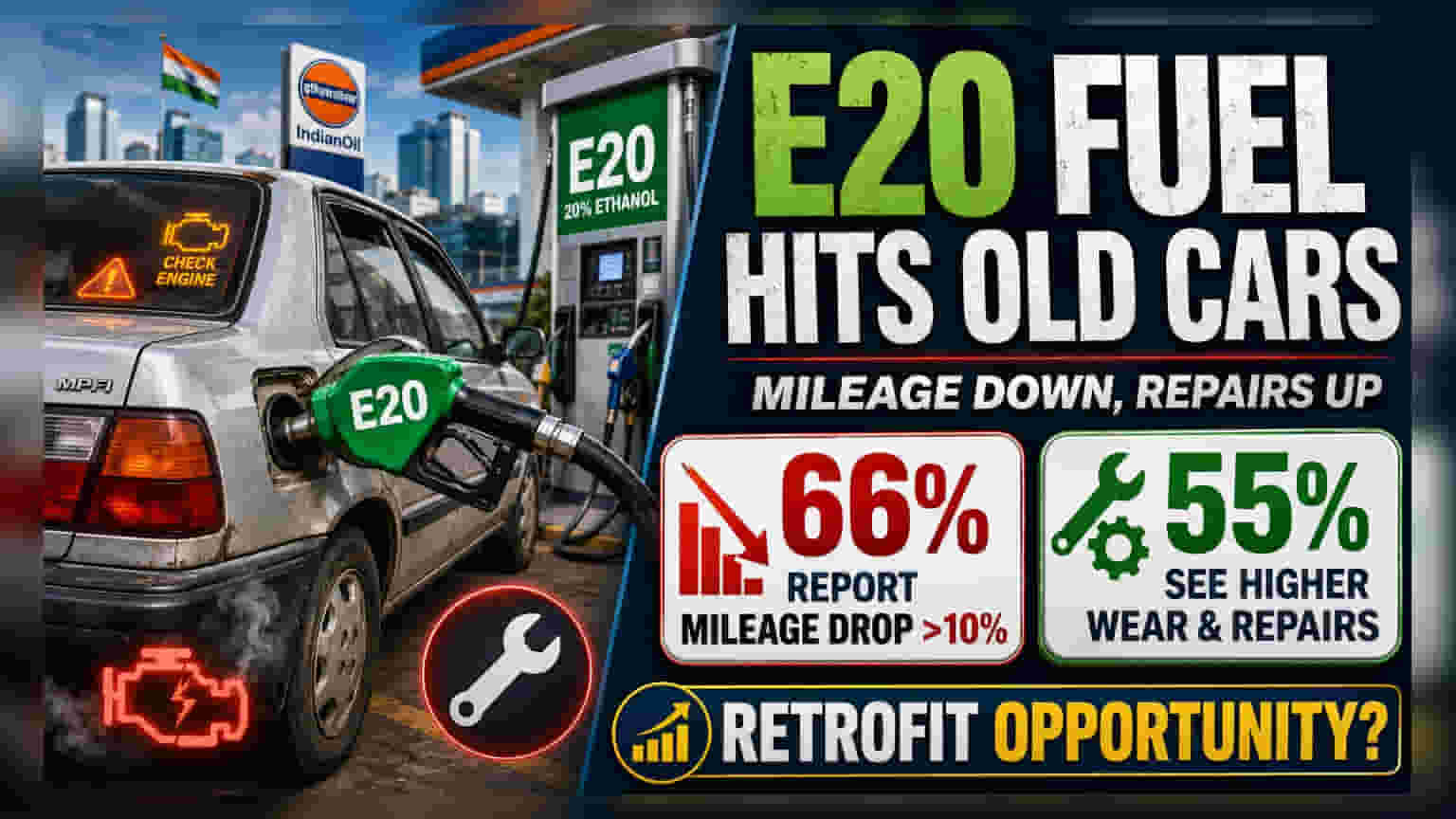
A survey of 44,000 vehicle owners reports a significant drop in mileage and higher maintenance for pre-2023 cars using E20 fuel. This highlights growing friction between India's ethanol blending goals and the practical experience of millions of existing vehicle owners.
What Happened
A recent consumer survey by LocalCircles has brought attention to the challenges faced by owners of older petrol vehicles following the nationwide rollout of E20 fuel. The survey, which included responses from over 44,000 vehicle owners across 305 districts, indicates that many pre-2023 cars are struggling to adapt to the higher ethanol blend.
According to the findings, 66% of vehicle owners reported a mileage drop of more than 10% since the start of 2025. Additionally, 55% of respondents noted an increase in unusual wear and tear or higher repair requirements for their vehicles. These figures represent a notable increase in consumer complaints compared to survey data from earlier in the year.
Why This Matters for the Auto Sector
For the Indian auto industry, these findings highlight a complex transition period. Most vehicles manufactured before 2023 were designed to operate on E5 or E10 fuel, which contains a lower concentration of ethanol. As the government aggressively pushes for the E20 blending program—aiming to reduce crude oil imports and emissions—the operational health of older vehicles has become a point of concern.
Investors may note that this creates a potential "aftermarket" opportunity. Companies that can provide reliable retrofit kits, engine cleaning services, or specialized parts for older vehicles might see increased demand. On the other hand, there is a risk of brand-related friction. If consumers perceive that their vehicles are deteriorating faster due to government-mandated fuel policies, it could influence future purchase decisions or lead to complaints directed at manufacturers, even if the issue stems from fuel compatibility.
The Policy and Industry Response
The government continues to maintain that ethanol blending is a vital step for energy security and reducing the national oil import bill. Officials have consistently stated that they have not received reports of widespread engine failures directly linked to E20 fuel. To address compatibility issues, the Bureau of Indian Standards (BIS) has been working on specifications for fuel systems, and major manufacturers like Maruti Suzuki have been exploring the development of retrofit kits to help older vehicles adapt to the higher ethanol content.
However, the gap between official reassurance and consumer experience remains wide. The survey data suggests that while the industry is preparing for the future, the transition for existing vehicles is not seamless, leading to higher ownership costs for many citizens.
Risks and Business Reality
The primary business risk here is the potential for a slow transition. If maintenance costs for millions of older vehicles rise significantly, it could hurt consumer sentiment toward new vehicle segments or lead to a decline in vehicle usage. Furthermore, if technical issues with E20 fuel gain more traction, it could create pressure on the government to slow down or reconsider the pace of implementation, which would impact the planning of oil marketing companies and automakers.
What Investors Should Track Next
Investors should monitor a few key developments:
- Retrofit Kit Rollouts: Look for announcements regarding the availability and cost of government-approved or OEM-backed kits designed to make older cars compatible with E20 fuel.
- Official Technical Studies: Watch for any comprehensive, large-scale technical studies by the government or independent research bodies that investigate the long-term impact of E20 on older engines, as this will provide a more definitive view than consumer surveys.
- Management Commentary: In upcoming quarterly earnings calls, observe if automakers address potential long-term impacts on service revenues or changes in customer complaints regarding fuel efficiency and engine health.