

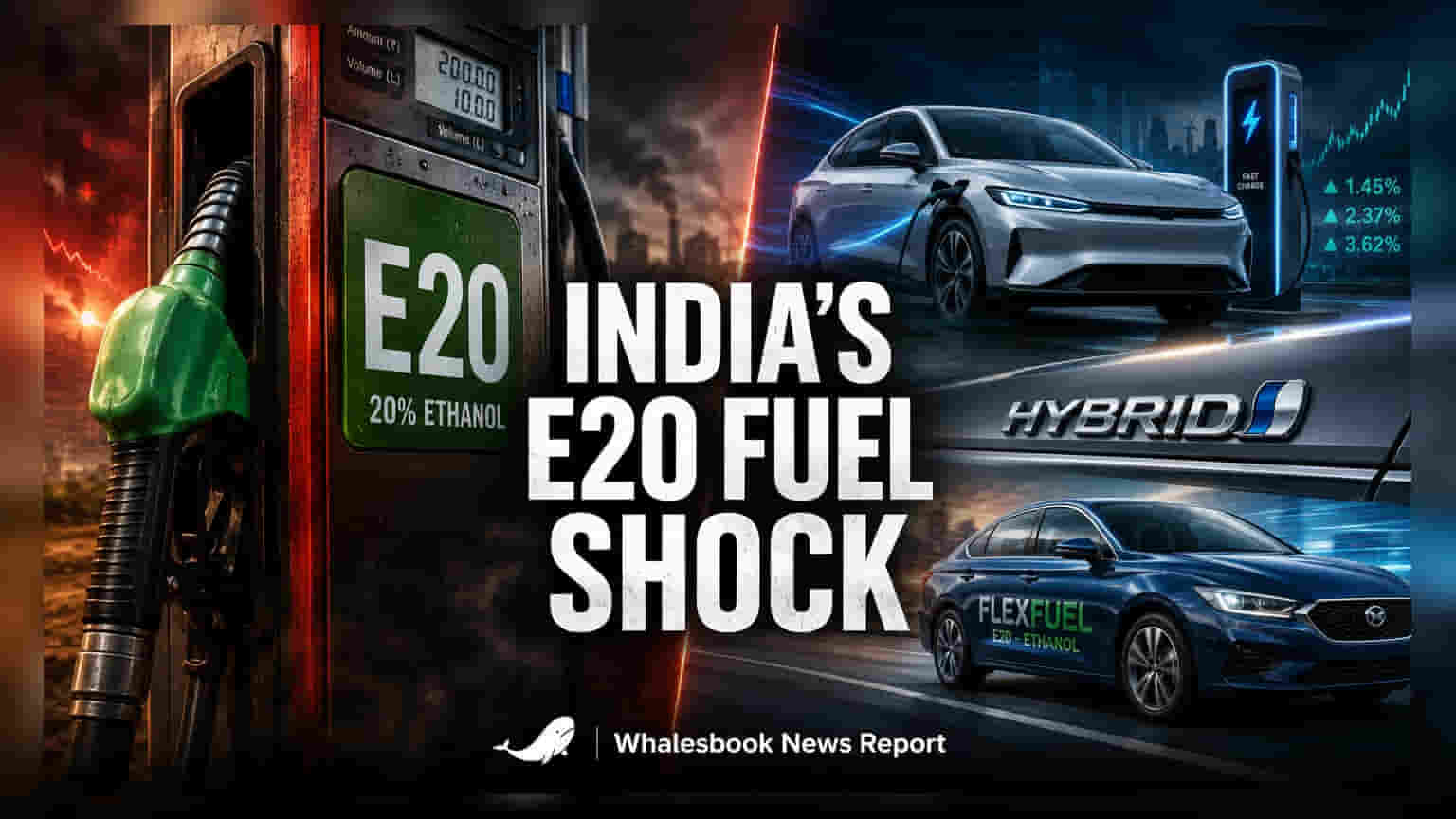
India's shift to E20 fuel, a blend of 20% ethanol and 80% petrol, is altering the automotive landscape by mandating engine upgrades in new vehicles. While the move aims to lower crude import dependence, investors should note that future growth for automakers depends on product variety and powertrain strategies rather than fuel blending alone.
India’s nationwide transition to E20 fuel has become a central theme for the automotive industry, as the government continues its push to reduce the country’s 89% reliance on imported crude oil. By integrating ethanol, a biofuel produced domestically from sources like sugarcane, the policy seeks to lower both carbon emissions and the economic impact of global oil price fluctuations. For the average investor, this represents a structural change in how vehicles are engineered and manufactured in India.
Impact on Engine Technology and Maintenance
The move to E20 requires significant technical adjustments for manufacturers. Vehicles produced from 2023 onwards have been specifically designed with upgraded fuel systems and recalibrated engines to handle the higher ethanol content. A key concern for the market involves the potential for reduced fuel efficiency. While industry data indicates a marginal drop in mileage of approximately 2-4%, consumer sensitivity to fuel costs remains high. Reports of higher maintenance requirements for older, non-compatible vehicles have circulated, though these issues are largely limited to legacy models that were not designed for high-ethanol blends.
Strategic Shifts in Automaker Portfolios
Automakers are responding to this regulatory shift by diversifying their technology offerings rather than relying on one solution. In the passenger vehicle segment, companies such as Maruti Suzuki have begun introducing flex-fuel models, while hybrids are seeing increased demand due to their efficiency. Meanwhile, in the two-wheeler space, electric vehicles (EVs) have gained momentum, capturing an 8.64% market share of total automobile sales. This multi-fuel approach, which includes EVs, hybrids, and flex-fuel engines, is designed to cater to varying consumer needs across urban and rural markets.
Investor Perspective on Growth Triggers
For investors monitoring original equipment manufacturers, the direct financial impact of the E20 transition is expected to be modest. The historical pattern of regulatory changes driving immediate, massive replacement cycles is less likely here, as current vehicle purchases remain more heavily influenced by financing availability, brand loyalty, and product features. Instead of fuel policy alone, the long-term profitability of major players like Hero MotoCorp and Maruti Suzuki will likely be determined by their ability to execute successful new product launches, grow their premium segment, and manage operational costs amid a competitive environment. Future earnings will depend on how effectively these companies balance their investments in new technologies like electric powertrains against the cost of updating existing internal combustion engine platforms.