

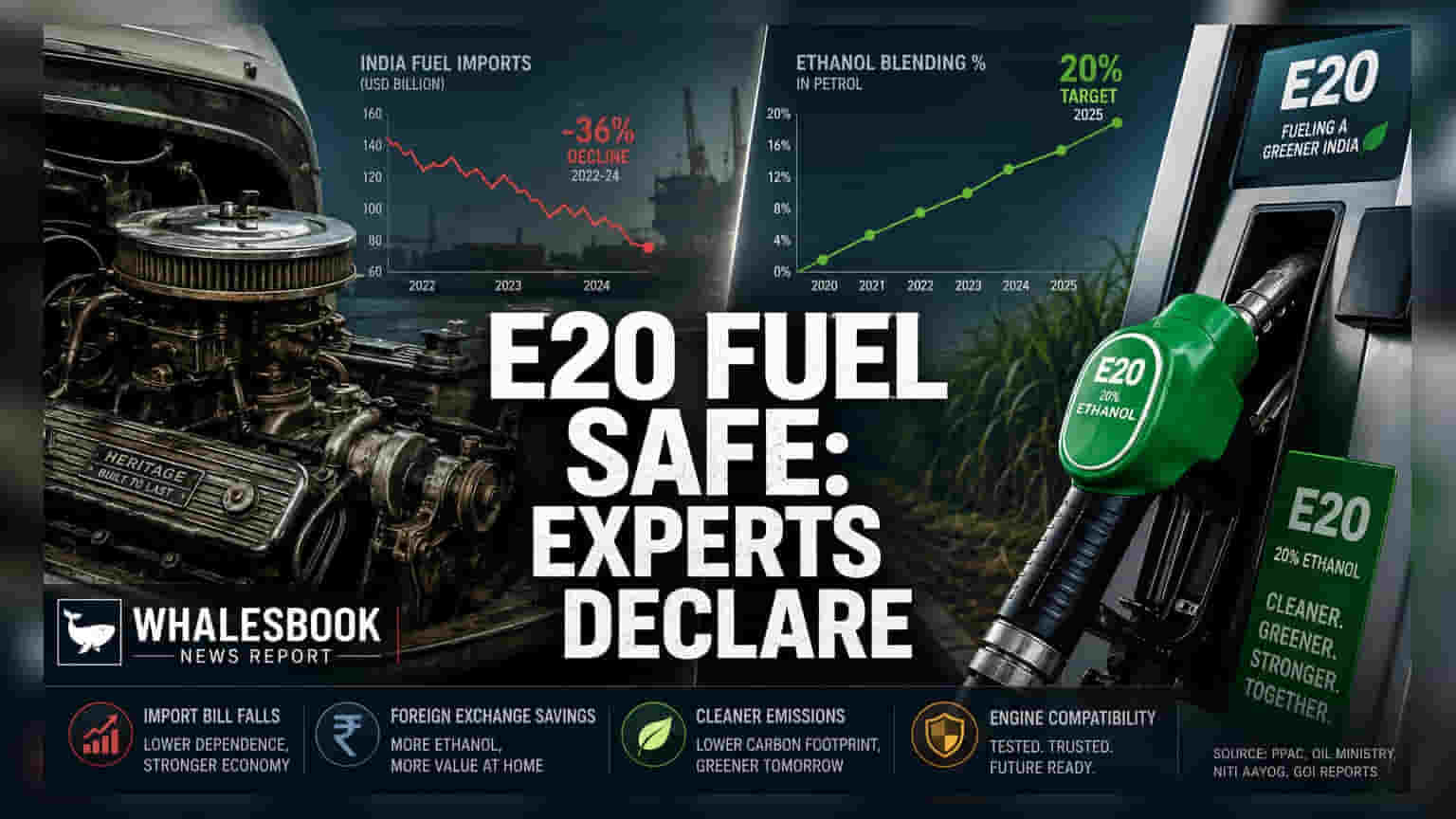
Automakers including Maruti Suzuki and Hero MotoCorp have confirmed that E20 ethanol-blended petrol is safe for older vehicles. Extensive testing shows no significant impact on engine longevity or component wear, supporting India’s goal to reduce crude oil import dependency.
What Happened
Industry leaders and automotive experts have addressed public concerns regarding the use of E20 ethanol-blended petrol—fuel containing 20% ethanol and 80% gasoline—in older vehicles. Representatives from major manufacturers, including Maruti Suzuki and Hero MotoCorp, stated that rigorous testing proves E20 fuel does not harm vehicles manufactured before the current E20 mandate. This announcement comes as India prepares to achieve its 20% ethanol blending target, a milestone aimed at lowering the country's reliance on imported crude oil and reducing carbon emissions.
Why This Matters For Investors
The transition to E20 fuel is a core component of India's energy policy. For investors, this shift directly impacts the automotive and sugar sectors. A successful transition without widespread engine failure supports the long-term viability of the government’s ethanol roadmap. If the transition were to face technical hurdles, manufacturers might incur higher warranty costs or face reputational risks, while sugar companies—key suppliers of ethanol—could face regulatory uncertainty.
Performance and Safety Testing
According to findings shared by Rahul Bharti of Maruti Suzuki India, internal tests on vehicles designed for E10 fuel showed that using E20 fuel did not lead to increased corrosion or premature component failure. Similarly, Ashutosh Verma of Hero MotoCorp noted that field data from millions of two-wheelers indicates no rise in maintenance issues compared to previous fuel standards. These reassurances are backed by certifications from the Automotive Research Association of India (ARAI), which oversees the compatibility standards of vehicles reaching the Indian market.
The Energy Context
India has aggressively pursued ethanol blending, moving from about 1.5% in 2013-14 to a projected 20% by late 2025. This move is designed to provide a cushion against global crude oil price volatility. By utilizing plant-based ethanol, the government aims to balance energy security with environmental goals. Engineers India Limited has previously noted that this program follows global best practices observed in countries like Brazil and the United States, where high-ethanol blending is standard.
What Investors Should Track
While the industry has provided technical reassurances, investors should monitor the actual field performance of older vehicles as E20 availability becomes universal. Key monitorables include any spikes in warranty claims or service center data related to fuel systems, changes in government policy regarding the pace of blending, and the impact of fluctuating sugarcane prices—the primary raw material for ethanol—on the margins of sugar manufacturing companies. Additionally, the continued ability of automakers to pass on compliance-related costs without hurting demand remains a crucial factor for sector health.