

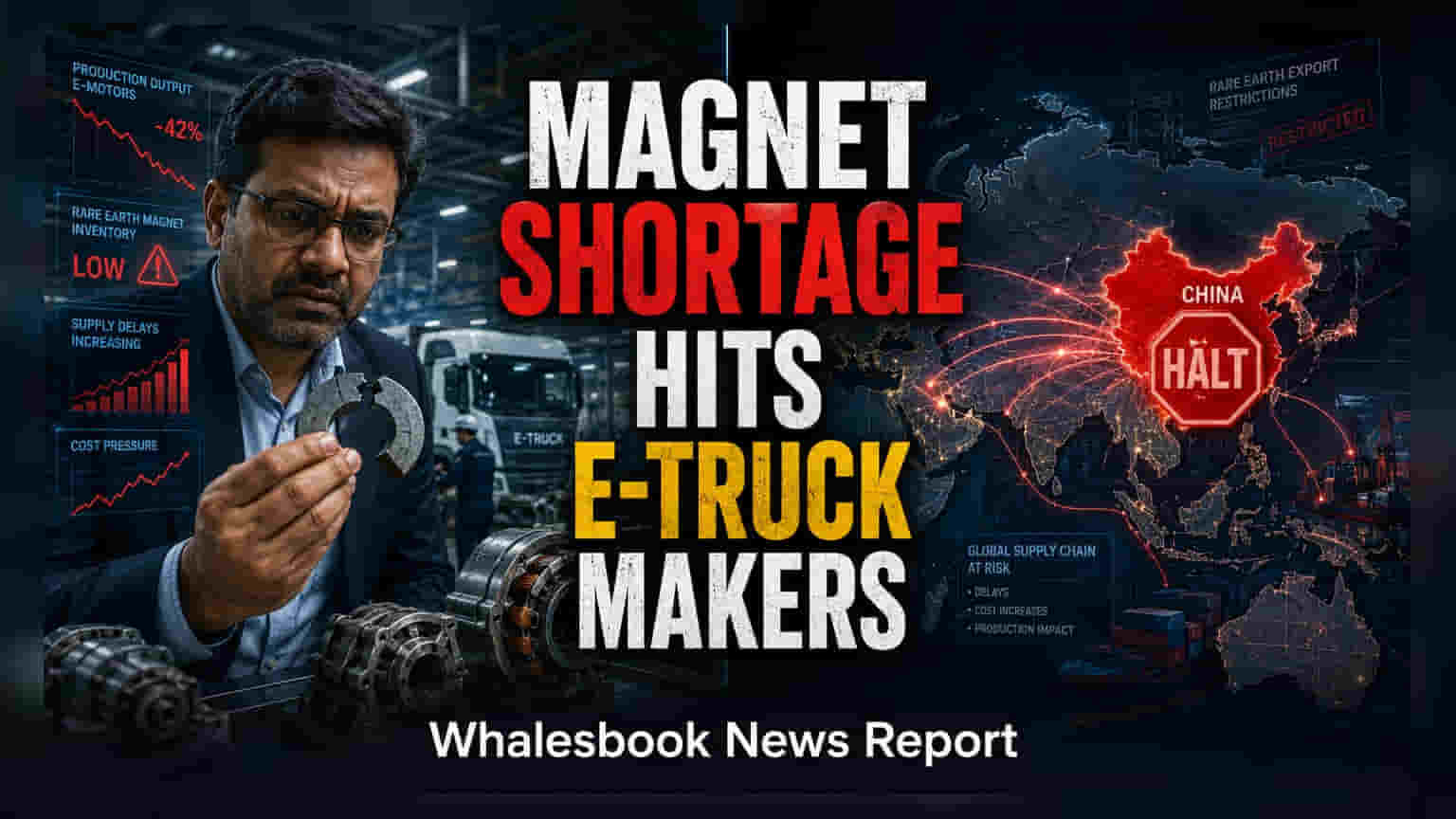
Indian electric commercial vehicle manufacturers are considering a third extension for localization exemptions under the PM E-Drive scheme. The industry faces persistent supply shortages of rare earth magnets, which are critical for electric traction motors and currently rely on imports. Investors should monitor whether this delay impacts the financial incentives available to manufacturers under the government program.
Manufacturers of electric trucks and buses in India are preparing to seek a third extension for meeting strict local manufacturing requirements, known as localization mandates, under the government’s ₹10,900 crore PM E-Drive scheme. Companies have been struggling to source rare earth magnets domestically, a critical component for high-power electric traction motors used in large commercial vehicles.
Impact of Supply Chain Constraints
The industry's ability to comply with these rules was severely disrupted in April 2025, when China—the world’s dominant supplier—limited the export of these specific magnets. Because Indian manufacturers have been unable to secure a steady domestic supply, they have faced difficulty in qualifying for government incentives linked to the PM E-Drive scheme. Under current regulations, companies must use a certain percentage of locally produced parts to receive subsidies. Without these components, firms cannot claim incentives on imported sub-assemblies, potentially putting pressure on their profit margins for electric vehicle projects.
Government Incentive Programs and Industry Hurdles
The government has made efforts to encourage domestic production, including an incentive program launched in November 2025 aimed at creating 6,000 tonnes of annual capacity for rare earth magnets. However, this initiative has seen low interest from private players, resulting in multiple extensions of tender deadlines. This highlights a significant structural challenge for the industry, as China controls roughly 60% of global mining and 90% of refining capacity for these minerals. Previous six-month extensions were granted in September 2025 and March 2026, signaling that this is not a short-term bottleneck but a persistent manufacturing challenge.
Challenges in E-Vehicle Adoption
Beyond supply chain constraints, the adoption of electric heavy vehicles has remained slow. Data shows that only three electric trucks have been subsidized under the scheme to date. While the government has sanctioned a larger number of electric buses, the final signing of concession agreements for their deployment has also been slower than expected. For companies like Tata Motors and Volvo Eicher Commercial Vehicles, the speed of these deployments and the ability to access subsidies are critical factors for business scalability.
Investors should closely track the Ministry of Heavy Industries' response to the potential request for a third waiver. If the government refuses or further delays a decision, it could affect the cash flow and project timelines for manufacturers who are counting on these incentives to make electric commercial vehicles cost-competitive against traditional diesel models. The next important update will be whether the ministry grants a further timeline extension, which would provide manufacturers more breathing room to develop their local supply chains.