 Whalesbook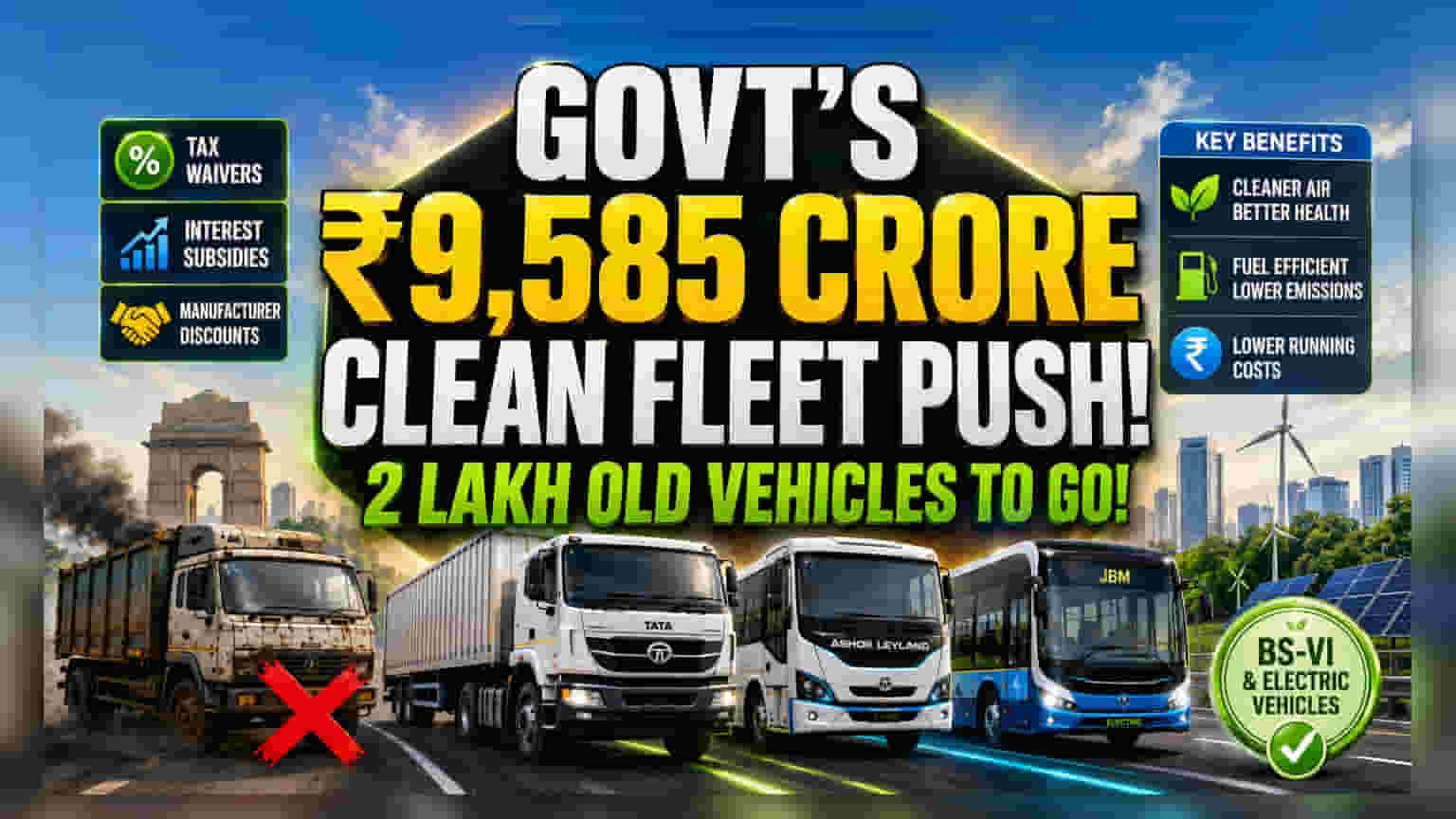


A new ₹9,585 crore government initiative in the Delhi-NCR region aims to replace over 2 lakh aging commercial vehicles. This move is expected to drive fresh demand for heavy vehicle manufacturers like Tata Motors and Ashok Leyland, while also supporting the e-bus segment led by companies like JBM Auto. Investors should monitor how effectively these incentives spur actual fleet replacements amid broader economic factors.
What Happened
The government has announced a ₹9,585 crore incentive program focused on the Delhi-NCR region to speed up the retirement of old, polluting commercial vehicles. The policy targets the replacement of roughly 2 lakh vehicles, specifically aiming to pull about 1.91 lakh old trucks and over 16,000 buses off the road. By offering a combination of tax waivers, interest subsidies, and manufacturer discounts, the government hopes to encourage fleet owners to switch to newer, cleaner models that meet current BS-VI emission standards or to electric vehicles.
Boosting the Replacement Cycle
For the commercial vehicle industry, this policy is a potential catalyst for 'replacement demand.' In this sector, sales are often driven by the need to upgrade fleets as vehicles get older and less efficient. When the government effectively shortens the life of a commercial vehicle through such mandates, fleet operators are often compelled to buy new ones. This policy acts as a direct lever to trigger that buying cycle. Manufacturers like Tata Motors and Ashok Leyland stand to gain as fleet operators look for reliable, compliant vehicles to replace their aging stock.
How Major Players Stand
Each major manufacturer has a different level of exposure to this shift. Tata Motors, a dominant player with a 55% market share in heavy commercial vehicles, is likely to see significant impact due to the sheer volume of its fleet replacements. Ashok Leyland, with a strong 34.1% presence in the MHCV bus segment, is also well-positioned to capture demand from transport operators upgrading their bus fleets. Meanwhile, JBM Auto represents a focused play on the electric shift. With a 24% market share in the e-bus segment and an integrated manufacturing setup, the company is targeting the growing demand for electric public transport, which is a major focus area for state-level transport replacements.
The Cyclical Nature of CVs
Investors must remember that the commercial vehicle industry is highly cyclical, meaning it moves in line with the broader economy. Sales are heavily dependent on freight activity and GDP growth. If the economy slows down, fleet operators often delay their purchase decisions, even if incentives are available. While this government program is a positive tailwind, it does not guarantee a surge in sales if underlying economic indicators are weak or if logistics activity slows down. The policy helps lower the barrier to entry, but it cannot completely bypass the reality of economic demand.
Risks for Investors
There are several factors that could dampen the success of this incentive plan. First, the cost of newer vehicles, even with subsidies, remains higher than what many small fleet owners are accustomed to. High interest rates can make financing these new purchases expensive, putting pressure on the budgets of smaller operators who own a significant portion of the older truck fleet. Additionally, the industry has often faced challenges with the 'implementation lag' in such government schemes, where the gap between policy announcement and actual vehicle purchase can be longer than expected. Finally, volatility in diesel prices continues to be a concern for operating costs, which influences fleet owners' willingness to upgrade to new models.
What Investors Should Track
Moving forward, the primary monitorable is the actual adoption rate—the speed at which fleet owners are scrapping old vehicles and purchasing new ones. Investors should listen to management commentary in upcoming earnings calls for updates on order book conversion. Monitoring credit growth for the transport sector and changes in interest rates will also provide clues on how easy it is for fleet operators to finance these upgrades. The final benefit to these companies will depend not just on the policy itself, but on the pace of economic growth and the cost of capital for the buyers.