

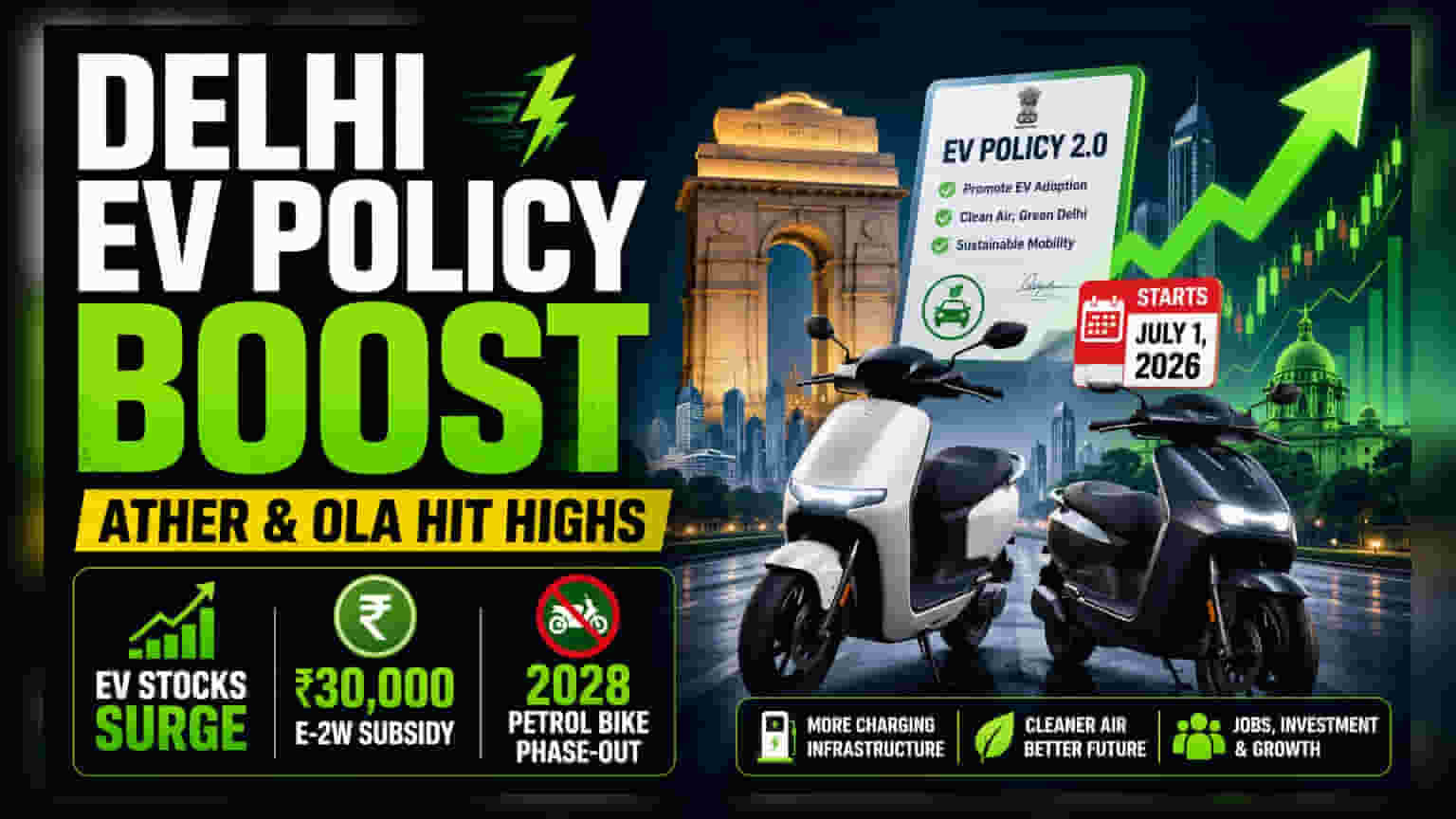
Ather Energy and Ola Electric shares hit record highs as Delhi implements its new EV Policy 2.0, effectively banning non-electric two-wheeler registrations from 2028. The policy introduces aggressive subsidies for buyers and a ₹15,000 crore government investment to fast-track adoption. While EV-pure players rally on expected demand growth, investors are weighing the long-term impact on market share dynamics between new-age electric companies and traditional auto manufacturers.
What Happened
Ather Energy and Ola Electric Mobility saw their share prices climb to record levels following the Delhi government’s approval of the EV Policy 2.0. The policy, which officially takes effect on July 1, 2026, aims to accelerate the transition to cleaner transportation in the capital. Ather Energy reached a new high of ₹1,177.25 on the BSE, while Ola Electric also extended its recent gains. The market reaction reflects strong investor sentiment toward companies focused exclusively on electric mobility, as the policy provides both immediate incentives and a long-term roadmap for the sector.
The Policy Shift And Demand Impact
The most significant aspect of the new policy is the mandate to phase out petrol, diesel, and CNG-powered two-wheelers. The government has set a hard deadline of April 1, 2028, after which only electric two-wheelers will be eligible for new registrations in the national capital. This creates a predictable timeline for electrification that could force consumers and businesses to shift toward electric models well before the deadline.
To bridge the price gap between internal combustion engine vehicles and electric alternatives, the policy offers direct subsidies. Buyers will receive ₹30,000 for electric two-wheelers and ₹50,000 for electric three-wheelers in the first year. Additionally, a ₹1 lakh scrappage incentive for older BS-IV four-wheelers is designed to encourage vehicle replacement. This financial support is expected to lower the entry barrier for customers, potentially boosting sales volumes for leading electric vehicle manufacturers in the region.
Impact On The Auto Sector
The policy announcement has sparked a conversation about the competitive landscape between electric-only companies and traditional automakers. While pure-play EV companies like Ather and Ola are seen as direct beneficiaries of this policy-driven demand, traditional giants like Hero MotoCorp, Bajaj Auto, and TVS Motor Company are also actively building their EV portfolios.
Investors are watching to see if this Delhi-specific policy acts as a template for other states. If national or other major state-level regulators adopt similar bans or subsidy structures, it could fundamentally change the growth trajectory for traditional auto manufacturers, who must manage a balance between their existing petrol-based business and the push toward electric alternatives.
Risks And Investor Monitorables
While the policy is a positive development for EV adoption, investors may track several challenges. First, the growth in EV sales depends heavily on the expansion of charging infrastructure. If the public charging network does not expand at the same pace as vehicle adoption, customer demand could be capped.
Second, the financial health of these companies remains linked to government policy. Any future change in subsidy structures or a delay in the release of incentives could impact profit margins. Finally, for legacy auto companies, the risk remains that their transition to electric vehicles might be slower or more capital-intensive than that of agile, electric-only competitors. The actual impact on market share and margins will depend on execution and the ability of each company to manage the shift in consumer preference over the next few years.