 Whalesbook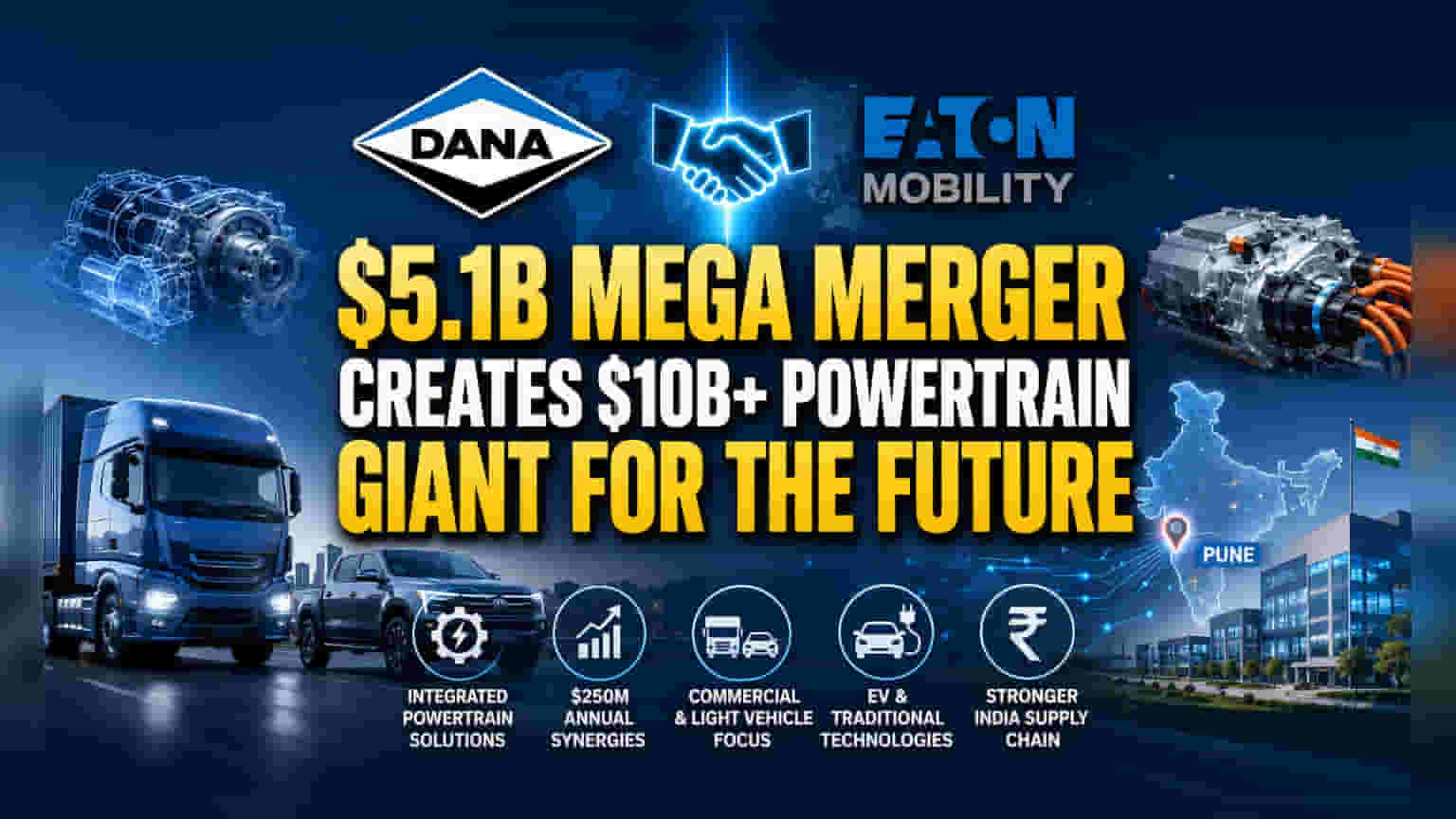


Dana Incorporated and Eaton Corporation have announced a $5.1 billion deal to combine their mobility businesses. This transaction aims to create a powerhouse systems supplier for electric and commercial vehicles, with combined annual revenues exceeding $11 billion. For Indian investors, the move signals a major shift toward integrated powertrain solutions and could influence local manufacturing and supply chains. We explore the strategic impact, potential risks of supplier consolidation, and what this means for India's automotive sector.
What Happened
In a major global automotive deal, Dana Incorporated has entered into a definitive agreement to combine with Eaton Corporation’s Mobility group. The transaction, valued at approximately $5.1 billion, is structured as a Reverse Morris Trust and will create a new entity with an enterprise value exceeding $10 billion. The merged company will focus on providing integrated powertrain solutions for commercial and light vehicles, catering to both traditional and electric vehicle (EV) markets. The companies expect to achieve roughly $250 million in annual cost savings, or synergies, within two years of closing the deal.
Why This Matters For Investors
The automotive industry is moving away from buying individual parts like axles or transmissions separately. Instead, vehicle manufacturers (OEMs) increasingly prefer buying complete, pre-integrated systems. By combining Dana’s drivetrain expertise with Eaton’s transmission and electrification technology, the new entity aims to become a 'systems supplier.' For investors, this shift is critical because it changes how the company competes. Instead of just competing on the price of a single component, the combined business can pitch complete powertrain systems to automakers, potentially deepening its relationships with major manufacturers and increasing the complexity—and value—of its offerings.
The Impact on India's Supply Chain
Both Dana and Eaton have long-standing, significant operations in India, particularly around automotive hubs like Pune. Dana has established drivetrain and e-Propulsion facilities, while Eaton operates an extensive engineering and supply chain network in the region. The merger could accelerate the local development of electric vehicle components. As Indian automakers strive to meet 'Made-in-India' and localization mandates, having a unified supplier that offers a broader suite of EV and traditional powertrain technologies could streamline R&D and manufacturing processes. Investors should watch how this combination influences the local procurement strategies of major Indian commercial and light vehicle manufacturers.
How Investors May Read This
While the deal promises operational efficiency, it also shifts the balance of power in the supply chain. Automakers often rely on a competitive pool of suppliers to keep input costs in check. The creation of a larger, more comprehensive supplier gives the merged entity more 'negotiating leverage.' While this is good for the company’s margins, vehicle manufacturers might find themselves with fewer alternatives for critical powertrain components. Furthermore, mergers of this scale come with significant integration risks—the challenge of combining two global workforces, technology platforms, and regional operations can often be more difficult than the financial math suggests.
What Could Go Wrong
Large-scale automotive mergers face several hurdles. The most immediate is regulatory scrutiny; antitrust regulators in various markets may examine whether the combined entity would hold too much power in specific powertrain segments, which could potentially stifle competition. Additionally, the automotive sector is facing rapid technological shifts. If the transition to electric vehicles happens faster or slower than expected, the combined company will need to remain agile to avoid getting stuck with obsolete assets. There is also the historical challenge of 'synergy realization,' where companies overestimate the cost savings from merging operations, only to find that the process is more expensive or slower than initially modeled.
What Investors Should Track Next
Investors should monitor a few key developments in the coming months. First, keep an eye on regulatory filings and clearances, which are required for a deal of this size. Second, watch for management updates on the integration plan, specifically how the company intends to combine its R&D and manufacturing centers in India and globally. Finally, monitor any official statements from major vehicle manufacturers regarding their procurement strategies; if OEMs begin to diversify their supplier base to offset the increased size of this new entity, it could signal shifts in future order books.