

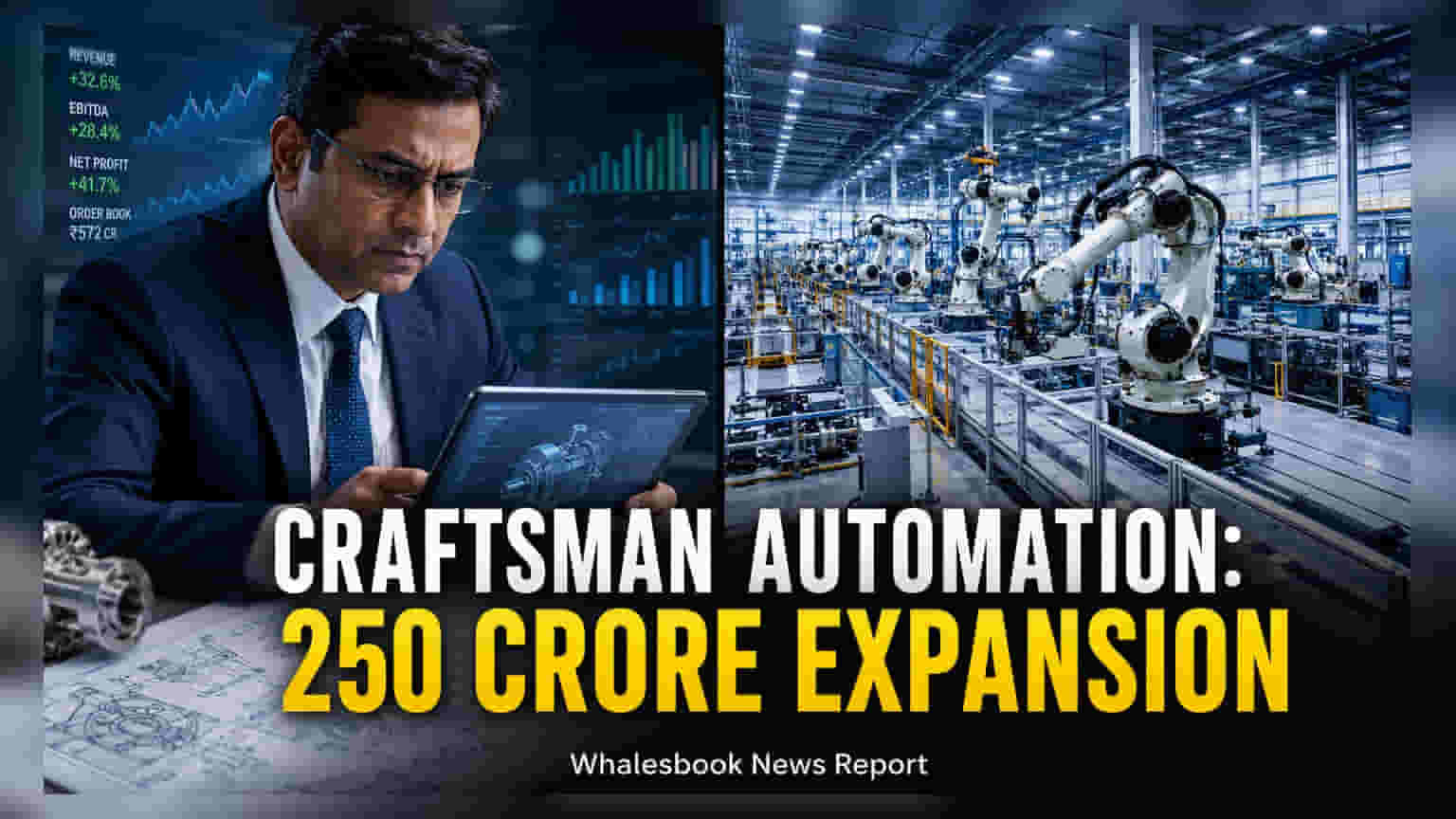
Craftsman Automation will invest ₹250 crore in a new Hosur manufacturing plant to meet rising demand from automotive customers. The project, launching in two phases over the next eight months, follows a strong Q1 FY27 where the company doubled its profit to ₹151 crore. Investors may track how this capital spending affects cash flow and long-term margins.
Craftsman Automation Ltd. has announced a ₹250 crore capital spending plan to set up a new manufacturing unit in Hosur, Tamil Nadu. This move aims to increase the company's production capacity to cater to the growing requirements of automotive Original Equipment Manufacturers (OEMs) in South India. The investment will be deployed in two stages, with ₹100 crore allocated for the first phase and ₹150 crore for the second. The company expects the facility to be operational within the next eight months.
Supporting Rising Production Needs
The decision to expand comes as Craftsman Automation reports high production levels across its existing aluminium product units. Currently, these facilities, which supply critical parts to major two-wheeler and passenger vehicle makers, are operating at about 85% of their total capacity. By establishing a new plant near key customer hubs, the company expects to reduce logistics costs and improve delivery efficiency. This proximity to major automotive manufacturing clusters in the South is a strategic effort to defend and grow its market share in the auto components sector.
Financial Context and Growth
This expansion is supported by a robust start to the current fiscal year. In the first quarter of FY27, Craftsman Automation recorded a consolidated net profit of ₹151 crore, a significant jump from ₹70 crore in the same quarter of the previous year. Revenue also grew by 36% to reach ₹2,432 crore. Growth was reported across all three of the company's primary business segments: powertrain components, aluminium products, and its industrial and engineering division.
Investor Monitorables
While the expansion signals confidence in demand, investors often look at how such spending impacts the balance sheet. A key area to track will be the company’s ability to manage its debt levels while funding this project. Although the company has shown strong earnings growth, the heavy capital requirement could lead to higher borrowing costs or reduced cash flow in the short term. Additionally, the success of this facility will depend on the sustained demand from the automotive sector. If the auto market faces a slowdown or if OEM production schedules are delayed, it could impact how quickly the new capacity is utilized. Monitoring the project’s commissioning timeline and the company’s future profit margin trends will be important for understanding the long-term impact of this investment.