 Whalesbook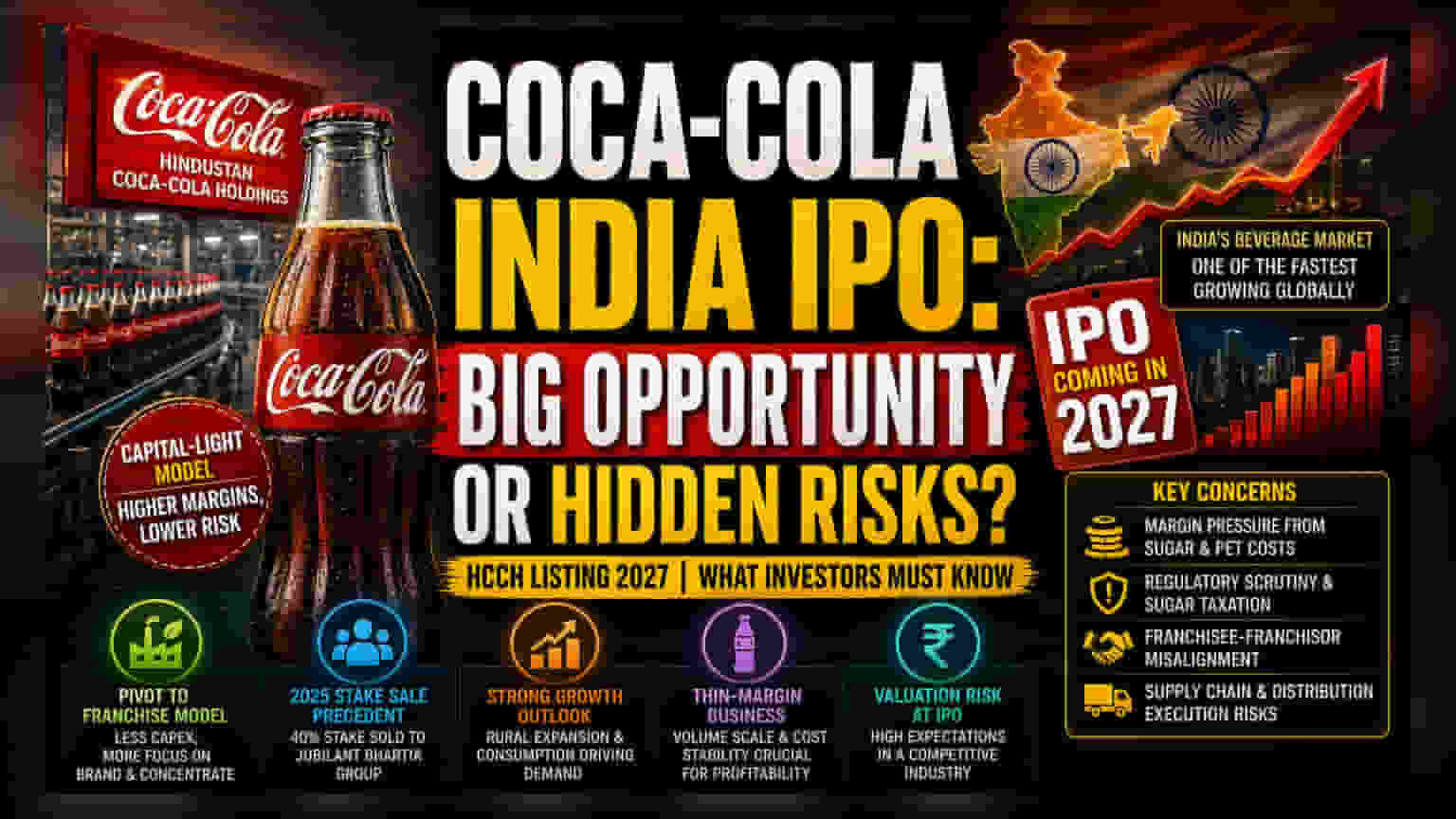


The Capital-Light Pivot
The proposed listing of Hindustan Coca-Cola Holdings (HCCH) represents the final phase of a deliberate shift toward a capital-light business model in one of the world's fastest-growing consumer markets. By transitioning from a direct owner-operator to a franchisor, The Coca-Cola Company is effectively removing the heavy depreciation and operational risks associated with massive bottling infrastructure from its consolidated balance sheet. This strategy mirrors the company’s successful refranchising initiatives in North America and Europe, where the objective remains maximizing margins by focusing exclusively on brand equity and the proprietary concentrate supply chain.
Market Dynamics and Valuation Risks
While the prospect of owning a slice of India’s beverage supply chain is likely to attract significant institutional interest, investors should note the specific structural nuances of this model. The 2025 divestment of a 40% stake to the Jubilant Bhartia Group set a precedent for localized control, yet the upcoming IPO introduces complexities regarding valuation multiples in a highly competitive, climate-sensitive industry. Historically, pure-play bottling entities in emerging markets have struggled with margin compression during periods of volatile commodity prices—particularly sugar and PET resin—which directly impacts the profitability of the manufacturing arm independently of the parent company's brand power.
The Forensic Bear Case
The reliance on a franchise model brings inherent long-term risks that are often overlooked during the initial excitement of a public offering. Specifically, the misalignment of interests between the franchisor and the franchisee can lead to friction, particularly regarding capital expenditure requirements for plant upgrades and distribution expansion. Furthermore, the Indian beverage market is currently facing intensified regulatory scrutiny regarding health-centric product labeling and sugar taxation. Any shift in consumer preference toward lower-margin, healthier alternatives could force the bottler into expensive, forced operational pivots that the parent company, operating as a mere concentrate provider, may not fully subsidize. Investors should remain cautious of the premium likely to be baked into this IPO, as the entity will be exposed to significant supply chain risks without the full backing of the global parent's capital reserves.
Future Outlook and Sector Context
As the 2027 timeline approaches, the success of this offering will depend heavily on the sustained growth of India's rural distribution networks and the stabilization of input costs. Market analysts anticipate that the IPO will likely serve as a benchmark for other global consumer goods firms seeking to localize their capital structures. However, the ultimate test for HCCH as a public entity will be its ability to navigate the thin-margin nature of mass-market bottling while maintaining the high growth rates expected by shareholders in a volatile emerging market environment.