

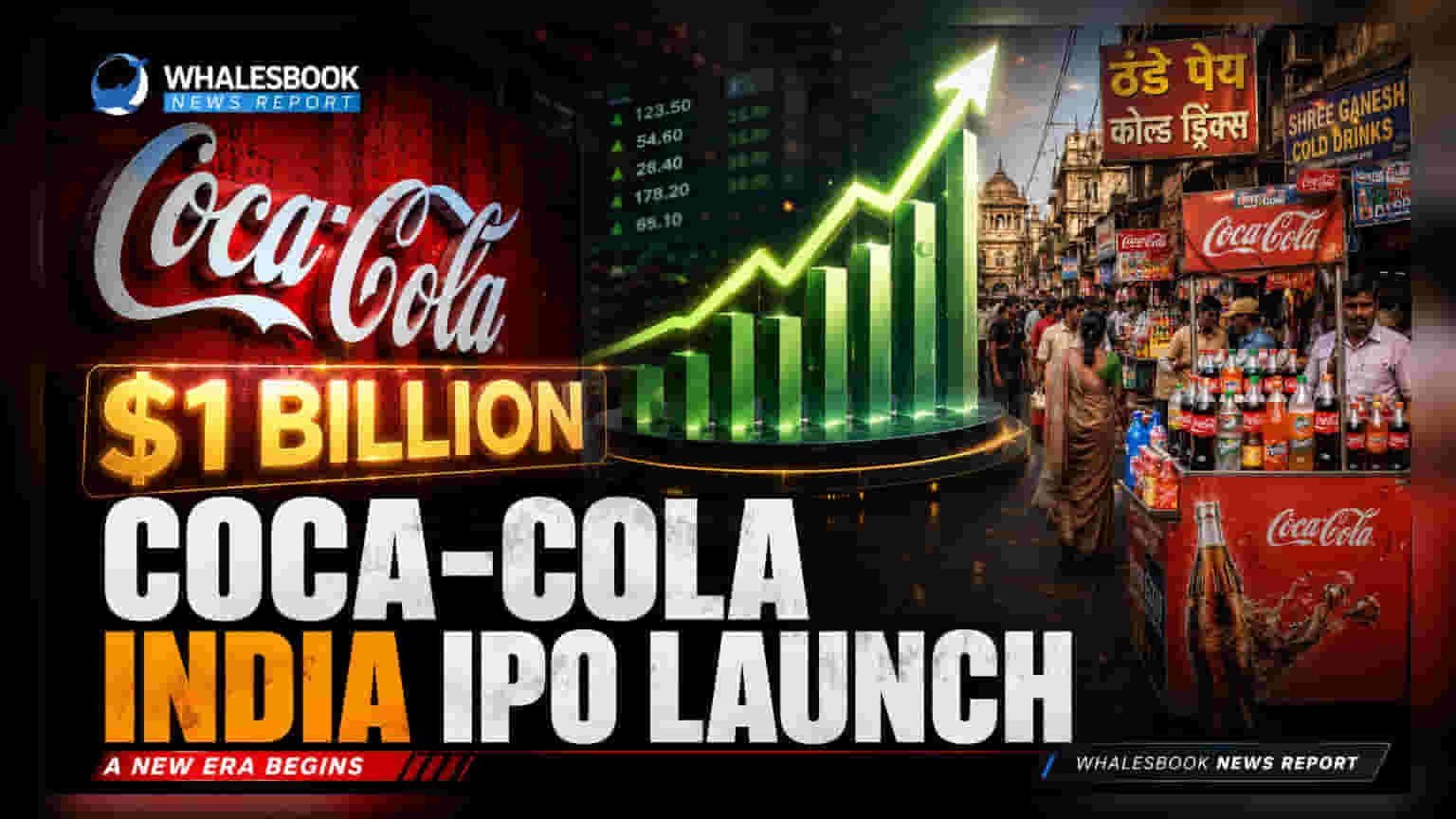
Coca-Cola Co. is preparing to list its Indian bottling subsidiary, Hindustan Coca-Cola Holdings, in a $1 billion IPO targeted for 2027. The deal aims for a valuation of nearly $10 billion, signaling a major strategic shift for the beverage giant in India. Investors are looking at this as a significant development in the domestic FMCG sector.
What Happened
Coca-Cola Co. has formally announced plans to take its Indian bottling operations public by 2027. The company is exploring an Initial Public Offering (IPO) for its Indian subsidiary, Hindustan Coca-Cola Holdings (HCCH), which acts as the parent firm for its largest local bottler, Hindustan Coca-Cola Beverages (HCCB). The company is reportedly seeking to raise around $1 billion through this offering, aiming for a total enterprise valuation of approximately $10 billion.
Investment banks have been invited to pitch for the deal, with firms like Rothschild & Co. already involved as advisors. This planned listing follows a significant strategic move in 2025, where the Jubilant Bhartia Group acquired a 40% stake in the bottling unit, setting the stage for this eventual public listing.
Strategic Business Shift
For investors, the core meaning behind this move is a shift in Coca-Cola’s business model in India. Traditionally, global beverage giants have managed their own capital-intensive bottling networks. By listing the bottling arm, Coca-Cola is accelerating its move toward an "asset-light" model. This structure allows the parent company to focus on high-margin tasks like brand building, marketing, and syrup manufacturing, while the publicly listed bottling entity handles the heavy-duty work of manufacturing, distribution, and logistics.
This strategy is designed to improve capital efficiency. By bringing in partners like the Jubilant Bhartia Group and eventually listing the business, Coca-Cola can offload significant operational and capital expenditure burdens while still maintaining strong control over its brands in the country.
Peer and Sector Context
In the Indian markets, the most relevant comparison for this IPO is Varun Beverages Ltd (VBL), which is the primary bottling partner for PepsiCo. VBL has long served as a benchmark for beverage bottling stocks, known for its rapid expansion, aggressive acquisition of territories, and efficient distribution network.
Analysts often look at VBL’s financial metrics—such as its operating margins and return ratios—to understand the potential of a large-scale bottling business in India. If the Hindustan Coca-Cola bottling unit lists, it will create a massive duopoly-like structure in the Indian stock market, offering investors a direct way to bet on the two largest cola brands in the country. VBL has maintained a strong track record, and the market will likely compare the valuation and margins of the new Coca-Cola entity against VBL’s performance.
Risks to Consider
The bottling business is not without challenges. Investors in this sector must track several specific risk factors:
- Environmental and Regulatory Pressure: Beverage bottling is water-intensive. Regulations in India are tightening around water usage and waste management. Additionally, mandatory plastic recycling norms (which require increasing levels of recycled content in bottles) could raise production costs if the supply of food-grade recycled plastic remains limited.
- Competitive Landscape: The sector is seeing intense competition. Reliance Consumer Products has aggressively expanded its "Campa Cola" brand, which competes directly with the established cola majors on price and distribution reach.
- Seasonality: Revenue for these companies is highly seasonal, with a significant portion of annual earnings tied to the summer months. Any weather disruption or demand slowdown during peak seasons can impact quarterly performance.
What Investors Should Track
As the 2027 target date approaches, investors should keep an eye on:
- Regulatory Filings: Future drafts (DRHP) will reveal the exact financial health, debt levels, and profitability of the bottling unit.
- Margin Trends: How the company manages the cost of raw materials—like sugar, packaging, and fuel—relative to its selling price.
- Expansion Updates: Whether the company continues to acquire new bottling territories or makes significant capital investments, which would signal its growth intent.
- Market Reception: The success of similar large-cap listings in the consumer sector, which often sets the sentiment for future IPOs.