

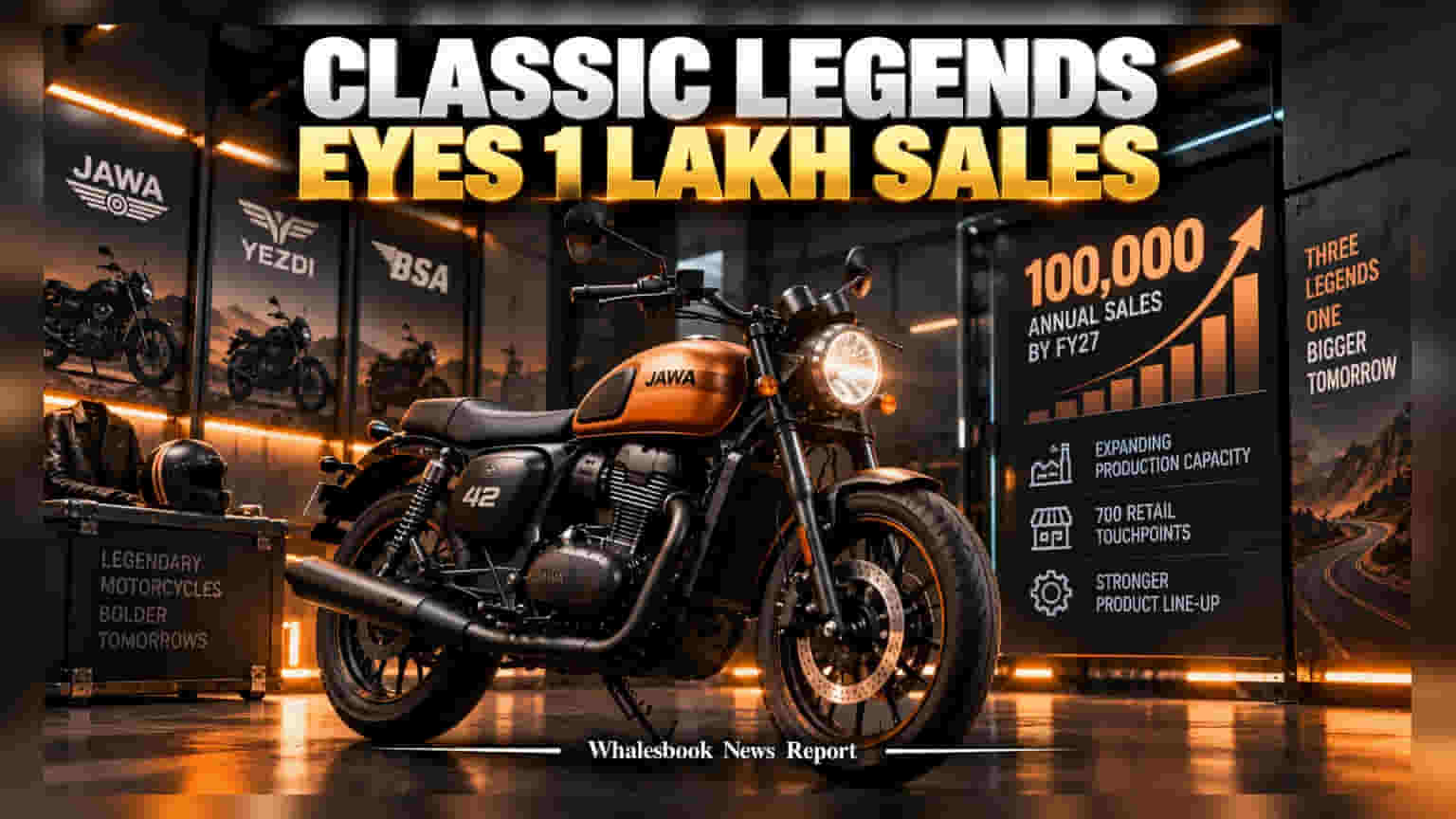
Classic Legends, a subsidiary of Mahindra & Mahindra, aims to reach 100,000 annual motorcycle sales by FY27. After achieving profitability in FY26 with 45,409 units sold, the company is scaling production and retail networks to challenge premium market leaders. Investors may track this progress as part of M&M's long-term strategy and potential future plans for an initial public offering (IPO) for the subsidiary.
Classic Legends, a subsidiary of Mahindra & Mahindra (M&M), is accelerating its growth strategy with a firm target to reach 100,000 annual motorcycle sales by FY27. This ambitious volume goal marks a significant step up for the brand, which manages the Jawa, Yezdi, and BSA nameplates. The announcement follows the company's first year of operational profitability in FY26, during which it sold 45,409 units.
For investors in Mahindra & Mahindra, this development is significant as Classic Legends represents a strategic diversification into the premium motorcycle market. With the subsidiary reportedly exploring a potential initial public offering (IPO) within the next 12 to 18 months, the scaling of operations—from manufacturing capacity to retail networks—is a critical metric for long-term value creation. The brand is currently leveraging a product blitz, including regular updates to its existing bike platforms to maintain consumer interest.
The company’s growth plan relies on expanding its physical presence, with a roadmap to grow its retail network toward 700 touchpoints from current levels exceeding 450. By refreshing models frequently and adding features, the firm aims to sustain demand without the heavy cost of designing entirely new motorcycle platforms from scratch.
The primary challenge remains the competitive landscape, where Royal Enfield continues to hold a dominant share of the premium motorcycle segment. Achieving the 100,000-unit milestone requires overcoming significant production bottlenecks. Management has previously indicated that current manufacturing capacity is a constraint, potentially necessitating the setup of new facilities to meet these higher volume demands. Any delay in expanding production or a potential slowdown in consumer demand for premium two-wheelers could pressure margins and impact the subsidiary’s financial objectives.
Investors monitoring M&M’s broader performance may track the progress of this subsidiary on three specific fronts: the clarity on the timeline for its potential IPO, the actual commissioning of new production capacity to support the 1-lakh unit goal, and the company's ability to capture market share from established incumbents while protecting its operating margins.