

Major Chinese car companies are entering the humanoid robotics market to offset falling profits from EV sales. By using their existing manufacturing expertise, firms like Xpeng and BYD aim to lead in commercial AI, though success depends on overcoming high production costs and international regulatory hurdles.
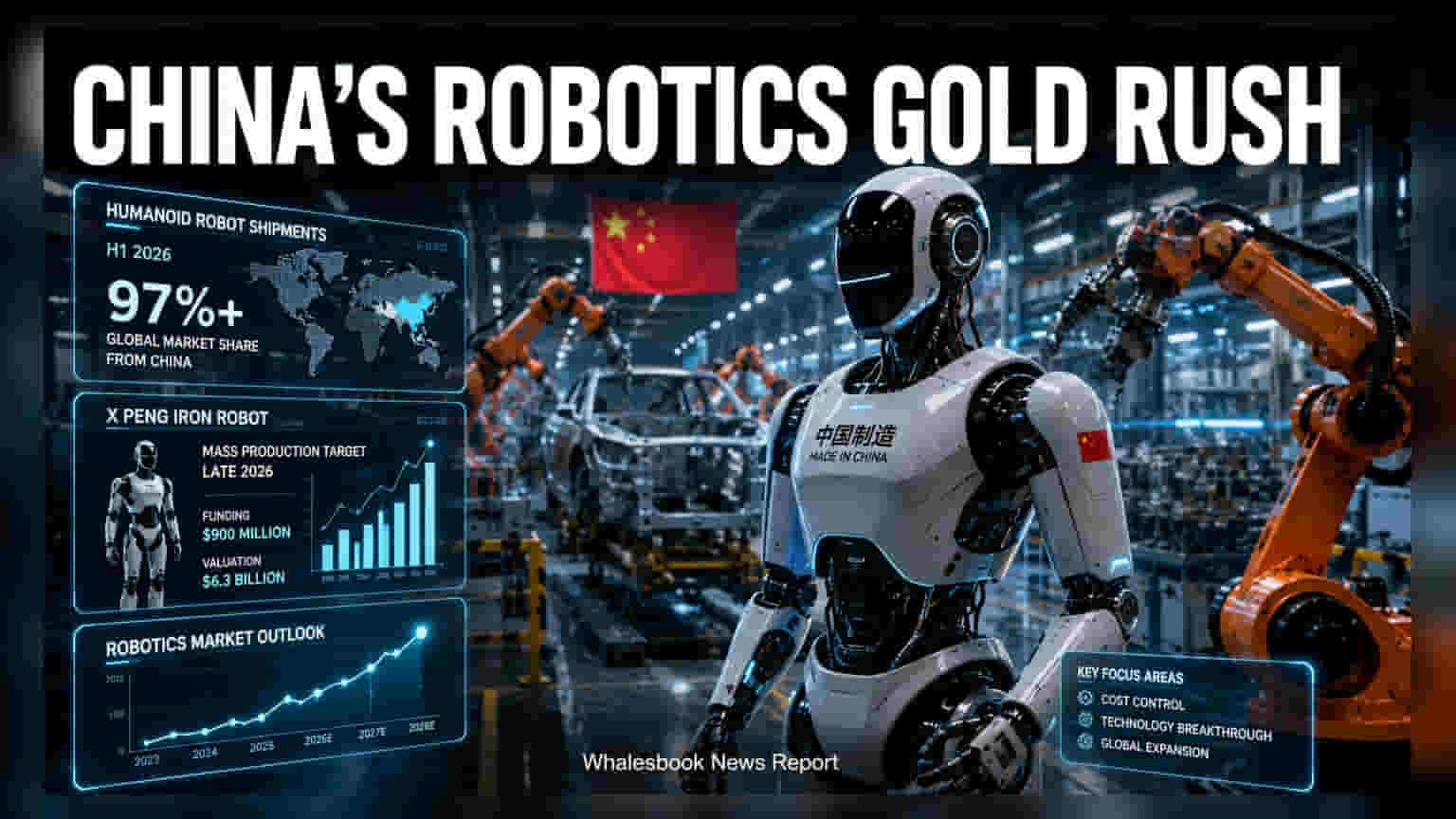
Major Chinese car manufacturers are aggressively entering the humanoid robotics industry as a strategy to combat shrinking profit margins in the electric vehicle market. With intense price competition squeezing traditional car businesses, executives are increasingly viewing robots as a critical long-term revenue stream. The sector has seen rapid growth, with Chinese companies accounting for over 97% of global humanoid robot shipments in the first half of 2026, though much of this currently serves internal manufacturing needs rather than open-market sales.
Leading the charge, Xpeng recently secured $900 million in funding for its robotics division, pushing the unit's valuation to $6.3 billion. The company has publicly targeted late 2026 for the start of mass production for its 'IRON' humanoid robot. Other automotive giants are following similar paths. BYD, for instance, unveiled its own humanoid robot named 'Xiao Di' in August 2026, which the company intends to deploy within its own showrooms and facilities to test reliability before wider commercial release.
The strategic rationale for this shift lies in existing manufacturing infrastructure. Unlike new robotics startups, carmakers already possess established supply chains, high-volume production experience, and internal teams skilled in sensor technology, AI, and battery systems. These companies are betting that by repurposing automotive-grade manufacturing processes, they can lower the cost of building robots and eventually outpace pure-play robotics firms.
However, investors should be aware of the substantial risks involved in this transition. Developing machines that can reliably navigate unpredictable real-world environments remains a massive technical challenge. While robots are viewed as a future growth area, they are currently a heavy expense. The significant capital spending required for research and development may put additional pressure on the already strained profit margins of these automakers if the robotics divisions do not become commercially viable quickly.
Furthermore, the global landscape poses geopolitical challenges. Rising international scrutiny, including the potential for future trade restrictions or import bans on Chinese-made humanoid technology in Western markets, could limit the global expansion plans of these firms. As the industry moves from internal pilot programs to commercialization, the key monitorables for investors will be the actual production timelines, the ability to control costs during the scaling phase, and whether regulatory barriers in overseas markets impact growth prospects.