

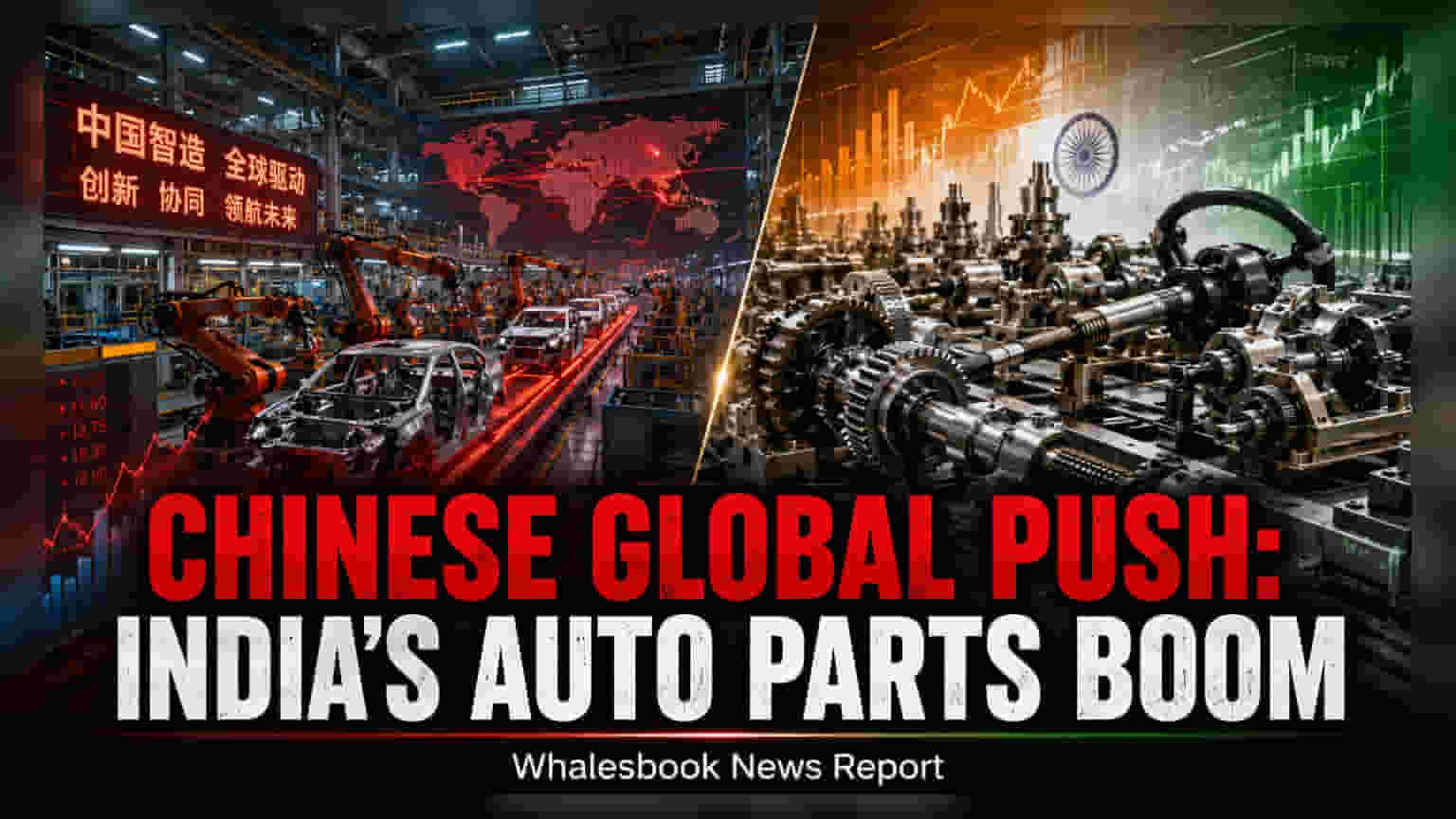
As Chinese automakers move production to Europe and Latin America to bypass trade barriers, Indian suppliers like Samvardhana Motherson and Sona Comstar are scouting for new partnership deals. While this global expansion offers a potential revenue boost, investors should remain aware of the sector's heavy dependence on Chinese imports and rising global competition.
Chinese car manufacturers are rapidly setting up factories in regions like Europe, Southeast Asia, and Latin America. Companies like BYD and SAIC Motor are driving this trend, partly to bypass international trade rules that make exporting directly from China harder. This strategy creates a new, potential revenue stream for Indian auto component manufacturers that already have their own production networks in these regions.
For major Indian players like Samvardhana Motherson International (SAMIL) and Sona Comstar, this represents a chance to become local partners for Chinese firms in new markets. SAMIL, which recently reported a strong Q1 FY27 performance with revenue of Rs 35,244 crore and a 70% increase in profit after tax, is well-positioned with a global network. The company is also expanding its capabilities, such as its recent investment in Shenzhen Autocruis Technology to enter the advanced camera-based systems market. Similarly, Sona Comstar is focusing on securing hybrid and electric vehicle driveline contracts, recently winning a significant order from a North American automaker.
However, the opportunity is complex. While Indian companies may win contracts, they also face significant challenges. Indian auto suppliers are heavily dependent on China for critical parts, with nearly 56% of India’s auto component imports consisting of transmission, steering, and engine parts. This deep reliance on Chinese imports limits the value Indian firms can add domestically. Furthermore, Indian suppliers are not only competing with each other; they are also competing against Chinese component vendors who are expanding internationally alongside their home-grown carmakers.
Investors should also consider that the global electric vehicle (EV) market is seeing unpredictable demand, with several regions reporting sales that fall short of earlier expectations. This volatility creates uncertainty for order visibility. As Chinese automakers try to balance domestic pricing pressures with the higher costs of operating in international markets, the success of Indian suppliers will depend on their ability to offer technology, quality, and cost advantages that local European or American suppliers—and even Chinese domestic suppliers—cannot match.
Moving forward, the key things for investors to watch are not just the announcements of new partnerships, but the actual execution of these orders. Success will depend on whether Indian firms can integrate their global operations to support these new clients effectively, the trend in commodity prices like copper and aluminum, and whether they can reduce their dependence on Chinese imports for essential safety and power electronics components.