

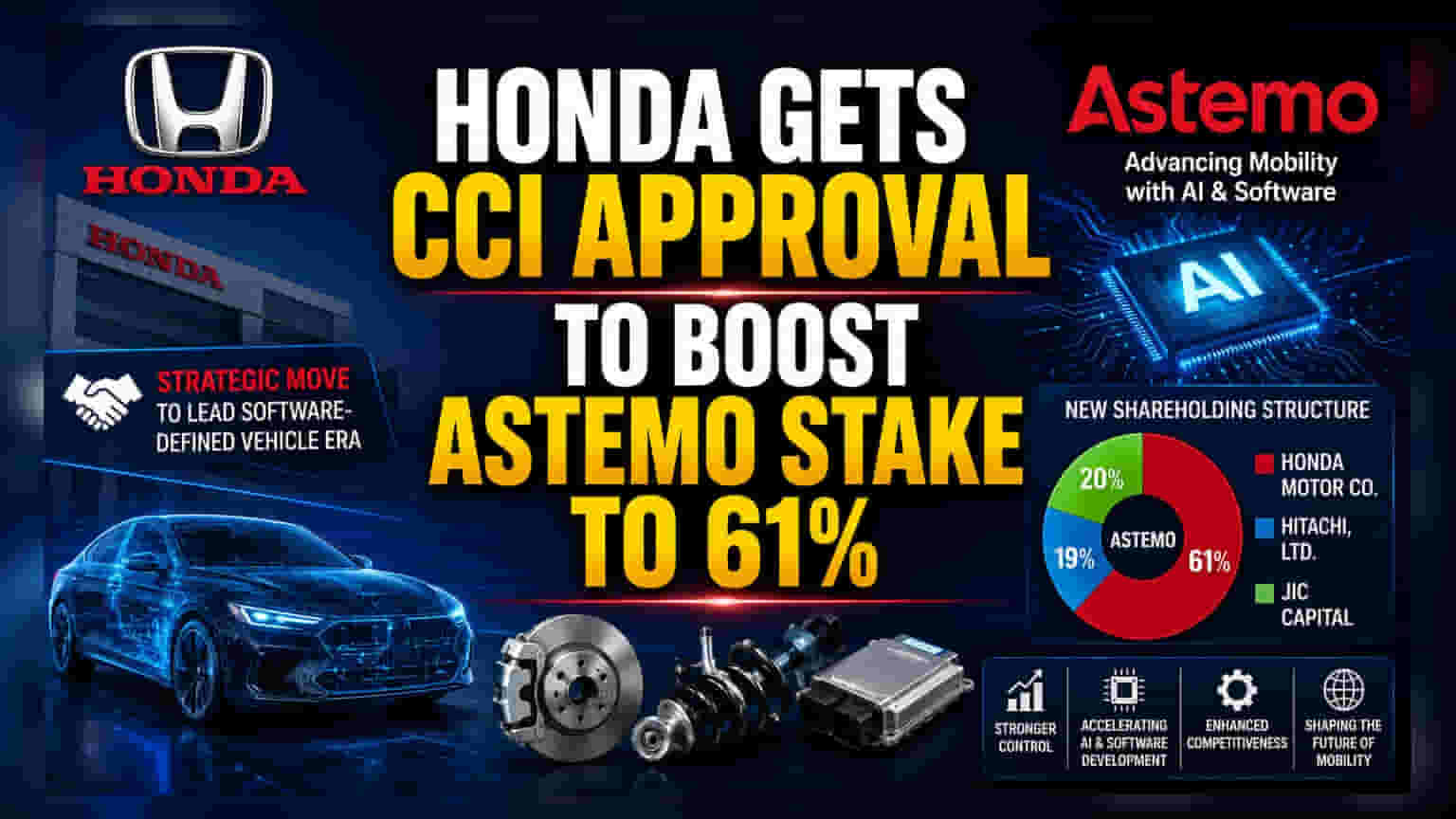
The Competition Commission of India has approved Honda Motor's proposal to acquire an additional 21% stake in automotive components manufacturer Astemo from Hitachi. This transaction will turn Astemo into a consolidated subsidiary of Honda, helping the automaker tighten its control over its critical auto parts supply chain.
What Happened
The Competition Commission of India (CCI) has granted approval to Honda Motor Co., Ltd. for its proposal to acquire an additional 21% voting interest in Astemo Ltd. from Hitachi, Ltd. This regulatory clearance paves the way for a major shift in the shareholding of the automotive component maker. Following the completion of this transaction, Honda's stake in Astemo will rise to 61%, allowing the automaker to consolidate Astemo as a subsidiary. The move follows an agreement announced by the companies in December 2025.
The New Shareholding Structure
Astemo, originally formed in 2021 through the merger of Hitachi Automotive Systems with Honda’s former subsidiaries—Keihin, Showa, and Nissin Kogyo—has seen several capital changes over the years. Before this acquisition, the shareholding was split between Honda (40%), Hitachi (40%), and JIC Capital (20%). Post-transaction, the structure will evolve to:
- Honda Motor Co.: 61%
- Hitachi, Ltd.: 19%
- JIC Capital: 20%
Strategic Logic Behind The Move
The automotive industry is rapidly transitioning toward Software-Defined Vehicles (SDVs), where vehicle value is increasingly driven by software rather than just hardware. Honda has stated that this consolidation is essential to accelerate the high-speed, high-efficiency development of artificial intelligence and software technologies. By taking majority control, Honda aims to lead the transformation of Astemo into a supplier that can integrate hardware and software more seamlessly, which the automaker considers critical for its future competitive edge in mobility.
Why This Matters For The Sector
While Astemo operates as a private entity in India, this development has wider implications for the automotive ecosystem. Astemo is a major supplier of key components such as brakes, suspension systems, and powertrain parts used by various automakers, including Honda. Tightening corporate control allows Honda to align Astemo’s product roadmap more closely with its own vehicle development cycles. For the Indian auto ancillary industry, such consolidations reflect a broader trend where global auto majors are seeking deeper integration of their supply chains to manage the complexities of transitioning to electric and software-driven vehicles.
What Investors Should Track
As this is a global restructuring move, investors in Indian auto and auto ancillary stocks may look for indirect impacts. Key monitorables include whether this closer integration leads to improved cost efficiency for Honda's vehicles, or if there are shifts in procurement strategies for other automakers that rely on Astemo's components. Additionally, market participants may watch for any impact on the competitive landscape within the Indian auto parts segment, as Astemo continues to be a prominent player in the manufacturing and supply of critical automotive and two-wheeler components.