

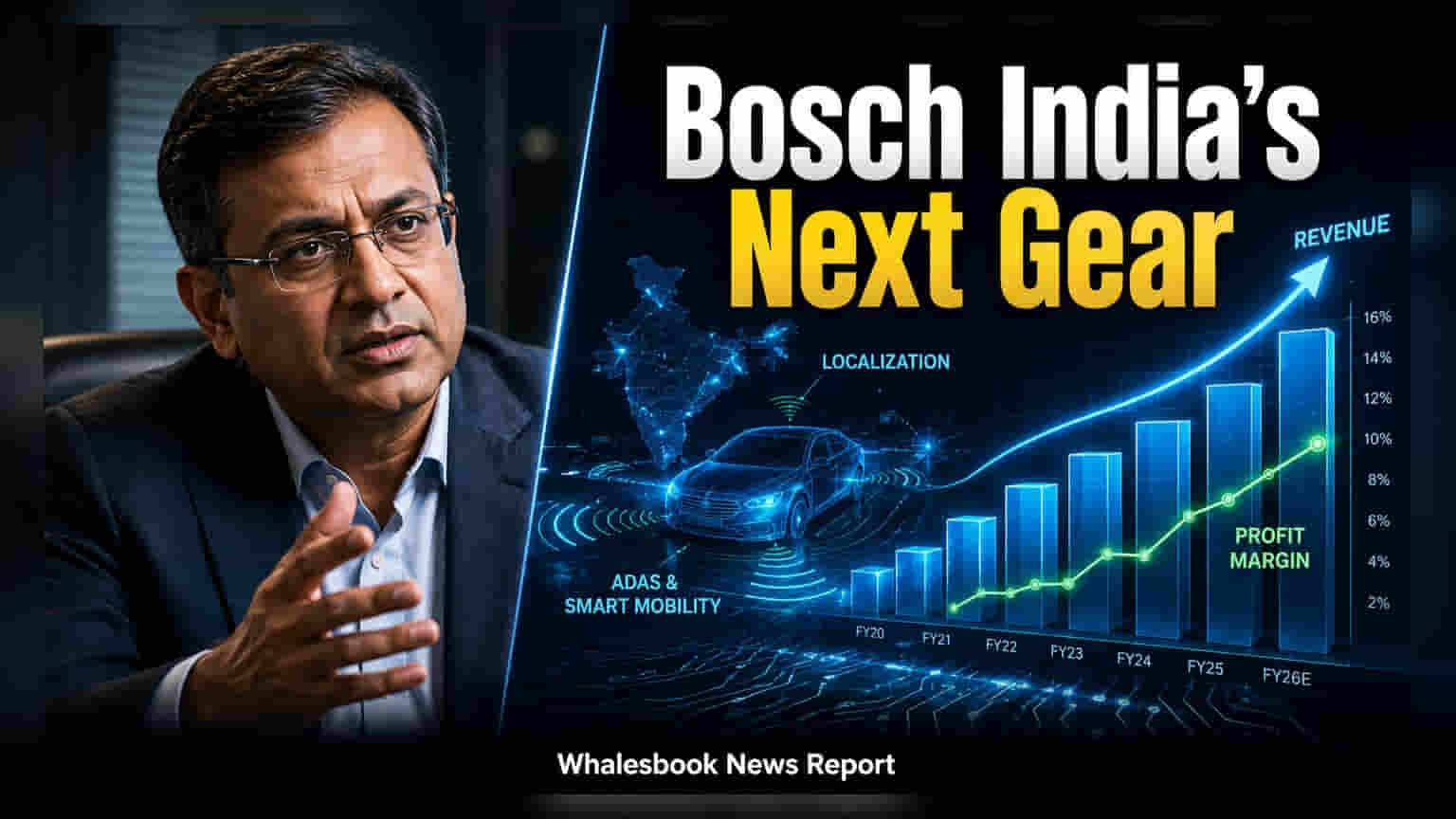
Bosch India reported a 22% rise in revenue to ₹5,841.9 crore for the June quarter, supported by strong demand in its power solutions segment. The company is prioritizing localization and new technologies like ADAS to sustain a 14% EBITDA margin. Investors are monitoring how the company manages potential risks, including commodity price inflation and supply chain issues, while transitioning toward advanced automotive tech.
Bosch India, a major player in the automotive technology sector, posted a 22% increase in revenue for the first quarter ending June 2026, reaching ₹5,841.9 crore. This growth was supported by solid operational performance, as the company’s EBITDA margin reached 14.1%, showing a steady improvement from the 13.4% recorded in the same period last year.
While the company saw strong top-line growth, net profit declined by approximately 37% to ₹705 crore. Investors should note that this decline is primarily due to a large, one-time exceptional gain that was included in the previous year's financial results. When this one-off item is excluded, the underlying profit demonstrates a healthy growth of nearly 9.9%, indicating stable core performance.
Strategic Shift Toward New Technologies
Bosch is moving beyond traditional combustion engines by investing heavily in localization and next-generation automotive technologies. A major driver during the quarter was the power solutions business, which grew by 29%. The company is preparing for future regulatory changes, including CAFE Phase III, and is increasingly focused on Advanced Driver-Assistance Systems (ADAS) and software-defined vehicles.
Additionally, the company’s push into the electric vehicle space remains a critical area of growth. The e-axle joint venture with Tata AutoComp Systems, based in Nashik, is scheduled to commence operations by late next year. This, combined with a focus on premium product offerings and two-wheeler electrification, is part of the company's broader strategy to diversify its portfolio.
Financial Strength and Operational Risks
A notable strength for the company is its debt-free balance sheet, which provides the financial flexibility to invest in research and new manufacturing capacity without the pressure of interest repayments. However, the path ahead is not without challenges. Management has identified several risks that could influence future performance.
Global geopolitical uncertainties continue to pose a risk to supply chains and shipping costs. Furthermore, commodity price inflation—specifically for materials like steel and aluminum—remains a concern. If these input costs continue to rise, they could pressure operating margins unless the company can effectively pass these costs to its customers. Other factors, such as monsoon variability, are also being monitored for their potential impact on rural demand and the broader automotive market.
Moving forward, the key monitorable for investors will be the speed at which the company executes its transition toward premium, tech-heavy products and how effectively it gains market share in the rapidly evolving electric two-wheeler segment.