

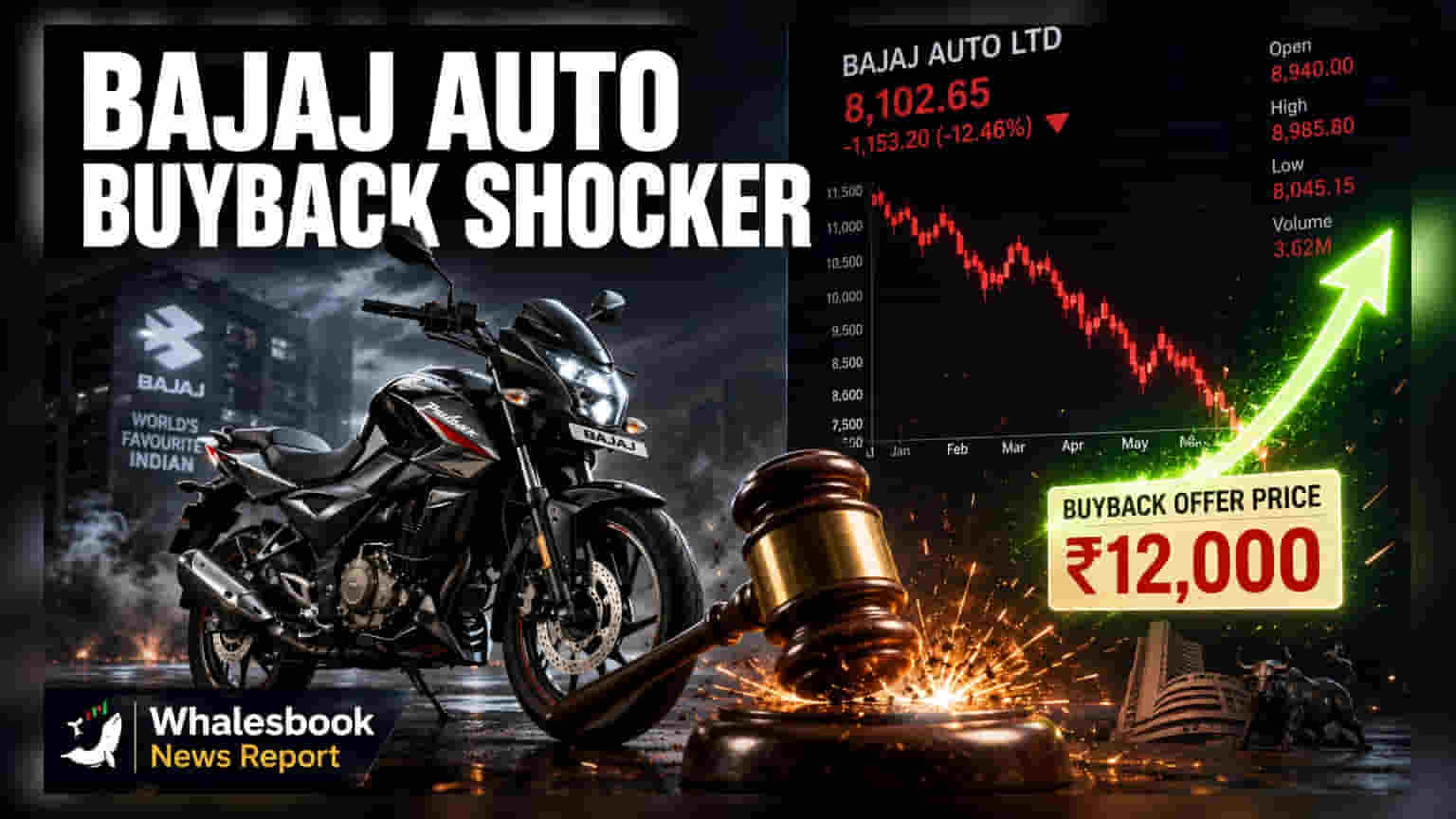
Bajaj Auto has officially opened its largest-ever share buyback at ₹12,000 per share, representing a 22% premium. The process, which runs from July 1 to July 7, follows new tax regulations implemented in April 2026. Investors should understand how the tender route works, the impact of the acceptance ratio on total returns, and the change from dividend-based taxation to capital gains tax.
What Happened
Bajaj Auto has commenced its share buyback program, offering to repurchase up to 46.94 lakh shares at a price of ₹12,000 per share. This tender offer, valued at approximately ₹5,632.8 crore, opened on July 1 and is scheduled to close on July 7, 2026. The buyback price represents a premium of around 22% compared to the stock's closing price on July 1. Investors who held shares on the record date of June 24 are eligible to participate in this offer. The company's move to return capital via a buyback is often seen as a way to manage its cash reserves and reward shareholders.
How The Tender Route Works
This buyback is being conducted through the tender route. In this process, eligible shareholders must specifically offer or 'tender' their shares to the company through their brokers within the specified window. Unlike selling shares on the stock exchange where the transaction is immediate, a tender offer is not guaranteed to be fully accepted. If the number of shares tendered by investors exceeds the total amount the company intends to buy back, the company will accept shares on a proportionate basis. This means an investor may have only a portion of their tendered shares bought back, with the remainder left in their demat account for future trading.
The New Tax Reality
Changes to tax regulations for share buybacks, effective April 1, 2026, are a key factor for investors to understand. Previously, the buyback amount was treated as dividend income and taxed according to the investor's individual income tax slab, which was often higher. Under the current rules, tax is levied only on the actual profit realized. This profit is determined by subtracting the original purchase price (cost of acquisition) from the buyback price of ₹12,000. For instance, if an investor originally bought the shares at a lower cost, only the difference is taxable. This profit is now subject to capital gains tax rates, with long-term capital gains taxed at 12.5% and short-term gains at 20%, which provides more clarity and potentially better tax outcomes for many investors compared to the previous structure.
Why Acceptance Ratio Matters
While the 22% premium looks attractive, the final financial outcome for an investor depends heavily on the 'acceptance ratio.' This ratio determines what percentage of the tendered shares the company will actually buy. Because 15% of the total buyback size is reserved for small shareholders, retail investors may have a better probability of having a larger portion of their shares accepted compared to non-retail participants. However, the exact ratio will only be clear after the buyback window closes and the company tallies the total number of applications.
What Investors Should Track
Investors who have tendered their shares should track the final confirmation of acceptance from their brokers following the July 7 closing date. The key monitorables include the final acceptance ratio, the timeline for the credit of funds to bank accounts, and the status of any unaccepted shares. Those who do not wish to tender can continue to hold their shares or sell them on the open market, depending on their investment goals. Monitoring exchange filings from Bajaj Auto after the close of the offer will provide the final details on the buyback success.