

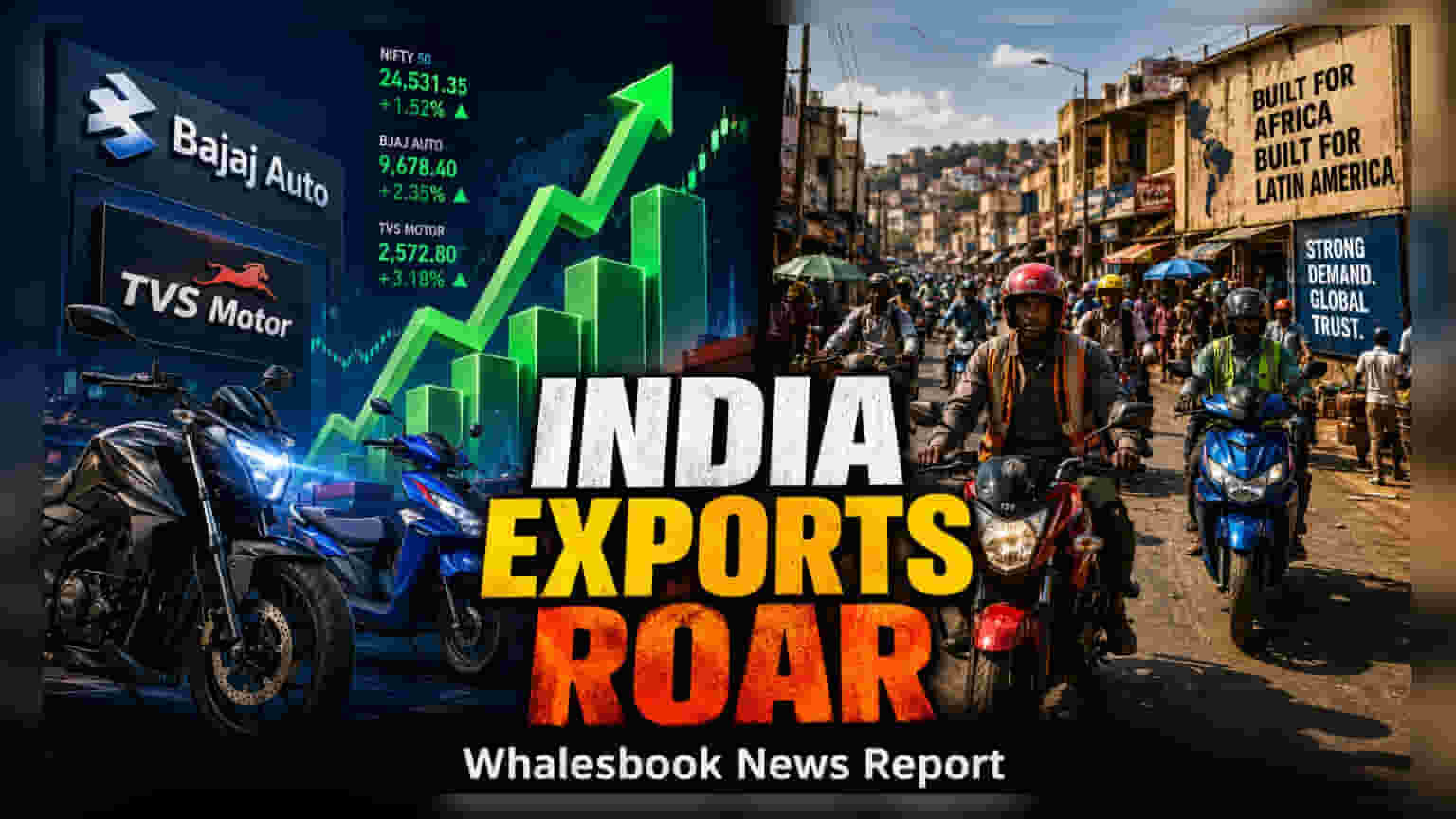
India's two-wheeler exports rose nearly 37% to 1.5 million units in the June quarter, led by record volumes from Bajaj Auto and TVS Motor. This recovery follows a period of instability in key African and Latin American markets, marking a significant shift for the sector's international business performance.
Detailed Coverage
Indian two-wheeler manufacturers have seen a strong recovery in international demand, with total exports climbing to 1.5 million units during the June quarter. According to data from the Society of Indian Automobile Manufacturers (SIAM), this represents a 37% increase compared to the same period last year. This rebound is particularly significant as it signals that challenges such as foreign exchange shortages and political instability in major export destinations—which plagued the sector throughout FY24 and FY25—are beginning to ease.
Bajaj Auto Leads Export Volume Growth
Bajaj Auto has regained its position as a key driver of this export momentum. In a notable turnaround, the company exported 636,005 two-wheelers in the June quarter, surpassing its domestic sales of 586,547 units. This performance marks a sharp contrast to the previous year when domestic demand heavily outweighed international shipments. The growth is largely attributed to improved demand in Nigeria, where the company's Boxer Heavy Duty motorcycle remains a key product, and a recovery in KTM-branded motorcycle exports from India. Management has indicated that monthly export volumes are projected to exceed 250,000 units, aiming to maintain this trajectory through the remainder of FY27.
TVS Motor and Industry Performance
TVS Motor Company also reported strong international results, recording 419,737 units sold in overseas markets. This represents a 66% growth compared to the previous year, highlighting the company's successful expansion into new geographies. Together with Bajaj Auto, these two companies account for nearly two-thirds of India's total two-wheeler exports. Other major manufacturers, including Hero MotoCorp, Honda Motorcycle & Scooter India, and Suzuki Motorcycle India, have also contributed to the sector-wide increase in shipments.
Sector Context and Monitorables
While the current export surge is positive, investors may monitor how sustained demand in emerging markets like Africa and Latin America influences future profit margins. A significant portion of this sector's profitability depends on currency fluctuations in these regions and the stability of local import policies. Additionally, while the domestic market has been supported by favorable tax policies, the overall health of the two-wheeler industry remains tied to both global shipping costs and the ability of manufacturers to manage supply chain logistics amid ongoing international conflicts. The next key indicator for investors will be whether these export volumes remain stable in the second half of the year as the companies look to scale their international footprint further.