

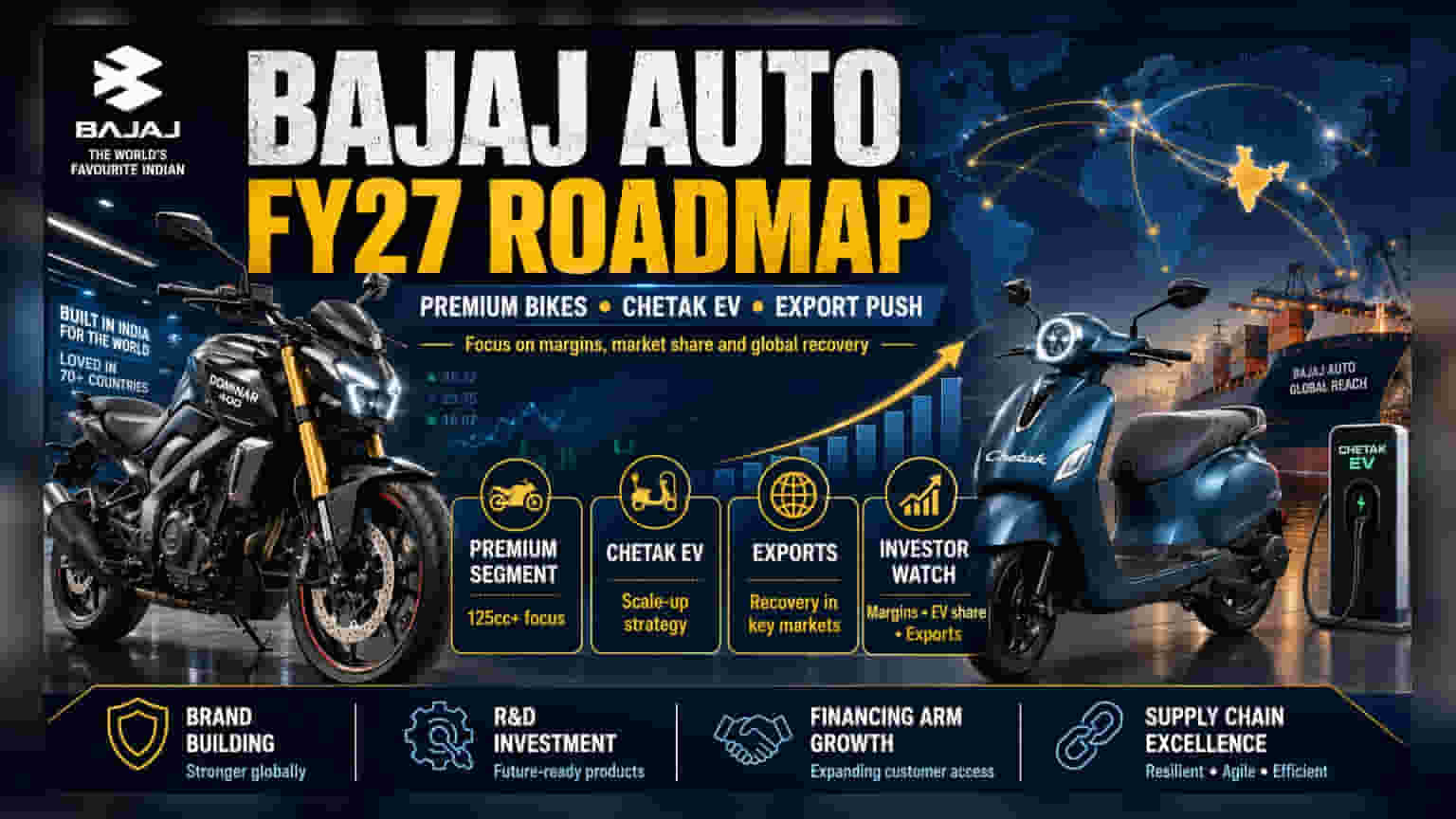
Bajaj Auto is sharpening its focus on premium motorcycles and the Chetak electric scooter for fiscal year 2027. The plan emphasizes domestic market growth and a recovery in export volumes despite global supply chain hurdles. Investors will watch how these strategic investments and R&D spending influence profitability and market share in an increasingly competitive EV and premium segment.
What Happened
Bajaj Auto has outlined its strategic roadmap for the fiscal year 2027, focusing on two main areas: expanding its premium motorcycle portfolio and scaling up the Chetak electric scooter brand. Chairman Niraj R. Bajaj stated that the company will prioritize product interventions and brand-building to boost competitiveness in the 125cc-plus motorcycle market. Additionally, the company plans to push for higher export volumes to recover from global headwinds, while scaling up its dedicated financing arm, Bajaj Auto Credit, and R&D initiatives under Bajaj Auto Technology.
The Premium and EV Strategy
The company's move into the premium segment relies heavily on its partnerships with brands like KTM and Triumph. By focusing on the 125cc-plus segment, Bajaj Auto is trying to capture more value per unit sold, as these bikes typically offer better profit margins than entry-level motorcycles. Simultaneously, the Chetak electric scooter remains a core pillar for the company’s EV growth. Bajaj is not only increasing capacity for its electric portfolio but also investing in alternative material sourcing to reduce dependence on vulnerable supply chains.
Managing the Export and Supply Chain Puzzle
Historically, exports have been a major revenue driver for Bajaj Auto, often contributing a significant portion of its total income. The company is now navigating a complex global environment where geopolitical issues and shifting trade dynamics have complicated international logistics. While the management has noted signs of recovery in key international markets, they acknowledge that commodity price inflation and logistics disruptions remain persistent challenges. The strategy involves a delicate balance: leveraging the brand’s global presence while managing the cost pressures that these supply chain problems create.
Financial and Operational Context
Bajaj Auto typically maintains a strong balance sheet with substantial cash reserves, which provides a buffer against temporary market volatility. However, the current strategy involves heavy investment in capacity expansion, R&D, and brand activations. While this spending is intended to fuel future growth, investors often monitor how such expenditures affect short-term profit margins. The scaling of in-house services like vehicle financing is designed to support sales by making premium and electric vehicles more accessible to customers, effectively creating a captive market for its products.
Competitive and Sector Outlook
The Indian two-wheeler market is becoming increasingly crowded. In the premium motorcycle space, Bajaj competes with players like Royal Enfield and TVS Motor Company, which have also been aggressively updating their product lineups. In the electric scooter segment, the competition is even stiffer, with established players like TVS and Ather Energy, alongside new entrants, constantly updating their technology and pricing. Bajaj's success will depend on its ability to execute its product-launch timeline and maintain its brand appeal without compromising on profitability.
What Investors Should Track
For investors, the key monitorables over the coming quarters include the company's market share in the electric two-wheeler segment and its ability to maintain profit margins amid rising R&D and expansion costs. Additionally, the recovery trajectory of export volumes will be critical to watch, as any further disruption in global trade could weigh on overall revenue growth. Management commentary on demand trends in both the premium domestic segment and key export geographies will also provide clues about the effectiveness of their current product interventions.