 Whalesbook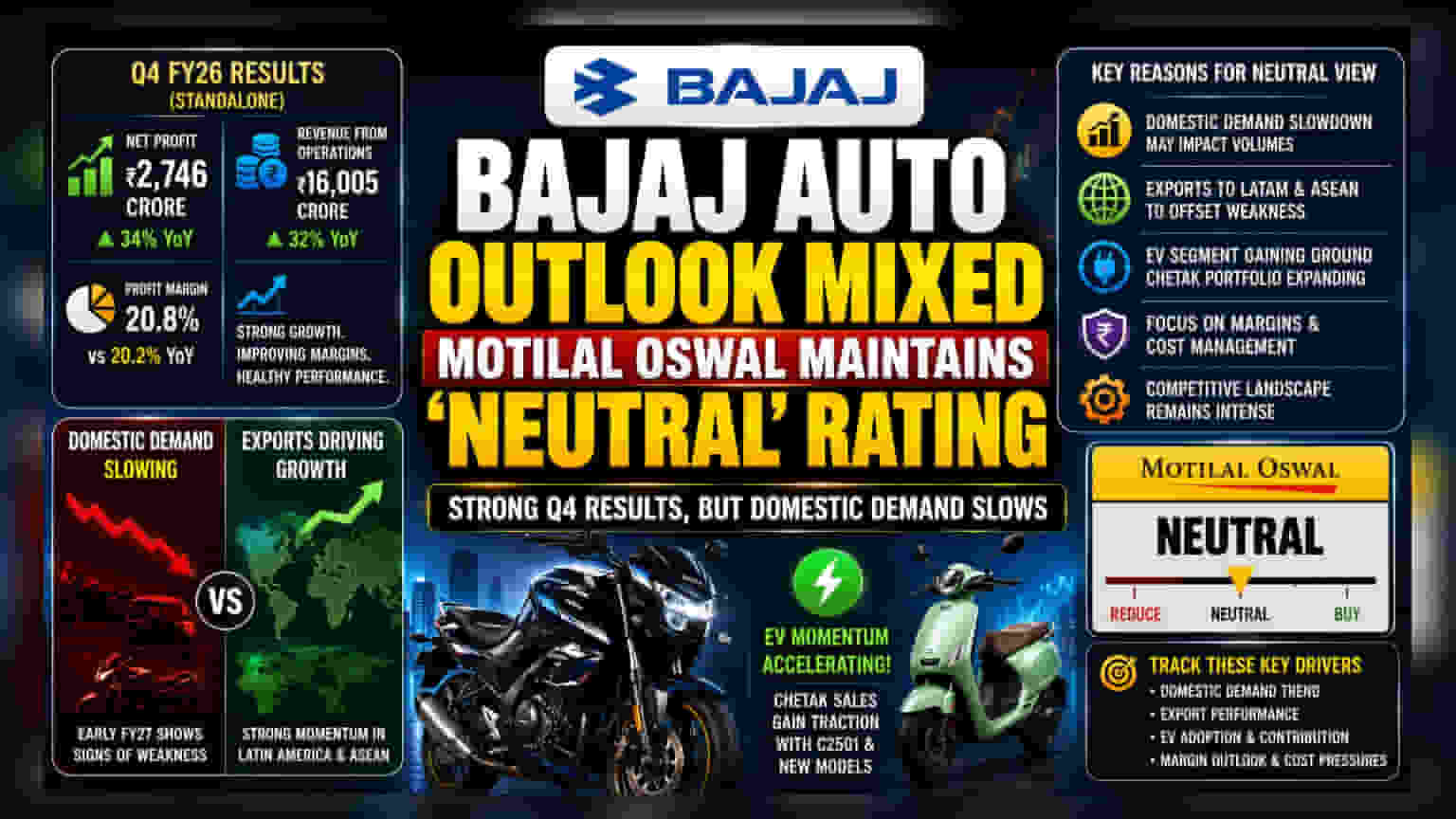


Motilal Oswal maintained a 'Neutral' rating on Bajaj Auto, citing a potential slowdown in domestic demand for FY27. However, the brokerage remains positive on the company's export growth and the rising sales of its electric Chetak scooters.
What Happened
Motilal Oswal Financial Services has kept its 'Neutral' rating on Bajaj Auto shares. While the brokerage maintains a balanced view on the company, it has noted a potential slowdown in domestic demand during the early months of the fiscal year 2027. This cautious outlook arrives shortly after the company released a strong financial performance for the quarter ending March 2026.
Why The Outlook Is Mixed
Investors are currently balancing two competing trends for the company. On one side, the domestic market is showing signs of cooling off, which can impact sales volume for motorcycles and three-wheelers. On the other side, the company is seeing positive momentum in its export markets, particularly in regions like Latin America and the ASEAN nations. Exports have historically been a significant contributor to Bajaj Auto’s revenue, and the company is counting on these international markets to help offset any weakness in local sales.
The EV Push
The company is also gaining ground in the electric vehicle segment. Sales of the electric Chetak are increasing, supported by the launch of new models like the C2501. The shift toward electric vehicles is a major trend across the Indian two-wheeler industry, and the successful growth of the Chetak portfolio is a key positive factor for the company's future. Analysts are closely watching how this electric segment contributes to long-term profitability and whether it can help the company maintain its competitive position.
A Look At The Recent Financials
Bajaj Auto finished the fiscal year 2026 with strong results. In the fourth quarter, the company reported a standalone net profit of Rs 2,746 crore, which is a 34% increase compared to the same period last year. Revenue from operations also rose, climbing 32% to Rs 16,005 crore. Profit margins, which indicate how much of the revenue is converted into profit, improved to 20.8% from 20.2% the previous year. These results show the company's ability to maintain healthy operations, even as the broader auto industry faces a complex economic environment.
What Investors Should Monitor
The most important factor to track in the coming months will be the actual demand trend in the domestic market. If the slowdown in sales volume continues or intensifies, it could put pressure on the company’s revenue growth. Additionally, investors will watch for updates on export performance to see if international demand remains strong enough to balance the domestic volatility. The speed of electric vehicle adoption and the company's ability to protect its profit margins against potential cost pressures will also be essential areas for shareholders to follow.