

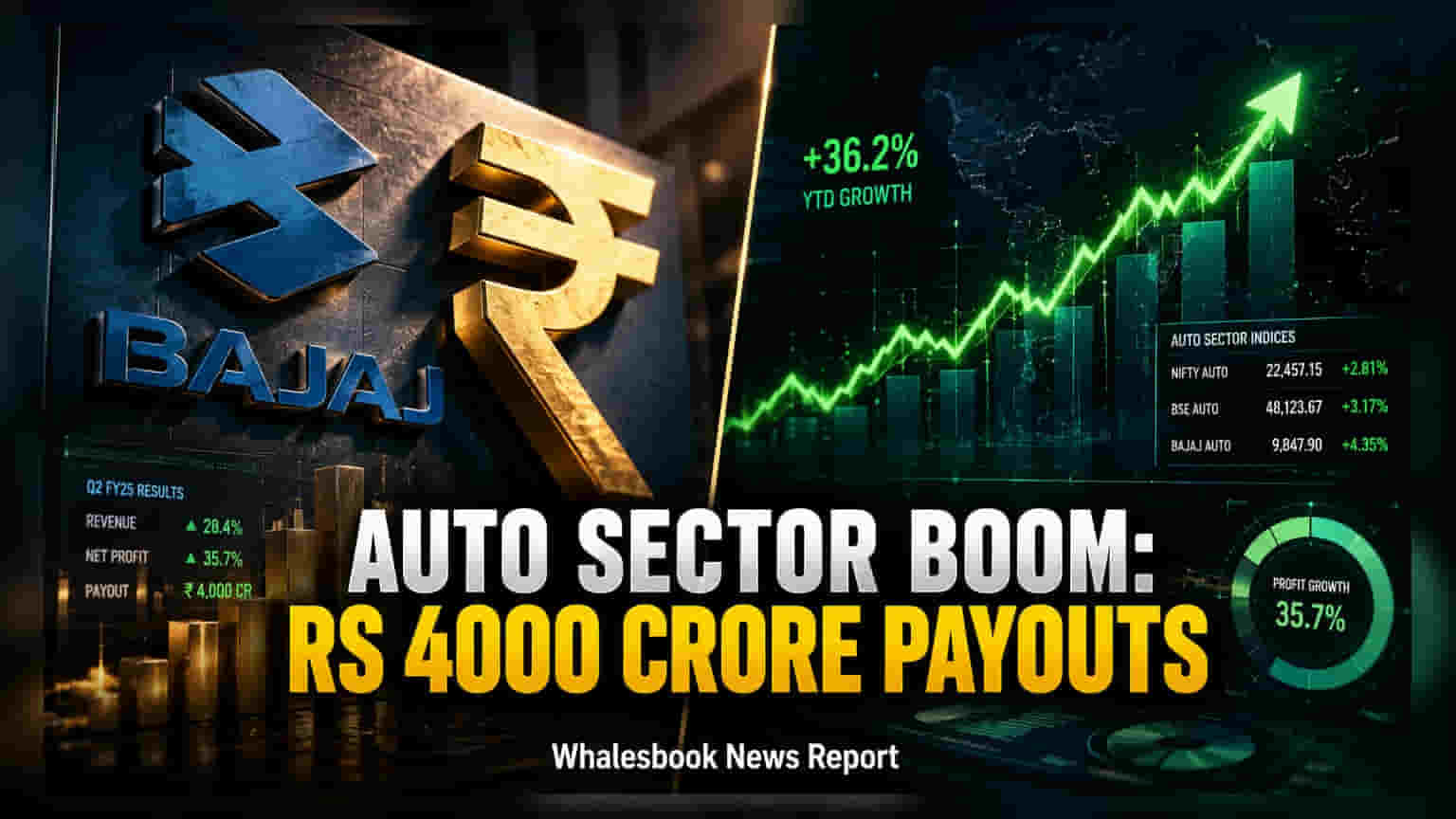
The government has disbursed ₹750 crore to Bajaj Auto under the Production-Linked Incentive scheme for achieving incremental sales targets. This payout is part of a larger ₹4,000 crore disbursement plan for the auto sector in the current fiscal year. Investors may track how these incentives impact the company's future cash flow and profit margins.
The central government has begun disbursing incentives under the Production-Linked Incentive (PLI) scheme for the automobile sector, with Pune-based Bajaj Auto becoming the first recipient this fiscal year. The company has received approximately ₹750 crore, a payment linked to incremental sales of about ₹6,000 crore achieved during the 2025-26 period.
Budget Allocation and Scheme Scope
This payout is part of a broader push to accelerate growth in the domestic automotive industry. The government has set aside nearly ₹4,000 crore for disbursements across eligible auto and auto component manufacturers during this fiscal year. The financial commitment to this program has grown significantly, with the budget allocation for the Auto PLI scheme rising to ₹5,939.87 crore for the current year, compared to ₹2,091.26 crore in the previous fiscal period.
Approved in September 2021 with a total outlay of ₹25,938 crore, the PLI scheme rewards companies for meeting specific targets related to production volume, capital spending, and domestic value addition. For Bajaj Auto, the approval covered 13 vehicle models across its two-wheeler and three-wheeler segments, provided the company meets strict requirements regarding local manufacturing and value addition.
Investor Perspective on PLI Benefits
The receipt of these incentives serves as a direct boost to the company's cash flow. Historically, such government incentives act as a supporting factor for profit margins, as they effectively lower the cost of production or reward efficiency in scaling up operations. By the end of last December, data indicated that various beneficiaries under the PLI umbrella had collectively achieved incremental sales worth ₹32,879 crore, with roughly ₹1,350.83 crore already paid out to five applicants prior to this latest round.
For investors, the key monitorable remains how effectively the company manages these inflows alongside its ongoing capital spending plans. While the influx of cash is positive for liquidity, the long-term impact on profitability will depend on the company’s ability to sustain sales growth in a competitive two-wheeler market. Shareholders may also track future exchange filings for updates on additional claims or further disbursements as the company continues to meet its phased production and domestic content targets. The success of this scheme relies on the company's consistent ability to meet performance benchmarks, and any changes in government policy or future regulatory audits regarding domestic value addition will be worth following.