 Whalesbook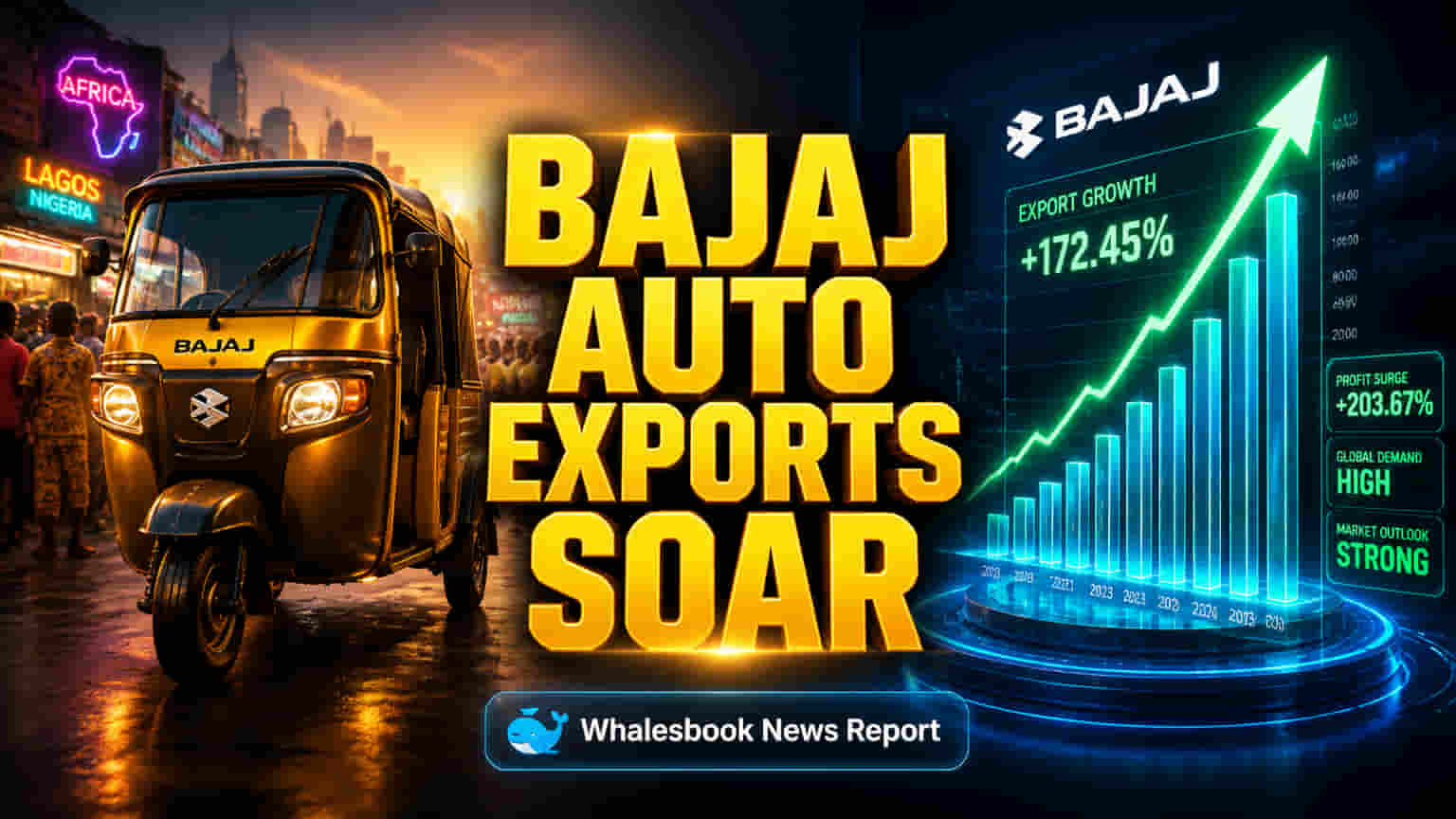


April Sales Soar on Strong Exports
Bajaj Auto's operations accelerated in April, with total sales climbing 40% year-on-year to 5.13 lakh units. This strong performance was driven by an impressive 83% surge in exports, reaching 2.65 lakh units and outpacing domestic sales of 2.48 lakh units. Growth was widespread, with commercial vehicle exports, particularly three-wheelers, jumping 125%, and two-wheeler exports rising 78%. This export-led expansion shows the company's strong global standing. Shares rose, trading around ₹10,445 on May 4, 2026, up approximately 4.5% and nearing multi-month highs, with trading volume at 240,620 shares. The company's P/E ratio hovers around 32.7x, with a market capitalization near ₹2.92 lakh crore, showing investor confidence. This strong export performance is linked to improving macroeconomic conditions in key markets like Nigeria and Sri Lanka, coupled with favorable currency movements that improve profits.
Triple-Engine Growth Strategy: EV, Premium, Exports
Looking ahead to fiscal year 2027, Bajaj Auto is focused on a "triple-engine" growth strategy. Exports remain a key part, projected to sustain momentum. Simultaneously, the company is increasing focus on clean mobility, scaling up its electric scooter Chetak, where it holds a significant market share of approximately 23%. Analysts expect continued growth in this segment, alongside expansion of its CNG portfolio with vehicles like the Freedom 125. Premiumization is the third growth area, marked by plans for a new motorcycle brand targeting the ₹1.5–2 lakh segment and an expanded Triumph lineup in sub-350cc categories. This strategy aims to diversify revenue streams and capture higher-margin segments.
Navigating Global and Domestic Risks
While the export surge is a clear positive, a closer look shows significant risks. The company's greater reliance on overseas markets, which now account for over half of total volumes, makes it vulnerable to geopolitical disruptions. Shipping route uncertainties, particularly concerning the Red Sea corridor, have begun to increase shipping costs and travel times for auto exports to Europe. These shipping challenges are pressuring margins, even if direct volume impacts are not yet pronounced. Furthermore, currency fluctuations in key emerging markets, while currently favorable, risk sustained export profits. Domestically, Bajaj Auto faces growing competition. Its motorcycle market share has declined from 18.5% in FY20 to around 16% in FY26, with competitors like TVS Motor gaining ground, especially in larger engine segments. The anticipated progress of its CNG motorcycle has also been slower than initially projected, indicating execution challenges. In the rapidly evolving EV space, aggressive competition from players like Ola Electric and TVS Motor requires constant innovation to maintain its leading positions.
Board Meeting to Discuss Results and Buyback
Bajaj Auto's strong export-led performance comes ahead of a key capital allocation decision. The company's board is scheduled to meet on May 6, 2026, to review its March quarter results and discuss a potential share buyback. With an estimated cash surplus of ₹15,000–₹16,000 crore, the company is well-placed to balance investments in the EV and CNG transition with shareholder returns. Investors are watching this decision closely, given the company's history of rewarding shareholders through dividends and buybacks, including a previous tender offer at ₹10,000 per share in 2024.
Analyst Views and Company Valuation
Analysts are generally positive, with most recommending 'Buy' ratings and average price targets between ₹10,124 and ₹10,352, suggesting modest room for growth. Some forecasts, like Emkay Global's ₹11,100 target, show confidence in the EV and export recovery. However, some analysts still see Bajaj Auto's P/E ratio, around 30.9x, as high compared to some rivals like Hero MotoCorp (19.2x) but lower than TVS Motor (61.8x). The company's strategic direction towards exports, EV, and premiumization, along with prudent capital allocation, is key to its investment appeal, though managing geopolitical and domestic competition will be crucial for continued growth.