

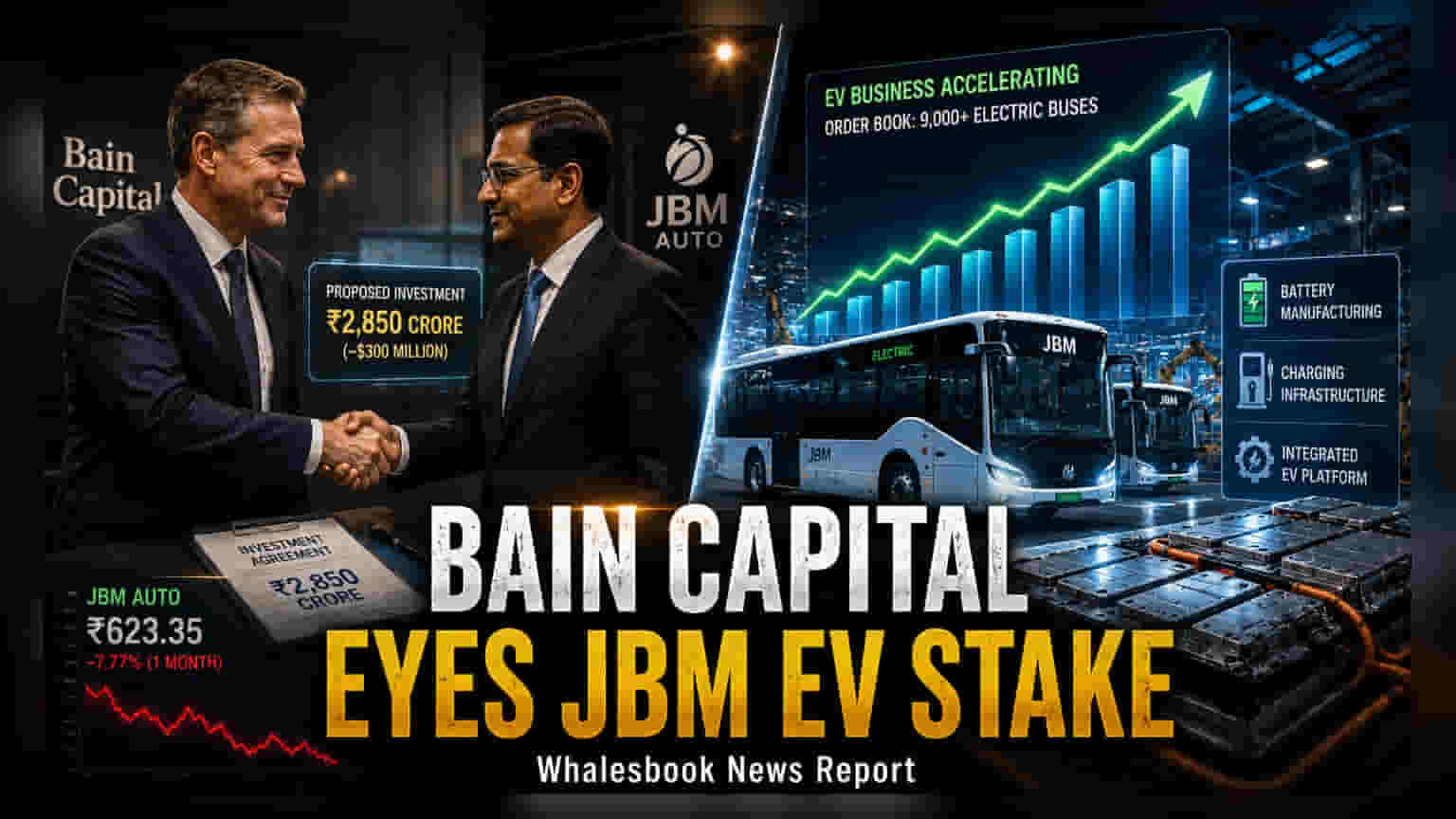
Bain Capital is in advanced negotiations to invest up to ₹2,850 crore in JBM Auto’s electric vehicle subsidiary. This capital injection could accelerate the company’s expansion of its integrated clean energy platform. Investors may monitor how this deal addresses the company's liquidity position and the execution of its large electric bus order book.
Bain Capital is in advanced discussions to acquire a significant minority stake in JBM Auto’s electric vehicle business. The proposed investment, which could reach approximately ₹2,850 crore (around $300 million), marks a major effort to scale the company's clean energy operations. Discussions regarding the exact stake size and potential joint control are reportedly ongoing.
JBM Auto has established a strong niche in the electric bus market, particularly in the tarmac and luxury coach segments. The company operates as an integrated EV platform, managing everything from battery manufacturing to charging infrastructure. For shareholders, this deal is significant as it provides capital to support an order book of over 9,000 electric buses that the company plans to deliver over the next two and a half years.
While the expansion opportunity is notable, investors are balancing this growth narrative with the company's current financial position. In the first quarter of the 2026-27 fiscal year, JBM Auto reported a consolidated net profit of ₹422 million, with earnings per share (EPS) of 1.78. A key area for shareholders to track is the company’s working capital cycle. Recent data shows debtor days have risen to 131 days, suggesting the company is waiting longer to collect payments from clients. In a capital-intensive industry like EV manufacturing, managing these collections is vital to maintaining financial stability.
The company has been actively seeking external capital to manage these high requirements, including a recent ₹900 crore funding round from Motilal Oswal for its subsidiary, JBM Ecolife. The potential Bain Capital deal would be another major step in this strategy, likely aimed at improving liquidity and supporting large-scale infrastructure deployment.
The stock closed at ₹623.35 on August 20, 2026. Like many companies in the manufacturing sector, JBM Auto has experienced recent stock price volatility, with a one-month return of approximately -7.77%. Market participants will likely focus on the finalized terms of this deal to see how it affects shareholder value and control.
The next important monitorable for investors is the official confirmation of the deal structure and its impact on the company's debt-to-equity profile. Additionally, the ability of the company to convert its large order book into actual cash flow while controlling its debtor days will be essential for long-term performance.