 Whalesbook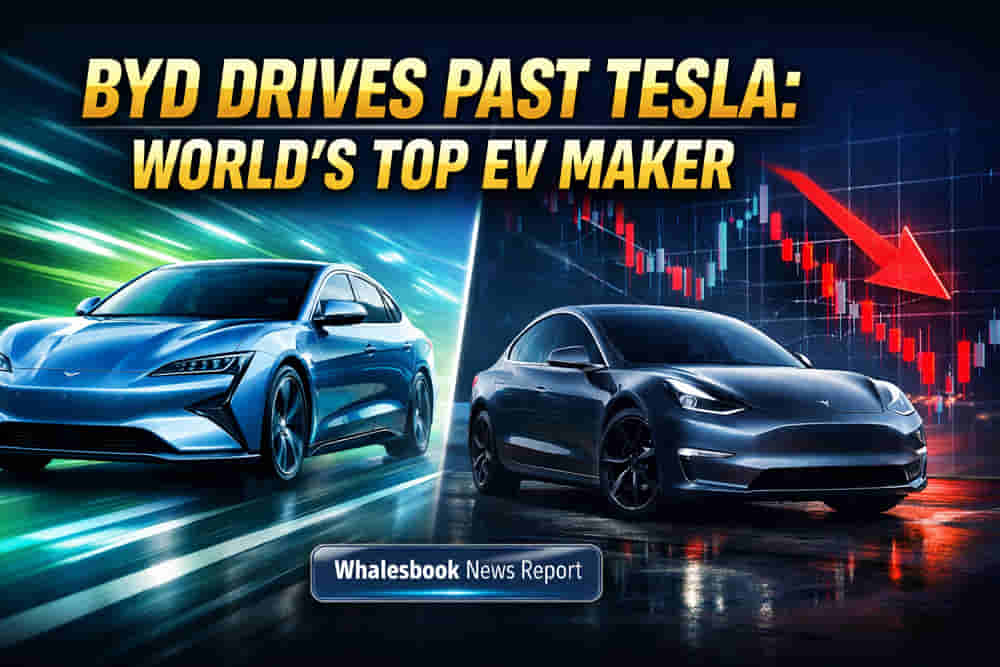
BYD Claims Top EV Spot in 2025 After Meeting Sales Target
BYD Co. has successfully achieved its revised full-year sales target for 2025, delivering an impressive 4.6 million vehicles. This performance positions the Chinese automotive giant to potentially surpass Tesla Inc. and claim the title of the world's largest electric vehicle (EV) manufacturer. The company's sales grew by 7.7% compared to 2024, meeting the goal that BYD had previously lowered in September.
Navigating Market Pressures
Despite this significant milestone, BYD and its competitors are bracing for a challenging year ahead. China is actively reducing incentives that have historically supported EV purchases. Concurrently, an influx of new electric models is intensifying domestic competition, while potential trade barriers loom over BYD's global expansion ambitions.
Intensifying Domestic Competition
The competition in China's auto market has become notably fiercer over the past year. BYD, consistently China's best-selling carmaker, is facing heightened pressure from rivals such as Geely Automobile Holdings Ltd. and Xiaomi Corp. These companies are attracting consumers with rapid innovation and compelling new vehicle offerings.
Leadership Confidence Amidst Challenges
BYD's Chief Executive Officer, Wang Chuanfu, acknowledged in early December that the company's technological advantage, which it held in previous years, has diminished, impacting domestic sales. However, he expressed strong confidence in the ability of BYD's 120,000-strong engineering team to drive new technological breakthroughs and regain competitive edges, according to Chinese media reports.
Surge in Overseas Deliveries
A clear bright spot for BYD has been its remarkable growth in international markets. Deliveries outside of China reached 1.05 million units in 2025. Building on this momentum, the company has set an ambitious goal to expand overseas sales to between 1.5 million and 1.6 million units in 2026, according to a November report by Citigroup Inc.
Financial Headwinds and Scrutiny
BYD is currently navigating significant financial headwinds, having posted consecutive declines in quarterly profit. The company also finds itself at the center of China's efforts to curb aggressive discounting practices within the auto industry. This increasing scrutiny is widely expected to accelerate industry consolidation and potentially reshape the sector's hierarchy.
Analyst Optimism and Tesla's Struggles
Notwithstanding these challenges, market observers generally believe BYD is better positioned than many competitors to weather the current environment. Analyst estimates compiled by Bloomberg project that BYD's total sales could climb to 5.3 million units in the upcoming year. Analysts at Deutsche Bank anticipate that new product launches and the unveiling of an advanced technology platform will significantly boost BYD's competitiveness.
This potential strengthening of BYD's position comes as its rival, Tesla, grapples with its own set of difficulties. The US automaker experienced a sales slump early in 2025 due to production line retooling for its redesigned Model Y. Factors such as CEO Elon Musk's polarizing public persona and the US government's decision to end federal purchase subsidies for EVs are also expected to dampen demand going forward.
Impact
BYD's performance and potential leadership shift could significantly alter the global EV landscape, intensifying competition and possibly accelerating the transition towards electrification worldwide. The company's strategic moves, particularly its international expansion, will have considerable implications for global trade dynamics and market access. Increased competition may lead to more affordable options for consumers, but also poses challenges for industry consolidation and smaller players. The outcome will influence investment strategies and market valuations across the automotive sector globally.
Impact Rating: 8/10
Difficult Terms Explained
- Electric Vehicle (EV): Vehicles that are powered partially or fully by electricity stored in rechargeable batteries, with zero tailpipe emissions.
- Incentives: Financial benefits, such as tax credits or subsidies, provided by governments to encourage consumers to purchase specific products like electric vehicles.
- Trade Barriers: Government-imposed restrictions on international trade, such as tariffs or quotas, designed to protect domestic industries or influence trade relationships.
- Consolidation: The process within an industry where smaller companies are acquired by larger ones, leading to a market dominated by fewer, larger entities.
- Quarterly Profit: The net income or earnings a company generates over a three-month period, after deducting all expenses and taxes.
- Aggressive Discounting: A sales strategy involving significant price reductions or heavy promotions to attract customers, often leading to lower profit margins.