

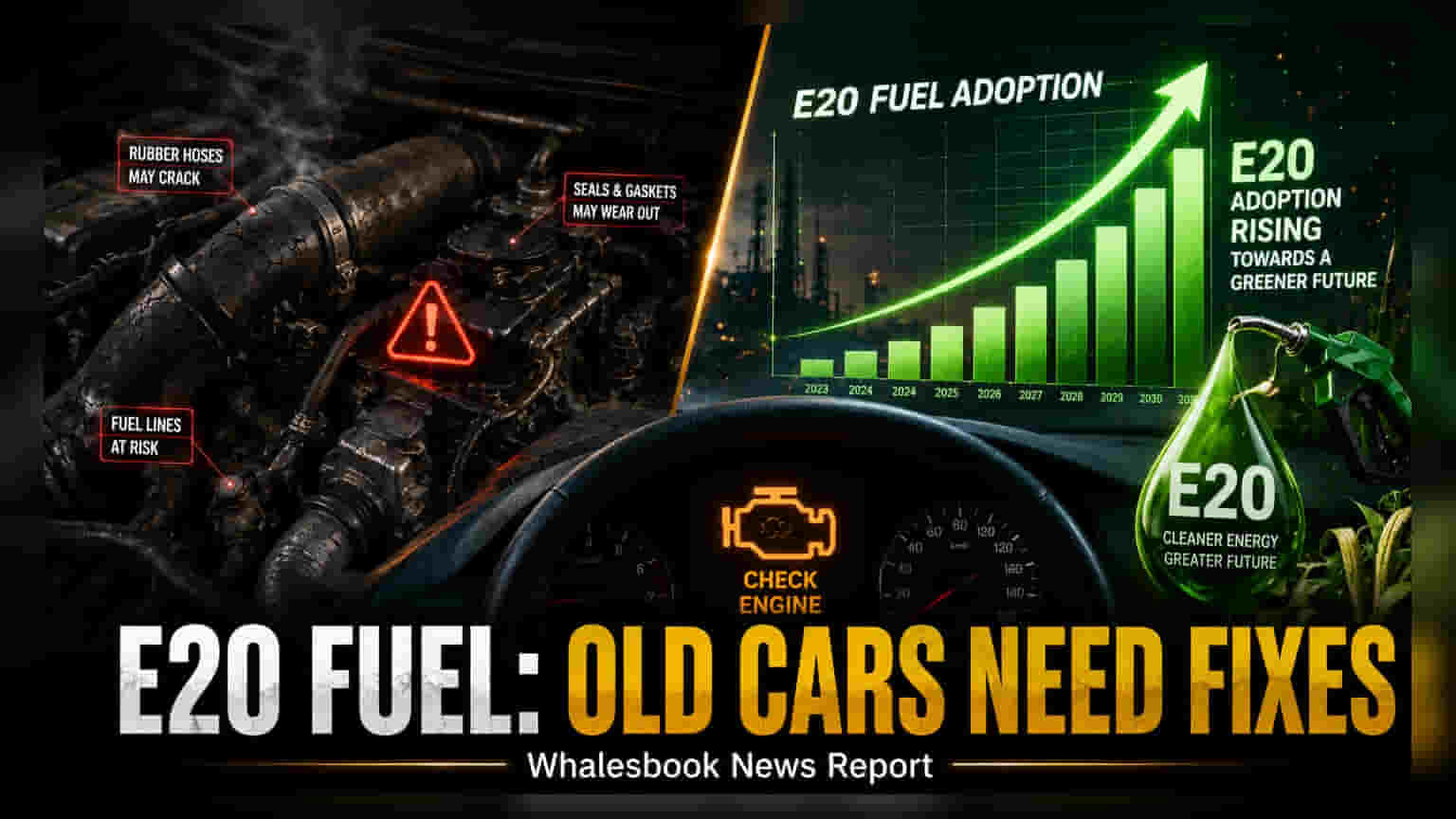
Road Transport Minister Nitin Gadkari confirmed that while most vehicles are E20 compatible, some pre-2016 BS-III models may need rubber part replacements. The government stated that manufacturers will continue to honor warranties, and no major engine modifications are required for the shift to 20% ethanol-blended petrol.
Road Transport and Highways Minister Nitin Gadkari clarified in the Rajya Sabha on Wednesday that older vehicles, specifically Bharat Stage (BS)-III models manufactured before 2016, may require minor maintenance adjustments when using E20 fuel. While engine modifications are not necessary for most cars and two-wheelers, the minister noted that certain rubber parts and gaskets in these older models might need replacement to maintain compatibility.
Maintaining Vehicle Compatibility
The government stated that these minor replacements can be managed during the regular vehicle servicing cycle, rather than requiring expensive overhauls. This confirmation follows extensive testing and studies conducted by key industry and research bodies, including Indian Oil Corporation Ltd (IOCL), the Automotive Research Association of India (ARAI), the Indian Institute of Petroleum (IIP), and the Society of Indian Automobile Manufacturers (SIAM). According to these assessments, performance metrics such as drivability, engine startability, and metal component durability remain stable when using petrol blended with 20% ethanol.
Impact on Fuel Efficiency and Warranties
Concerns regarding a potential drop in fuel efficiency have been addressed by the Inter-Ministerial Committee (IMC) established by NITI Aayog. Their findings, outlined in the 'Roadmap for Ethanol Blending in India 2020-25' report, concluded that variations in mileage are influenced by a wide array of driving and vehicle factors and cannot be attributed solely to the use of E20 fuel. To protect consumer interests during this transition, the government has confirmed that vehicle manufacturers will continue to honor standard warranty claims for vehicles using E20 fuel.
The Ethanol Blending Roadmap
India has been scaling its Ethanol Blended Petrol (EBP) programme in a phased manner since the initial pilot project began in 2001. The transition to higher blending levels, such as E20, is backed by laboratory trials and durability studies that align with global practices used in countries like Brazil for several decades. For investors and vehicle owners, the primary focus remains on the gradual adoption of these fuel standards across the country. The key monitorable for the automotive sector will be how efficiently manufacturers manage these minor maintenance requirements for older vehicle fleets and how consumer adoption of E20 fuel progresses as distribution expands nationally.