

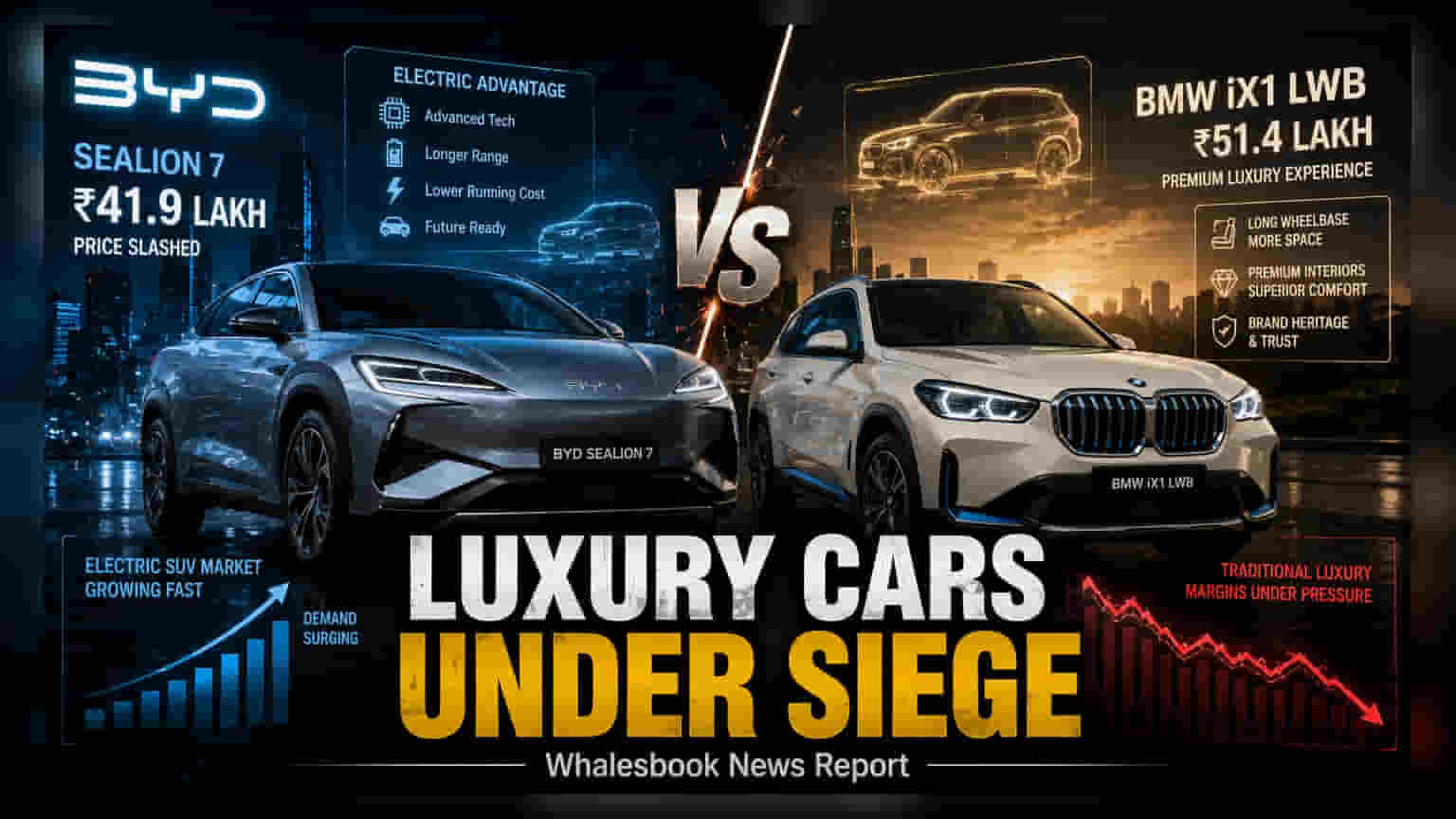
Entry-level luxury cars face stiff competition as electric SUVs from brands like BYD hit the ₹45 lakh price point. To protect market share, German automakers are shifting to long-wheelbase models and flexible ownership programs. Investors are monitoring how this rivalry impacts profit margins, especially as global luxury players navigate high EV costs and slowing consumer demand.
The traditional Indian entry-level luxury car market, which usually starts around the ₹50 lakh price point, is facing a new wave of competition. Electric SUVs from manufacturers like BYD are now priced under ₹45 lakh, bringing advanced features and modern technology to a segment that was once dominated solely by established European brands.
This pricing pressure intensified recently when BYD reduced the price of its Sealion 7 electric SUV to ₹41.9 lakh. This move significantly narrows the price gap between the electric SUV and entry-level luxury offerings like the BMW iX1, which is priced at ₹51.4 lakh. As the price difference shrinks, buyers are increasingly evaluating whether the brand prestige of a luxury car outweighs the value and features offered by these new electric competitors.
Luxury Brands Shift Strategy to Defend Market Share
In response to this shifting landscape, established players like BMW and Mercedes-Benz are refining their approach to maintain their position in the Indian market. A central part of this strategy is a pivot toward long-wheelbase (LWB) models. By offering increased interior space and rear-seat legroom—features previously reserved for high-end sedans—the automakers are aiming to appeal more strongly to Indian buyers who prioritize comfort. BMW India has seen this strategy gain traction, with long-wheelbase vehicles accounting for 52% of its total sales during the first half of 2026.
Additionally, these luxury automakers are using ownership ecosystems to build loyalty and reduce the perceived cost of entry. Programs like BMW’s 360 Finance Plan and Mercedes-Benz’s STAR Agility+ offer features like guaranteed future value and flexible upgrade paths. These programs are designed to lower monthly ownership costs and provide a sense of financial predictability, which is a key factor for customers deciding between a luxury brand and a lower-priced electric alternative.
Global Financial Context and Margin Pressure
While these strategies aim to protect market share, they come at a time when the broader luxury automotive sector is facing global financial headwinds. The transition to electric mobility requires significant investment in research and development, which often puts pressure on operating margins.
Recent financial reports show that both major German automakers are navigating a difficult environment. Mercedes-Benz reported a 17% decline in operating profit for the first quarter of 2026, and the company has updated its guidance to reflect market volatility, particularly in China. Similarly, BMW recently issued a profit warning, noting that intense competition and weak consumer demand in key markets led them to adjust their automotive margin guidance to a range of 1–3%. These global challenges underscore the difficulty of maintaining profitability while simultaneously investing in new technology and defending market share against new entrants.
Future Outlook for Investors
For investors, the key monitorable will be how these companies manage the balance between market share and profitability. While new launches continue, the sector faces risks such as high production costs for electric vehicles and fluctuating consumer demand. The ability of legacy automakers to retain their premium pricing power in the face of feature-rich, lower-priced competition will be a major indicator of their long-term health. Moving forward, observers will track quarterly sales volumes, the success of the new ownership programs, and whether the shift toward long-wheelbase models successfully supports profit margins in the competitive entry-luxury segment.