

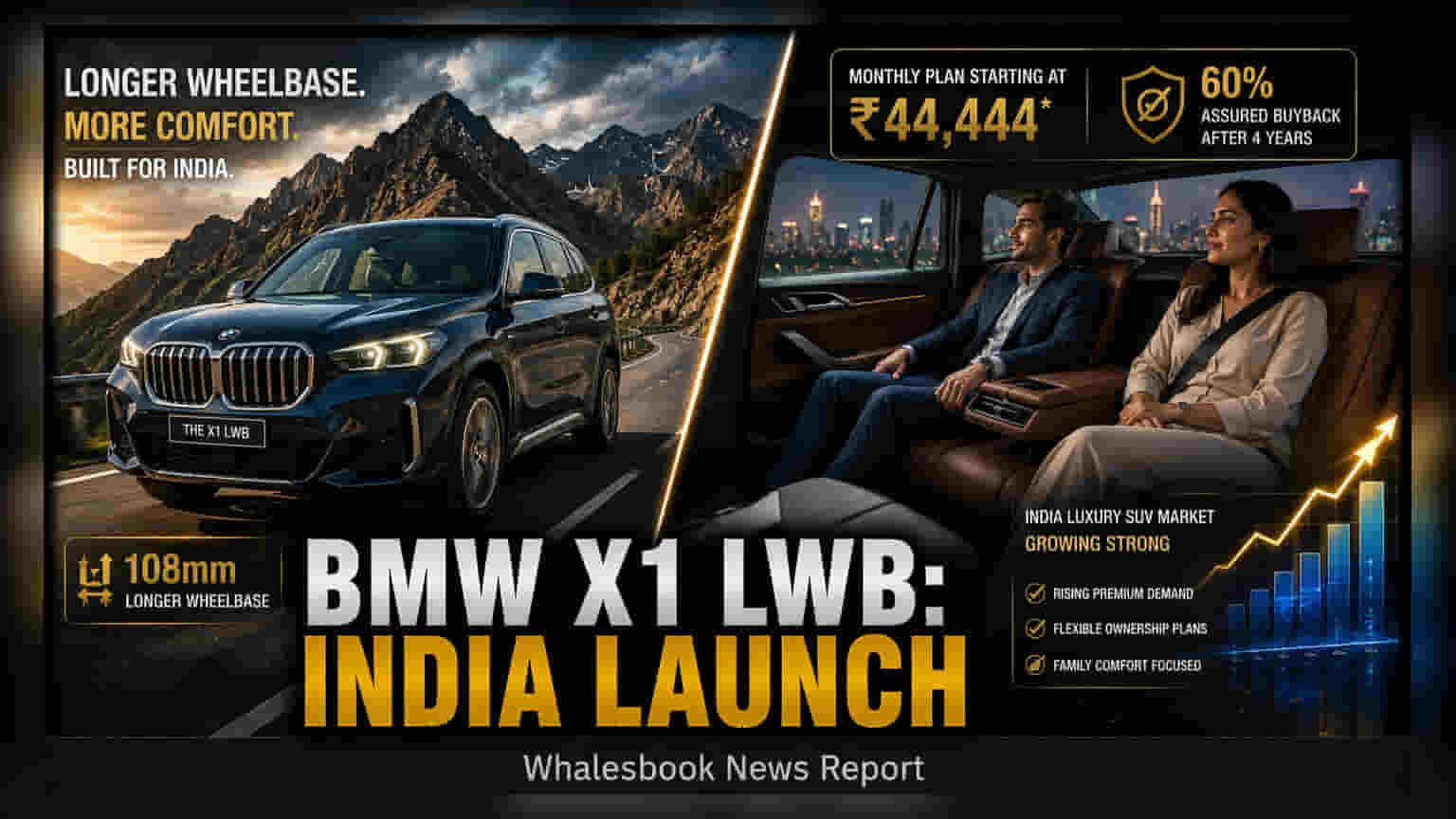
BMW has introduced the new X1 Long Wheelbase (LWB) SUV in India, priced at ₹49.90 lakh. The launch targets buyers seeking more rear-seat space in the luxury SUV segment, with the company offering special financing and buyback options to support sales in a price-sensitive market.
BMW India has officially launched the X1 Long Wheelbase (LWB) variant, priced at ₹49.90 lakh (ex-showroom). This new model is designed to address the specific preference of Indian luxury car buyers for increased rear-cabin space, offering a 108mm longer wheelbase compared to the standard X1. The increased size aims to provide more legroom, positioning the vehicle as a family-friendly option in the premium SUV category.
Strategic Pricing and Sales Strategy
To attract buyers in the competitive luxury segment, BMW is introducing a financial plan with monthly payments starting at ₹44,444. Furthermore, the company is offering an assured 60% buyback value after four years. These financial tools are intended to lower the entry barrier and mitigate concerns regarding the resale value of luxury vehicles. By focusing on flexible ownership options, the manufacturer is attempting to maintain demand despite broader economic pressure on high-end discretionary spending.
Luxury Market Context and Risks
For investors monitoring the Indian automotive sector, it is important to note that the global parent company, BMW AG, is not listed on Indian stock exchanges. While there is a company named BMW Industries Ltd listed on Indian exchanges, it is in the steel processing sector and has no business connection to the German automaker.
The Indian luxury SUV segment remains highly competitive, with established players like Mercedes-Benz and Audi continuously refreshing their product lineups to capture market share. Companies in this space face several risks, including currency volatility, as high import content means that even a small depreciation of the Rupee against the Euro can put pressure on profit margins. Additionally, demand in the luxury car segment is sensitive to interest rate changes, which directly impact the cost of financing for potential buyers. Investors tracking the automotive sector often monitor how these companies manage the balance between pricing, input costs, and raw material inflation to protect their margins.
What Investors Should Track
The key monitorable for the broader luxury vehicle sector is the sales volume trend in the coming quarters and whether similar financing offers become an industry-wide standard to drive demand. Tracking how consumer spending on premium goods holds up against rising interest rates and inflation will provide insights into the health of the high-end auto market.