

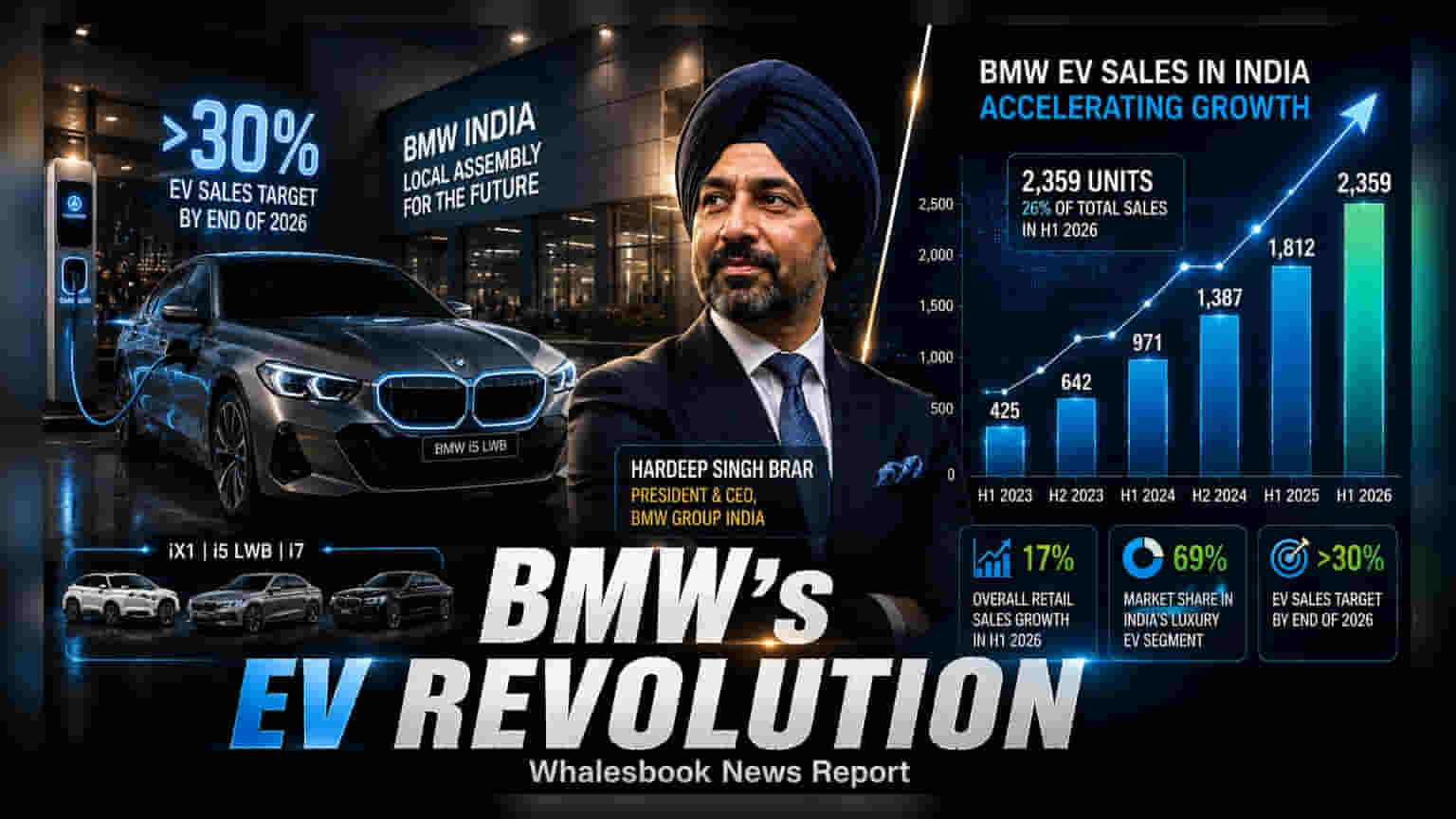
BMW India aims for electric vehicles to make up over 30% of its sales by the end of 2026, building on a 26% share achieved in the first half. The company is banking on local assembly of new models like the i5, although its global parent faces margin pressure due to international economic challenges.
BMW Group India is aiming for a significant shift in its sales mix, targeting electric vehicles (EVs) to contribute more than 30% of its total sales by the end of 2026. This target follows a strong performance in the first half of the year, where electric models already accounted for 26% of the company's total sales, totaling 2,359 units.
The company’s strategy to achieve this goal involves expanding its local assembly footprint. BMW India plans to introduce the locally assembled long-wheelbase BMW i5, which is expected to bolster its EV portfolio alongside existing models like the iX1 and i7. This focus on local assembly is designed to improve availability and cater to customer preference for long-wheelbase models, which currently make up a significant portion of BMW’s overall sales volume in India.
In the first half of 2026, BMW reported a 17% growth in overall retail sales, delivering 9,075 vehicles. This growth has helped the company maintain a strong market position, with a reported 69% share of India's luxury EV segment. While BMW’s domestic performance shows resilience, the company remains in a tight competitive race, with Mercedes-Benz recording 9,768 unit sales in the same period.
While BMW's Indian operations are expanding, the company's global parent, BMW AG, has recently provided a more cautious outlook. The global entity revised its 2026 automotive EBIT margin guidance downward to 1–3%, down from a previous estimate of 4–6%. This adjustment is largely attributed to a significant economic slowdown in the Chinese market and broader geopolitical tensions that have increased energy and production costs.
For investors and market observers, the difference between the local performance and the global outlook is a key factor to watch. While the Indian market has demonstrated robust demand, the global parent’s ability to manage profit margins amidst the slowdown in China could influence future capital allocation and global strategy.
The next important monitorables will be the actual market response to the local assembly of the i5 and whether the company can maintain its double-digit growth trajectory in India, despite potential global headwinds affecting the luxury automotive sector.