

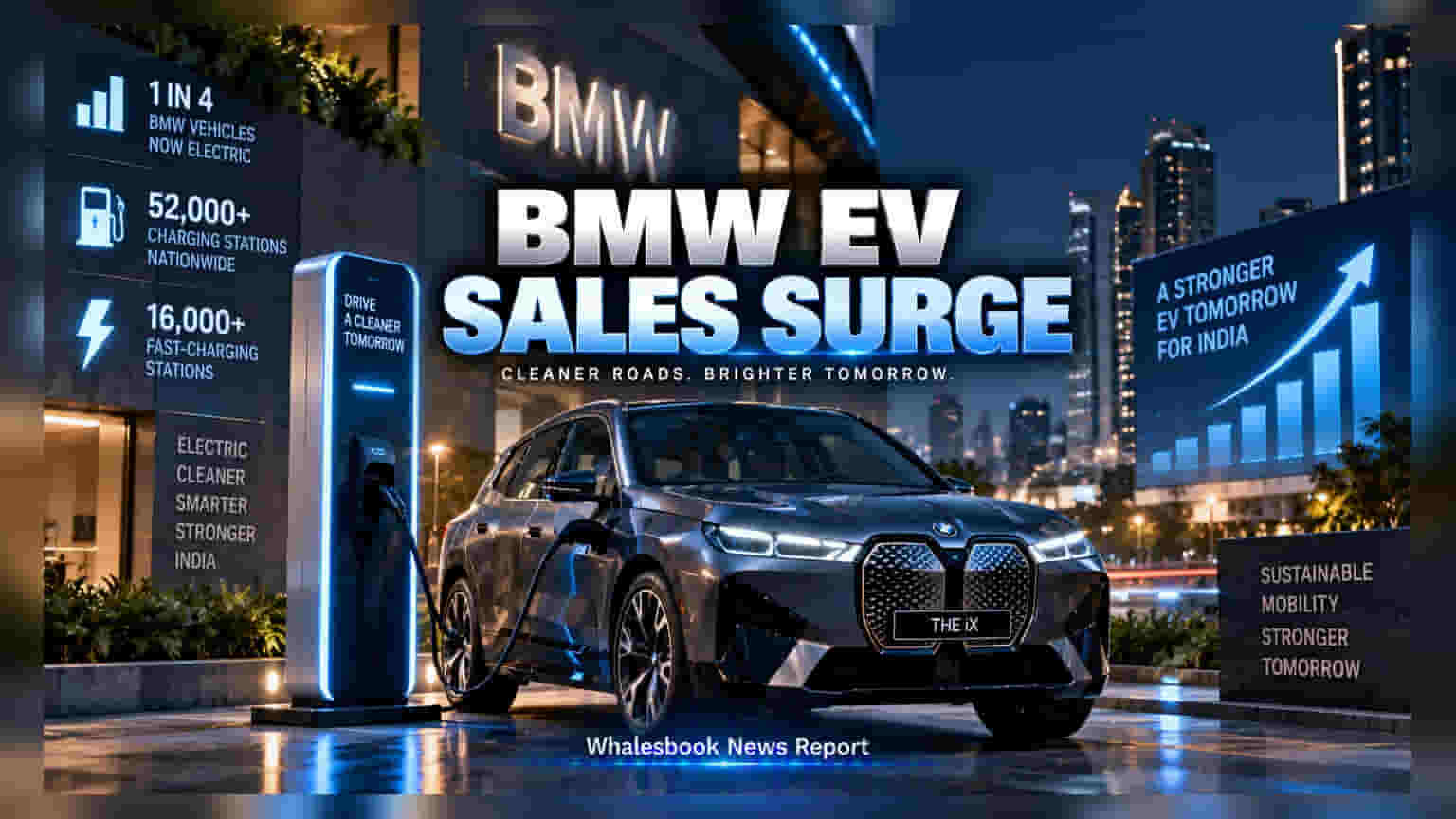
BMW Group India has announced that electric vehicles now represent one-quarter of its domestic sales. The company credits this growth to the rapid expansion of India's public charging network, supported by government programs like the PM E-DRIVE initiative.
BMW Group India has confirmed that one in four vehicles sold in its domestic portfolio is now electric. This shift highlights a significant trend in the premium automotive segment, where luxury buyers are increasingly moving away from traditional combustion engines toward electric models. The company reports that this adoption rate is being driven by more reliable access to charging infrastructure, a factor that has historically influenced purchasing decisions for high-end vehicles.
Infrastructure and Government Support
The expansion of public charging stations has been a key driver for this change. According to BMW Group India, the national network now encompasses over 52,000 charging stations. Of these, roughly 16,000 are equipped for fast-charging, which is essential for luxury vehicle owners who require quick turnaround times. The company notes that government policies, such as the PM E-DRIVE initiative, have provided the necessary framework to encourage this rollout of hardware across the country.
Strategy for Market Expansion
To address the common concern of range anxiety, BMW is taking a unique approach by opening its proprietary charging network to non-BMW electric vehicles. By positioning its chargers as an accessible utility rather than a closed-loop system for its own customers, the company is attempting to lower the barrier to entry for the broader EV market. While luxury electric vehicles typically offer driving ranges of around 500 kilometers on a single charge, the availability of reliable, high-speed charging remains the primary monitorable for long-term growth in this segment.
Competitive Context and Risks
The luxury automotive segment in India, which includes major competitors like Mercedes-Benz and Audi, is currently in a race to capture the high-end electric market. Each brand is competing not just on vehicle technology and performance, but also on the convenience of their service and charging ecosystems. For investors, the long-term success of this segment will depend on whether this infrastructure growth can keep pace with sales volume. While demand for luxury EVs is rising, risks remain regarding the consistency of power delivery, the operational reliability of the thousands of new charging stations, and the price sensitivity of the luxury consumer base. If the infrastructure fails to meet the expectations of premium owners, it could create brand friction or slow the transition to electric models. Moving forward, observers will likely track the commissioning of new fast-charging units and the actual utilization rates of these stations to gauge if the current momentum can be sustained.