

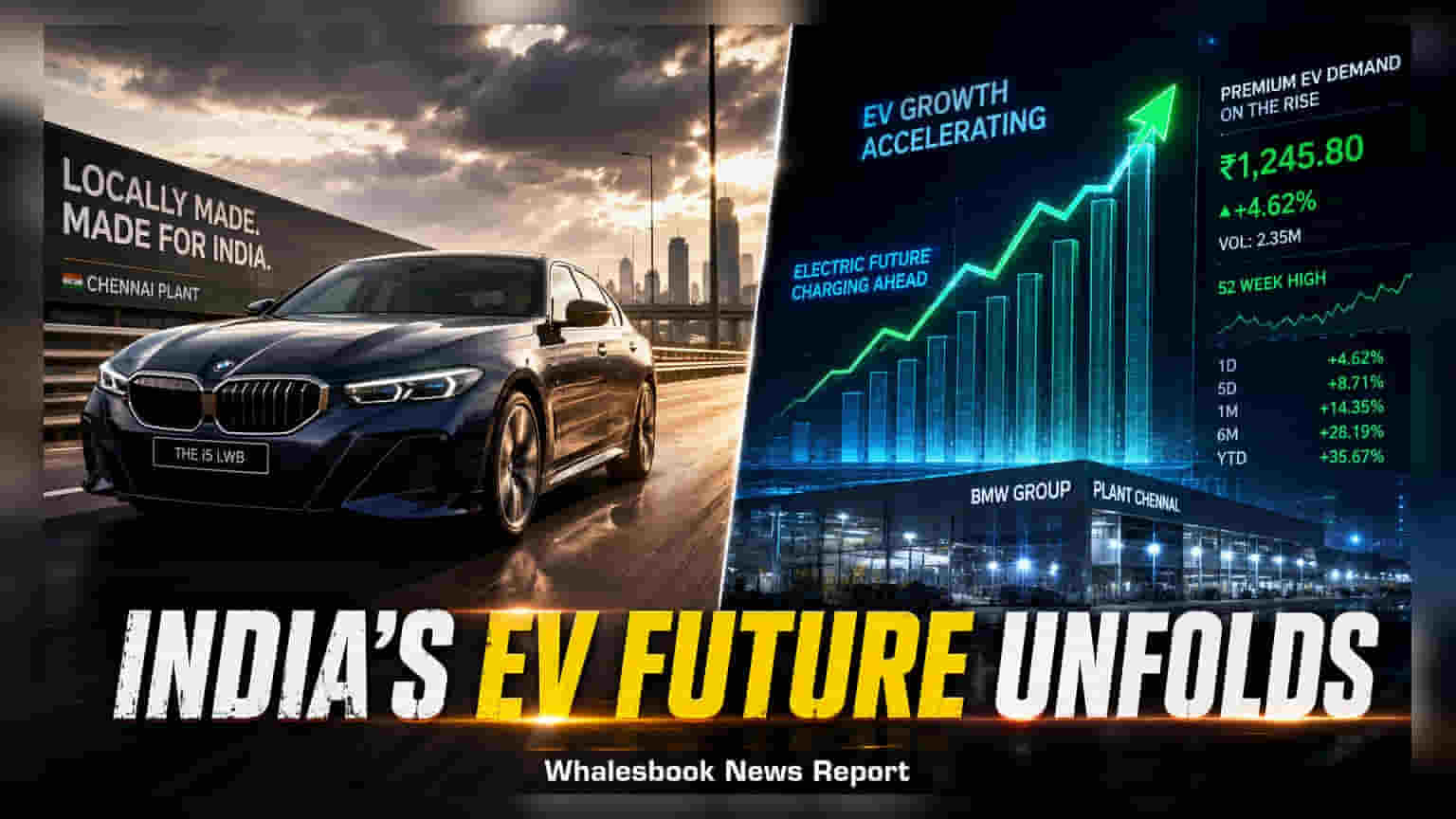
BMW India has opened bookings for its first locally manufactured i5 Long Wheelbase electric sedan, built at its Chennai plant with a 669 km claimed range. Note: BMW India is a private entity and is not listed on the Indian stock exchanges.
BMW India has officially started accepting bookings for its locally manufactured i5 Long Wheelbase (LWB) electric sedan. This move marks a strategic update for the company, as it is the first electric sedan to be produced at its manufacturing facility in Chennai. The decision to assemble the model locally highlights the company's effort to deepen its footprint in the premium electric vehicle segment in India.
The i5 LWB is equipped with an 81.6-kWh battery, which the manufacturer states provides a driving range of up to 669 km on the MIDC cycle. To cater to specific road conditions, the car features adaptive rear-axle air suspension and increased ground clearance. For initial buyers, the company is offering a limited 'First Edition' variant, restricted to the first 99 units, which includes exclusive design touches and enhanced rear-seat amenities.
For the Indian automotive sector, the trend toward local assembly of luxury EVs is significant. By producing vehicles in Chennai, automakers aim to improve operational efficiency and better align features with the needs of the Indian market. The Chennai plant has already been used for the production of other models like the iX1, and this new addition shows the factory is becoming central to the company’s electrification strategy.
While this development is relevant for the luxury car market, it is important for readers to note that BMW India is a subsidiary of the global BMW Group and is not a publicly traded company on the NSE or BSE. This should not be confused with other firms, such as BMW Industries Ltd, which is a separate and unrelated entity involved in steel manufacturing.
The luxury electric vehicle market in India remains highly competitive, with established global brands vying for market share. As these companies expand their electric lineups, success will depend on managing several factors, including the availability of charging infrastructure and price sensitivity among luxury buyers. Furthermore, the broader automotive sector remains sensitive to currency fluctuations, such as the movement of the Indian Rupee against the Euro, which can affect the cost of importing key components. Investors and market observers typically monitor these macroeconomic trends, alongside the company’s ability to maintain profit margins in an environment of rising energy and operational costs.